How Do I Avoid Crypto Scams?
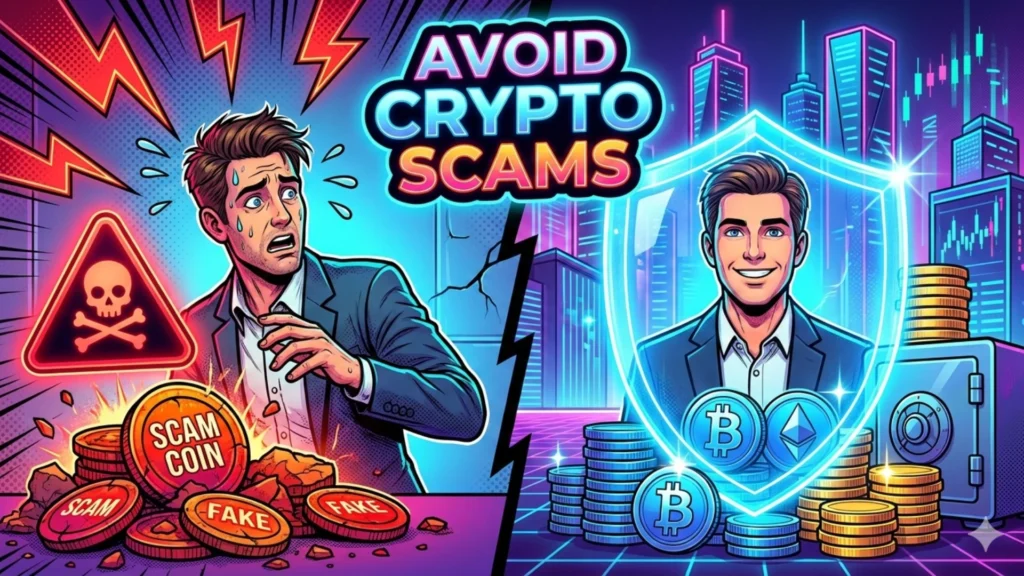
Learning how to avoid crypto scams is the most critical skill for anyone participating in the digital asset economy. Because blockchain transactions are irreversible, once you send funds to a scammer, they are almost impossible to recover.
To avoid crypto scams, you must adopt a “trust but verify” mindset. Never share your private keys or seed phrases, avoid clicking on unsolicited links, and always double-check the URL of the exchange or wallet you are using. Most importantly, remember the golden rule of crypto: If it sounds too good to be true, it probably is.
Table of Contents
What Are the Most Common Crypto Scams?
The first step in knowing how to avoid crypto scams is recognizing the tactics used by bad actors. The most frequent scams include:
- Phishing: Scammers create fake websites or emails that look like legitimate exchanges (like Coinbase or Binance) to steal your login credentials.
- Giveaway Scams: Fake social media accounts (often impersonating celebrities like Elon Musk) claim they will double any crypto you send to a specific address.
- Investment Schemes: Platforms that promise “guaranteed” daily returns or high-yield “mining” rewards that require you to recruit others.
- Romance Scams (Pig Butchering): Scammers build a long-term emotional relationship with a victim before “teaching” them how to invest in a fraudulent crypto platform.
How to Avoid Crypto Scams?
A rug pull is a specific type of scam common in the Decentralized Finance (DeFi) space. It occurs when developers create a new token, pump up its price through hype and marketing, and then suddenly drain all the liquidity from the project.
When the developers “pull the rug,” the token’s value drops to zero instantly, leaving investors with worthless assets that they cannot sell. Rug pulls often happen on decentralized exchanges (DEXs) where anyone can list a token without a central authority’s approval.
How Can I Tell if a Crypto Project Is Legit?
To determine if a project is legitimate, you should perform “DYOR” (Do Your Own Research). Look for these green flags:
- The Team: Are the developers “doxxed” (publicly known) with a history of successful projects?
- The Whitepaper: Does the project have a clear technical document explaining its utility, or is it just full of marketing buzzwords?
- The Audit: Has the project’s smart contract been audited by a reputable security firm like CertiK or Hacken?
- Community and Transparency: Is the project’s code open-source on GitHub? Is the community active and asking tough questions, or is the chat filled with “to the moon” bots?
Are Telegram Crypto Groups Scams?
While not all Telegram groups are scams, Telegram is a high-risk environment for crypto users.
Many groups are created specifically to orchestrate “pump and dump” schemes or to lure users into fake investment bots. A common tactic is for a “support agent” to send you a Direct Message (DM) first. Legitimate support will never DM you first. If you are in a crypto Telegram group, disable the setting that allows strangers to add you to groups and never click files or links shared by unknown members.
Can Crypto Be Hacked?
The answer is twofold: Blockchains are rarely hacked, but “crypto” (wallets and exchanges) can be.
- Protocol Security: Major blockchains like Bitcoin are secured by massive amounts of computing power, making a direct hack of the network nearly impossible.
- Smart Contract Vulnerabilities: In DeFi, bugs in a project’s code can be exploited by hackers to drain funds.
- Personal Security: Most “hacks” are actually the result of users losing their private keys, having their computers infected with malware, or falling for phishing sites.
Summary: Staying Safe in the Digital Frontier
If you want to know how to avoid crypto scams, you must stay proactive. Use hardware wallets for long-term storage, enable hardware-based Two-Factor Authentication (like a YubiKey), and never rush into an investment because of “FOMO” (Fear Of Missing Out).
By staying skeptical and prioritizing security over speed, you can navigate the crypto world safely and protect your digital wealth from predators.