Bitcoin was designed to give individuals full control over their money. But in practice, many people still rely on exchanges or third-party platforms to store their funds. That creates a major risk if you don’t control your Bitcoin, you’re trusting someone else to protect it.
This is where Bitcoin self-custody comes in.
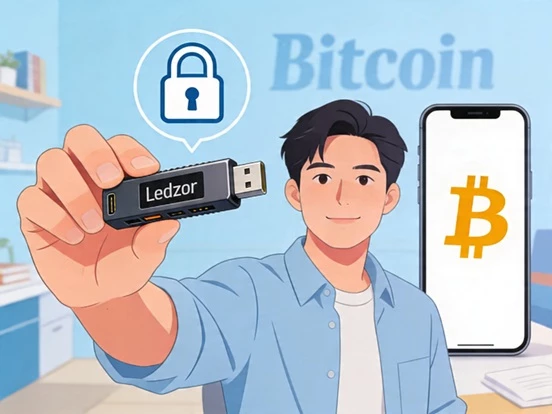
Self-Custody: With self-custody, you control your crypto assets and are responsible for managing the private keys to any of your crypto wallets. With self-custody, you have sole control over the access to your crypto assets’ private keys.[1]
It removes reliance on exchanges and gives you true ownership. But it also introduces a critical responsibility: protecting your seed phrase.
Your seed phrase — also known as a recovery phrase or backup phrase — is the master key to your wallet. If someone gets access to it, they can take your funds. If you lose it, your Bitcoin may be gone forever.
In this guide, you’ll learn:
- What self-custody really means
- How seed phrases work
- Why security matters
- The exact rules to follow
- The biggest mistakes to avoid
Table of Contents
Choosing the Right Wallet for Self-Custody
Self-custody means controlling your own private keys—but how you do that depends on the wallet you choose.
For most users, a hardware wallet is the safest option because it keeps your keys offline.
👉 Compare options:
→ Best Bitcoin Wallets (2026)
Different wallets offer:
- varying levels of security
- ease of use
- support for multiple cryptocurrencies
Choosing the right wallet is the foundation of secure self-custody.
What Self-Custody Means
Bitcoin self-custody means you control the private keys to your Bitcoin.
Private keys are what allow you to:
- Access your funds
- Send Bitcoin
- Prove ownership
If you don’t control the private keys, you don’t truly control the Bitcoin.
This leads to one of the most important principles in crypto:
👉 Not your keys, not your coins
Custodial vs Non-Custodial Wallets
There are two main types of wallets:
Custodial wallet:
- Controlled by a third party (exchange or platform)
- You don’t hold the private keys
- Easier to use, but less secure
Non-custodial wallet (self-custody wallet):
- You control the private keys
- No third-party access
- Full responsibility for security
A non-custodial wallet is what enables Bitcoin self-custody.
Why Bitcoin Self-Custody Matters
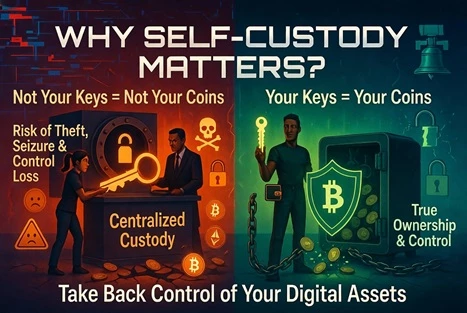
When you leave Bitcoin on an exchange:
- Your funds can be frozen
- Platforms can be hacked
- Withdrawals can be blocked
- You rely on someone else’s security
With self-custody:
- You control access
- You remove third-party risk
- You gain full ownership
But there’s a tradeoff:
👉 You are responsible for everything — especially your seed phrase.
What a Seed Phrase Is
A Bitcoin seed phrase is a human-readable backup of your wallet.
It usually consists of:
- 12 or 24 words
- Generated when you create a wallet
- Based on a standard called BIP39
These words are not random in the usual sense — they follow a specific structure defined by BIP39-compatible wallets.
How It Works
Your seed phrase is used to generate:
- Your private keys
- Your public keys
- Your wallet addresses
In simple terms:
👉 The seed phrase = the root of your entire wallet
If you restore your wallet using the same seed phrase, you regain access to all your funds.
Why BIP39 Matters
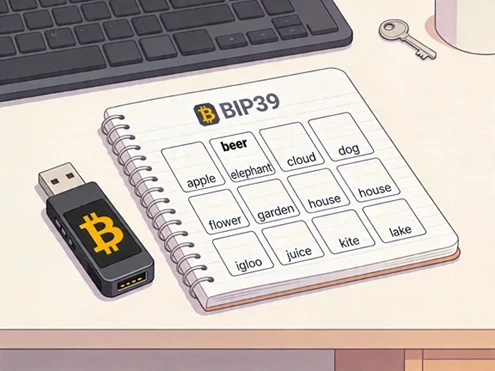
BIP39 is the standard most wallets use to generate seed phrases.
It ensures:
- Compatibility between wallets
- Predictable structure
- Reliable recovery
This means you can often recover your wallet across different platforms as long as they support BIP39.
Read the full bip39 list here
Different Names for Seed Phrase
You may see it referred to as:
- Seed phrase
- Recovery phrase
- Backup phrase
- Seed words
They all mean the same thing.
Why Seed Phrase Security Matters
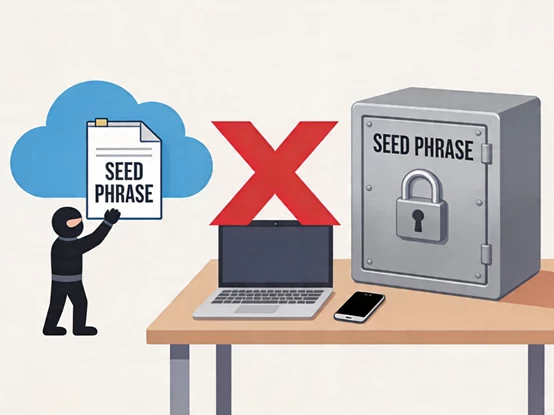
Your seed phrase is the most important part of Bitcoin self-custody.
It is not just a backup.
👉 It is full access.
If Someone Gets Your Seed Phrase
They can:
- Restore your wallet
- Transfer your Bitcoin
- Empty your funds instantly
There is no way to reverse this.
There is no support team.
There is no recovery process.
If You Lose Your Seed Phrase
If you lose access to your wallet and don’t have your seed phrase:
👉 Your Bitcoin is gone forever.
This has already happened to many people.
Why Offline Storage Matters
One of the most consistent lessons across all security guides is this:
👉 Never store your seed phrase digitally
Why?
Because digital storage introduces risk:
- Cloud accounts can be hacked
- Phones can be compromised
- Malware can scan files
- Screenshots can leak
Offline storage removes these attack vectors.
Seed Phrase Rules (CRITICAL)
If you follow these rules, you dramatically reduce your risk.
1. Write It Down Offline
Always store your seed phrase physically.
Options include:
- Paper
- Metal backup plates
Never rely on:
- Notes apps
- Screenshots
- Cloud storage
2. Keep It Private
Your seed phrase should never be shared.
Not with:
- Friends
- Support teams
- Apps
- Websites
👉 No legitimate service will ever ask for your seed phrase
3. Verify Every Word
When writing your seed phrase:
- Check spelling carefully
- Maintain exact order
- Double-check each word
Even one mistake can break recovery.
4. Test Wallet Recovery
Before storing large amounts of Bitcoin:
- Restore your wallet using the seed phrase
- Confirm it works
This ensures your backup is valid.
5. Choose a Secure Storage Location
Your backup should be:
- Safe from theft
- Safe from damage (fire/water)
- Accessible when needed
Some people prefer a single secure location for simplicity.
Others use multiple backups.
The key is consistency and reliability.
6. Keep It Offline — Always
This rule cannot be overstated:
👉 Never store your seed phrase digitally
Not even temporarily.
Not even “just in case.”
Mistakes to Avoid
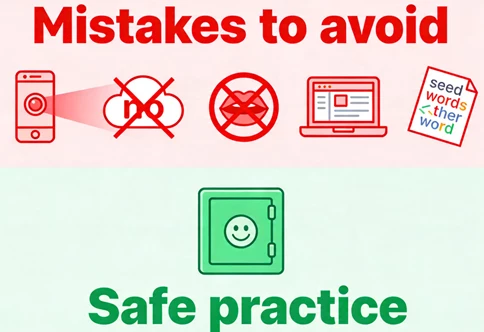
Most Bitcoin losses come from simple mistakes.
Taking a Photo of the Seed Phrase
Photos can be:
- Backed up automatically
- Accessed by apps
- Stolen via malware
Saving It in the Cloud
Cloud storage is not secure for sensitive data.
Even encrypted accounts can be compromised.
Typing It Into Random Websites
Fake wallets and phishing sites exist specifically to steal seed phrases.
👉 Never enter your seed phrase unless you are restoring your wallet in a trusted app.
Sharing Its Location
Even if you don’t share the phrase:
- Revealing where it is stored can create risk
Keep both the phrase and its location private.
Misspelling or Misordering Words
Seed phrases depend on exact accuracy.
Common mistakes:
- Wrong word
- Incorrect order
- Missing word
Any of these can make recovery impossible.
Practical Closing: The Simplest Safe Approach
Bitcoin self-custody doesn’t need to be complicated.
The safest approach is simple:
- Use a reputable non-custodial wallet
- Prefer a hardware wallet for larger amounts
- Write your seed phrase offline
- Store it securely
- Never digitize it
That’s it.
Using Your Wallet Safely (Send & Receive)
Once your wallet is set up, the next step is learning how to use it properly.
Even small mistakes—like sending to the wrong address—can result in permanent loss of funds.
Best practice:
- always test with a small transaction first
- double-check addresses before sending
- understand network fees and confirmations
👉 Step-by-step guide:
→ How to Send & Receive Bitcoin
Self-Custody Checklist (Save This)
Use this checklist to make sure you’re following best practices when storing Bitcoin securely:
🔐 Setup
- Use a trusted hardware wallet (official source only)
- Generate your seed phrase offline
- Never take screenshots or store seed digitally
📝 Backup
- Write down your seed phrase clearly
- Store backups in separate secure locations
- Consider fireproof / waterproof storage
🛑 Security Rules
- Never share your seed phrase with anyone
- No support team will ever ask for it
- Beware of phishing websites and fake apps
💸 Usage
- Always test transactions with small amounts
- Double-check addresses before sending
- Keep wallet firmware updated
How Self-Custody Fits Your Bitcoin Journey
Self-custody is one of the most important steps in using Bitcoin correctly.
👉 Recommended path:
Final Reminder
Your seed phrase is not just a backup.
👉 It is your Bitcoin.
- Whoever controls it controls your funds
- Losing it means losing access
- Protecting it is your responsibility
Bitcoin gives you full control.
But with that control comes one rule above all:
👉 Protect your seed phrase at all costs
Bitcoin Self-Custody Faq:
What is Bitcoin self‑custody?
Bitcoin self‑custody means you personally control the private keys to your Bitcoin, instead of relying on an exchange or custodian. If you hold the keys, only you can authorize spending, giving you full sovereignty over the funds.
What does “self‑custody” mean in crypto?
Self‑custody in crypto means you securely manage your own private keys and backups (like a seed phrase) without depending on a third party. The phrase “not your keys, not your coins” captures this idea: if you don’t control the keys, you don’t fully control the assets.
What is the difference between self‑custody and holding Bitcoin on an exchange?
With self‑custody you control the private keys and your Bitcoin lives on the blockchain; exchanges keep the keys and hold your Bitcoin for you. Exchanges can freeze or restrict access during crises, while self‑custody removes that counterparty risk but puts all security responsibility on you.
Why should I take self‑custody of my Bitcoin?
Self‑custody removes reliance on third parties, prevents exchange freezes, and supports financial sovereignty. It aligns with Bitcoin’s “no‑trust” model: you eliminate the risk that a platform can lose or block your funds, as long as you secure your keys properly.
What are the risks of self‑custody Bitcoin?
The main risks are losing access (lost device, forgotten seed phrase, typos) or having your seed phrase stolen or exposed. Since there is no customer support or reversals, mistakes can permanently lock you out of your Bitcoin.
What is a seed phrase in Bitcoin?
A seed phrase is a human‑readable backup (usually 12 or 24 words) that a wallet uses to regenerate your private keys and Bitcoin addresses. If you lose your wallet but keep the seed phrase, you can restore access to your funds on another compatible device.
What is a recovery phrase and how is it different from a seed phrase?
In practice, “recovery phrase” and “seed phrase” mean the same thing for most Bitcoin wallets. Both refer to the 12‑ or 24‑word backup that lets you recover your wallet. Some wallets also support an optional extra password (passphrase) on top of the seed, but the core recovery phrase itself is the words you write down.
How many words are in a Bitcoin seed phrase?
Most Bitcoin wallets use a 12‑ or 24‑word BIP39 seed phrase. Twelve words are standard for most mobile and hardware wallets; 24‑word seeds are an optional, more cautious choice in some wallets.
What is BIP39 and how does it relate to seed phrases?
BIP39 is a Bitcoin Improvement Proposal that defines how wallets generate mnemonic (seed) phrases from random numbers and how those phrases are converted into a binary seed for key derivation. It’s the standard that lets most Bitcoin wallets interoperate using the same 12/24‑word backup format.
Can seed phrase words repeat (for example, the same word twice)?
Yes: words in a BIP39 seed can repeat, and this is not a security flaw. The security comes from the entropy encoded in the entire phrase, not from avoiding duplicates. As long as the phrase is generated by reputable wallet software, repetitions are fine.
Why is seed phrase security so important?
Anyone who sees your seed phrase can restore your wallet and spend your Bitcoin. Since there is no way to freeze or reverse transactions, a stolen seed phrase usually means a permanent loss of funds.
What happens if my seed phrase is stolen?
If someone gets your seed phrase, they can sweep your Bitcoin to another wallet at any time. In most cases, you cannot recover those funds once they’re moved, which is why it must be treated like a master key to your vault.
Can I recover my Bitcoin if I only have the seed phrase?
Yes: if you have the correct seed phrase, you can restore your Bitcoin wallet on any compatible device or app and regain access to all addresses and funds derived from that seed.
Should I keep multiple copies of my seed phrase?
Most experts recommend a limited number of copies stored in physically separate, secure locations (for example, one at home and one at a trusted location like a safe‑deposit box). Each extra copy increases the risk of exposure, so “backup, but not everywhere” is the key idea.
How should I store my seed phrase safely?
Store your seed phrase offline on paper or metal, in a dry, fire‑resistant, and tamper‑resistant container. Avoid digital copies, cloud storage, and photos. Keep it private and test recovery with a small amount before trusting large balances.
Can I take a photo of my seed phrase?
No: taking a photo introduces multiple risks—phone compromise, cloud sync, or physical access to your device. A photograph of your seed phrase effectively turns it into a digital secret that can be copied and spread without your knowledge.
Is it safe to store my seed phrase in the cloud?
No: storing your seed phrase in cloud storage (Google Drive, iCloud, etc.) exposes it to platform breaches, account‑takeover attacks, and potential legal seizures. Seed phrases should never live in any online storage.
Can I tell someone where I stored my seed phrase?
Only share the location with people you absolutely trust, and even then you increase the risk of loss or theft. If someone knows where your seed is stored, they may be tempted, or they can accidentally reveal the location. In high‑security setups, as few people as possible should know anything about it.
What happens if I type my seed phrase into a random app or website?
Typing your seed into an untrusted app or website can expose it to malware, phishing, or data‑exfiltration scripts. If attackers capture the phrase, they can drain your wallet immediately. Never type your seed anywhere except your own trusted wallet.
Can someone guess my seed phrase if it’s written on paper?
If the seed phrase is truly random and follows BIP39, guessing it brute‑force is effectively impossible; the security is on the order of 128 bits. The real risk is someone physically finding or stealing the paper, not guessing the words. That’s why physical security and access control matter more than “guessability”.
How do I start self‑custody of my Bitcoin?
Start by downloading a reputable non‑custodial Bitcoin wallet (hardware or software), generating a new wallet, and writing down the seed phrase exactly as shown. Then send a small test amount from an exchange to that wallet, confirm it appears, and optionally test sending it back before moving larger sums.
Should I use a hardware wallet or a software wallet?
Use a hardware wallet for long‑term storage and larger amounts, as it keeps keys offline. Use a software wallet on a secure phone or computer for smaller, frequently used balances. Many people combine both: hardware wallet for savings and a mobile wallet for spending.
How do I move Bitcoin from an exchange to my self‑custody wallet?
Go to your exchange, open the “withdraw” section, select Bitcoin, and paste your self‑custody wallet’s receiving address. Confirm the address carefully, send a small test amount first, and then move the rest only after confirming the test transaction works.