
Bitcoin is the first decentralized digital currency and the foundation of the modern cryptocurrency market. Understanding Bitcoin fundamentals helps you see how the network works, why supply matters, how it compares with traditional money, and which core terms every beginner should know.
Bitcoin runs on a public blockchain, has a fixed supply, and operates without a central bank or single controlling authority. If you are new to Bitcoin, start with the guides below to build a strong foundation step by step.
Start Here: Core Bitcoin Topics
If you’re new to Bitcoin, this section acts as your foundation. These are the essential concepts every beginner should understand before going deeper.

What Is Bitcoin? Complete Guide
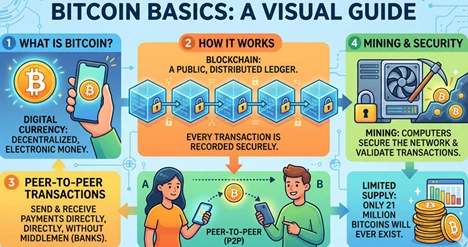
Blockchain Basics
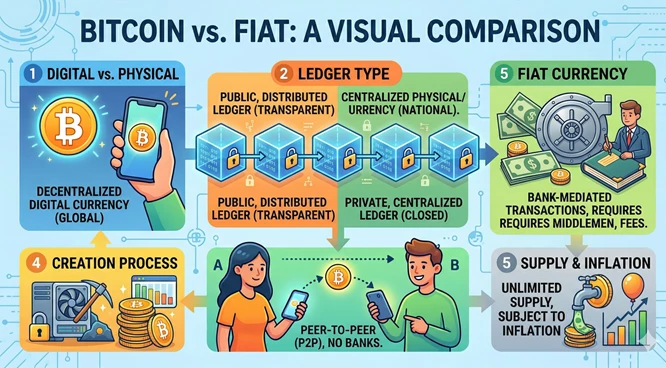
Bitcoin vs Fiat

Bitcoin Supply
Bitcoin Glossary
Review important Bitcoin and crypto terms so you can understand wallets, private keys, mining, nodes, and more.
Learn 50 Bitcoin Terms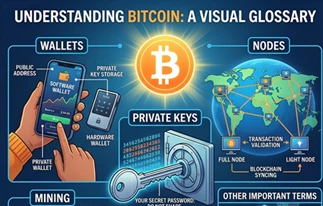
Bitcoin Security & Self-Custody
Owning Bitcoin means controlling your private keys. Learn how to safely store and protect your assets.
👉 Read: Bitcoin Self-Custody Guide
Bitcoin Wallets & Addresses
Understand how wallets work, how to send and receive Bitcoin, and how addresses are used.
👉 Read:
Lightning Network Basics
The Lightning Network enables fast and low-cost transactions on top of Bitcoin.
👉 Read: Lightning Network Guide (coming soon)
Why Bitcoin Fundamentals Matter
Understanding Bitcoin fundamentals is essential before investing or trading. By learning how Bitcoin works, what makes it scarce, and how it compares to traditional financial systems, you build a stronger foundation for making informed decisions. These core concepts help you avoid common mistakes and better understand long-term market trends.
What You’ll Learn in This Section
👉 Brief bullets:
- How Bitcoin works
- What blockchain actually does
- Why supply matters
- Key differences vs fiat
- Essential crypto terms
Start With the Basics
If you’re new to crypto, start with our What is Bitcoin guide, then move into blockchain basics before exploring supply and monetary comparisons.
Why Bitcoin Fundamentals Matter
Understanding Bitcoin fundamentals helps you avoid common mistakes and make better decisions.
Without a strong foundation, many beginners:
- fall for scams
- misunderstand volatility
- lose funds due to poor security practices
By learning how Bitcoin actually works, you gain:
- confidence in your decisions
- better risk management
- long-term perspective
Who This Bitcoin Fundamentals Guide Is For
This hub is designed for:
- Beginners starting from zero
- Investors who want deeper understanding
- Anyone looking to safely buy and store Bitcoin
- People confused by crypto jargon