
Quick Summary: March 2026 crypto news is split between a major security failure and clearer U.S. regulation. An attacker stole a privileged AWS key from Resolv’s USR stablecoin, minting 80 million unbacked tokens and draining $25 million in ETH, crashing USR from $1 to $0.025 in 17 minutes. Meanwhile, the Senate failed to advance the CLARITY Act, so regulators like the SEC and CFTC are moving forward with their own rules, which remain reversible. Investors should watch ETF flows, stablecoin supply, and security gaps like the $91 billion in USDT behind just two signing keys.
March 2026 crypto news hit hard on two fronts. Resolv’s USR stablecoin lost its dollar peg after an attacker used compromised privileged infrastructure to mint about 80 million unbacked tokens, extracting roughly $25 million in ETH. Meanwhile, U.S. regulators moved toward clearer digital-asset classifications and tailored offering rules. So investors face two competing signals: infrastructure stays vulnerable even as the legal framework sharpens. This roundup separates the immediate market and security risks from the longer-term policy shifts, with verified details you can act on.

Table of Contents
The Resolv USR Exploit Put Stablecoin Risk Back at the Center
Big crypto news this year: one stolen key turned a dollar stablecoin into penny stock. On March 22, an attacker hit Resolv’s USR token and it never recovered.
What Happened in the Minting System
The attacker broke into Resolv’s AWS key storage and grabbed the privileged key that approves mints. The contract only checked that a valid signature existed. It never compared the deposit to the output, so a $100,000 USDC deposit returned 50 million USR. A second transaction minted 30 million more. The attacker swapped it all into ETH and walked away with about $25 million, per Chainalysis. USR crashed from $1 to $0.025 in 17 minutes.
Why the Fallout Was Not Automatically System-Wide
Resolv paused everything within hours. The team burned millions of fake tokens and let pre-exploit holders redeem 1:1 through an allowlist. USR still died, but the damage mostly stayed contained to the protocol and its lending partners.
Lesson: hedge design meant nothing. Minting controls were the weak link.
Also Read: Crypto Cobra Blog: Crypto News, Reviews & Market Insights
Market Moves Are Being Shaped by Risk, Liquidity, and Regulation
Price alone tells you little right now. Bitcoin has swung from the mid-$76,000s back above $81,000 as regulation, ETF flows, and Fed policy pulled in different directions.
Three forces matter most:
- Liquidity: Spot trading volume sits roughly 25-30% below late-2025 levels, and thin order books make even modest selling move prices hard.
- Regulation: After the Senate failed to advance the CLARITY Act 49-50, the CFTC filed its own crypto market rules with the White House, and the SEC granted a temporary “Innovation Exemption” for tokenized stock venues.
- Risk appetite: Spot Bitcoin ETFs saw billions in outflows while the Fed hiked rates to 3.75-4%, keeping institutional money cautious.
The rally came from agency action, not legislation. That’s a fragile base.
What Traders Should Watch Beyond the Headline Price
Track the plumbing, not just the price:
- ETF net flows – they now drive Bitcoin’s price discovery more than retail buying.
- Stablecoin supply – shrinking supply means less dry powder for buying.
- Futures open interest and liquidations – heavy long liquidations often mark capitulation, not bottoms.
- Regulatory milestones – the CFTC rulemaking still needs review, a commission vote, and a comment period before anything becomes binding.
YouTube explains liquidity concepts well:
Also Read: Crypto Market Analysis News: Bitcoin Holds While Altcoins Lag
U.S. Regulators Are Moving Toward a More Defined Crypto Rulebook
Proposal, Interpretation, and Law Are Different
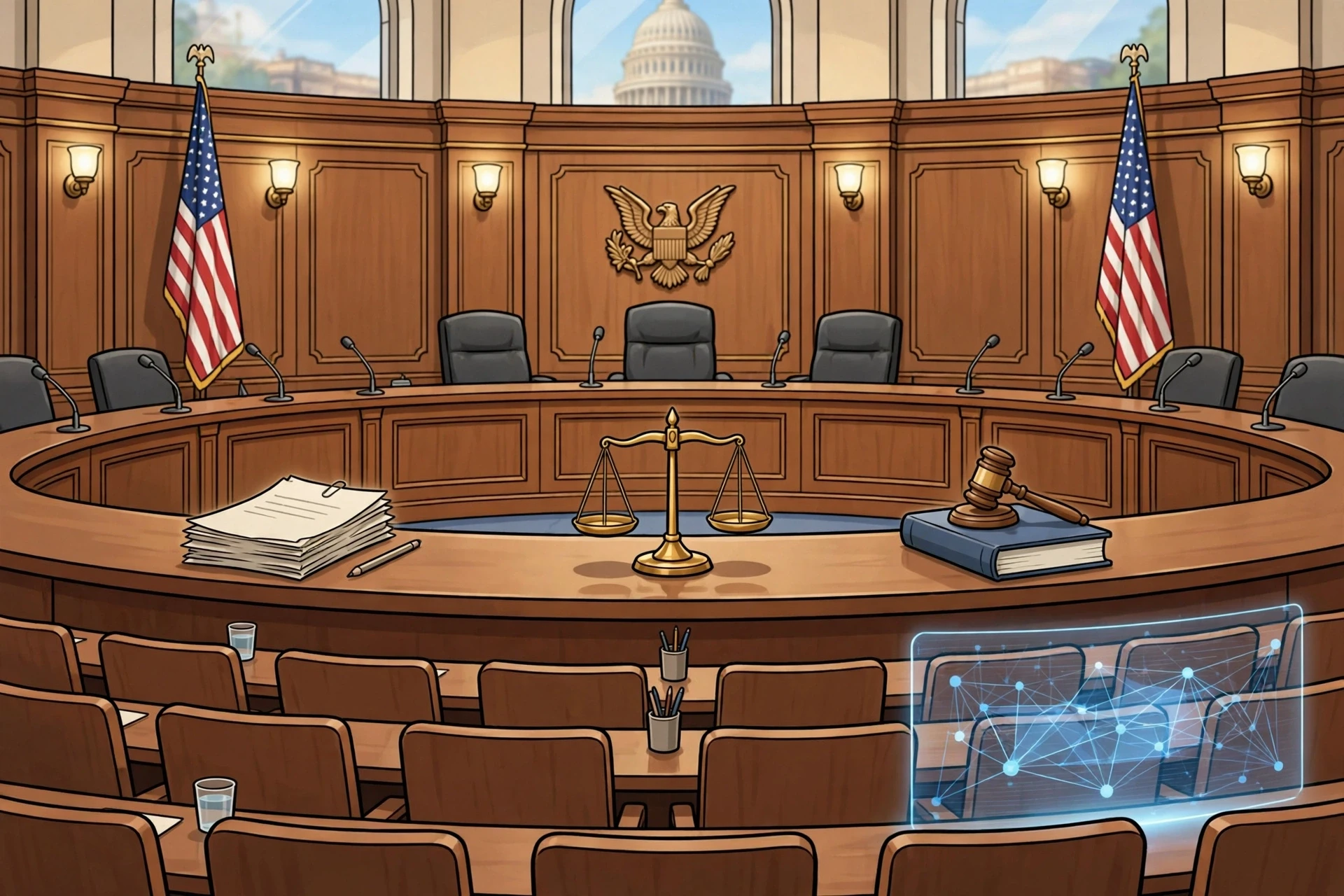
Big news, but read it carefully. On September 15, 2026, the Senate failed to advance the Digital Asset Market Clarity Act, a bill that would split crypto oversight between the SEC and CFTC. The vote was 49-50, short of the 60 needed.
Here’s the key distinction. A proposal is not a law. The SEC’s Regulation Crypto Assets plan would let startups raise up to $5 million without full registration, but it still needs finalizing. Agency rules can also be undone by the next administration. Only a statute, like the GENIUS Act for stablecoins, is hard to reverse.
Bottom line: rules are coming, but through regulators, not Congress, for now.
Why These Headlines Matter for Crypto Users
These stories hit wallets, not just headlines. A security review found about $91 billion of USDT sits behind just two signing keys with no delay or undo option. That’s the stablecoin most traders use daily.
The Liquid Network incident drained nearly $320 million and paused L-BTC withdrawals. Even “safe” Bitcoin wrappers carry risk.
For you, three takeaways stand out:
- Check where your assets actually live. Bridges and wrapped tokens add layers of failure.
- Watch pegs, not just prices. Stablecoins can break fast.
- Follow security news daily. It often moves markets before charts do.

Markets move fast, and so do scams. Stay ahead of every shift with Crypto Cobra – real-time analysis, alerts, and guides built for 2026.
Frequently Asked Questions
Cover the latest crypto market moves, security incidents, and policy updates.
This roundup tracks Bitcoin price swings, stablecoin security failures, and new regulation in one place. Check back often, as markets shift fast in 2026.
How do I protect my crypto from exchange hacks?
Use hardware wallets, enable two-factor authentication, and never share seed phrases.
Where can I follow these updates daily?
Crypto Cobra posts real-time analysis, or try CryptoPanic for aggregated news alerts.
Conclusion
2026 rewards caution: Bitcoin fights resistance near $83K, while the Liquid hack and a USDT key-risk warning show security still lags. Watch ETF flows, verify custodians, and treat regulation news with a critical eye.