
Quick Summary: Public miners spent about $79,995 to produce a Bitcoin selling near $86,000 in Q1 2026, leaving razor-thin margins as hash price fell to roughly $29 per petahash-second per day. But what is Bitcoin miner profitability? Energy costs decide who stays online: only sub-8-cent power, through industrial hosting or flare-gas edge sites, keeps operations viable, while home miners paying $0.16-$0.20 per kWh cannot even cover electricity. Operators are chasing stranded power or pivoting to AI workloads, since AI tenants now pay more per megawatt than hash price does. Crypto Cobra tracks real-time hash price and cost data so miners can size up their power rate against the market daily.
Public miners spent late 2025 producing one coin for about $79,995 while Bitcoin traded near $86,000, and hash price slid from $36-38 to roughly $29 per petahash-second per day by Q1 2026, per CoinShares. That gap is the whole story of Bitcoin miner profitability: energy costs now decide who stays online. Record hashrate is squeezing margins further. This piece breaks the dollar math down, then covers the power rates and operational pivots that keep Bitcoin miner profitability positive as energy costs climb.
Table of Contents
The Q1 2026 Margin Squeeze: $79,995 to Mine a Coin Selling for $86,000
CoinShares put the weighted average cash cost for public miners at roughly $79,995 per coin in Q1 2026. With Bitcoin trading near $86,000, that left a margin of barely $6,000. For anyone tracking Bitcoin miner profitability energy costs, the floor and the price were almost touching.
Why a 31% BTC Drop Crashed Margins
Bitcoin fell about 31% from its highs, and hash price slid from $36-38 to roughly $29 per petahash per day. Energy bills do not drop with the price, so revenue per rig shrank while power costs stayed fixed. Many operators sold coins through the quarter just to pay bills, which pushed record quarterly liquidations.
Three Difficulty Drops in a Row: What That Signals
The network logged three negative difficulty adjustments in a row, meaning the total hashrate fell as unprofitable machines went dark. That is capitulation, not repair. The Q1 2026 CoinShares report also logged the sharpest hashrate contraction in several quarters, a sign the weakest operators are already offline.
Difficulty falls help survivors: less competition, so each remaining rig earns more hash price.
The Electricity Rates That Still Work in 2026
Bitcoin miner profitability now hinges almost entirely on energy costs, and the gap between cheap and expensive power decides who survives.
Industrial hosting facilities run at roughly $0.065 to $0.08 per kWh all-in, while some industrial sites pay as little as $0.04 to $0.06. At those rates, efficient rigs like the S21 XP still clear their breakeven near $0.088 per kWh. Home miners face residential rates of $0.16 to $0.20 per kWh, which is a different game entirely.
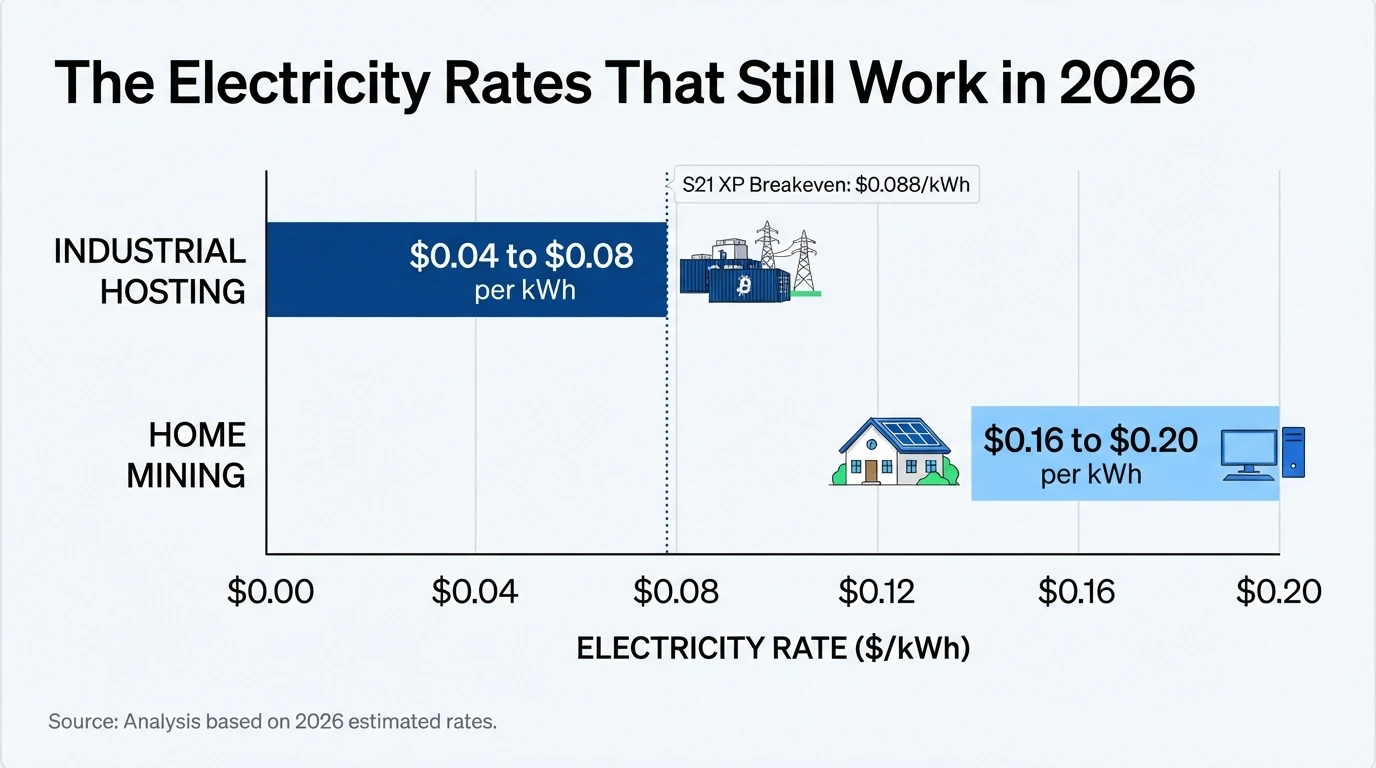
Industrial Hosting vs. Home Mining: Two Different Realities
Hosting contracts lock in wholesale power, often near hydro dams or stranded gas, so operators keep 42-60% margins at $0.07 per kWh. A home miner paying $0.15 pays more than double for the same hashrate. Before committing a rig, compare your utility bill against the 2026 hosting rate benchmarks by region. Location, not machine choice, drives the outcome.
Bitcoin Mining Profitability Calculator
Estimate Bitcoin mining profit from your ASIC hashrate, power use, electricity cost, pool fee, and current network difficulty.
Miner details
Estimated results
Estimates assume 144 blocks per day and use network difficulty to derive implied network hashrate. Results exclude taxes, downtime, hardware depreciation, cooling, repairs, and future difficulty changes. Bitcoin difficulty adjusts roughly every two weeks and higher difficulty reduces earnings per unit of hashrate. [33][36]

When Electricity Costs 3 to 5 Times More, the Math Breaks
Above $0.10 to $0.12 per kWh, most home rigs cannot cover power, let alone hardware payback. At $0.07, an S21 XP costs about $184 monthly to run; at triple the rate, power alone wipes out revenue. Analysts tracking Bitcoin mining costs per BTC find only sub-8-cent power stays viable this cycle.
How Operators Are Responding: Stranded Power, Edge Sites, and the AI Pivot
Bitcoin miner profitability energy costs have pushed operators to chase power nobody else wants. The cheapest kilowatt-hours sit at the edge of the grid, where oil fields burn off natural gas they cannot sell.
Edge-of-Grid Mining and the Flare-Gas Trade
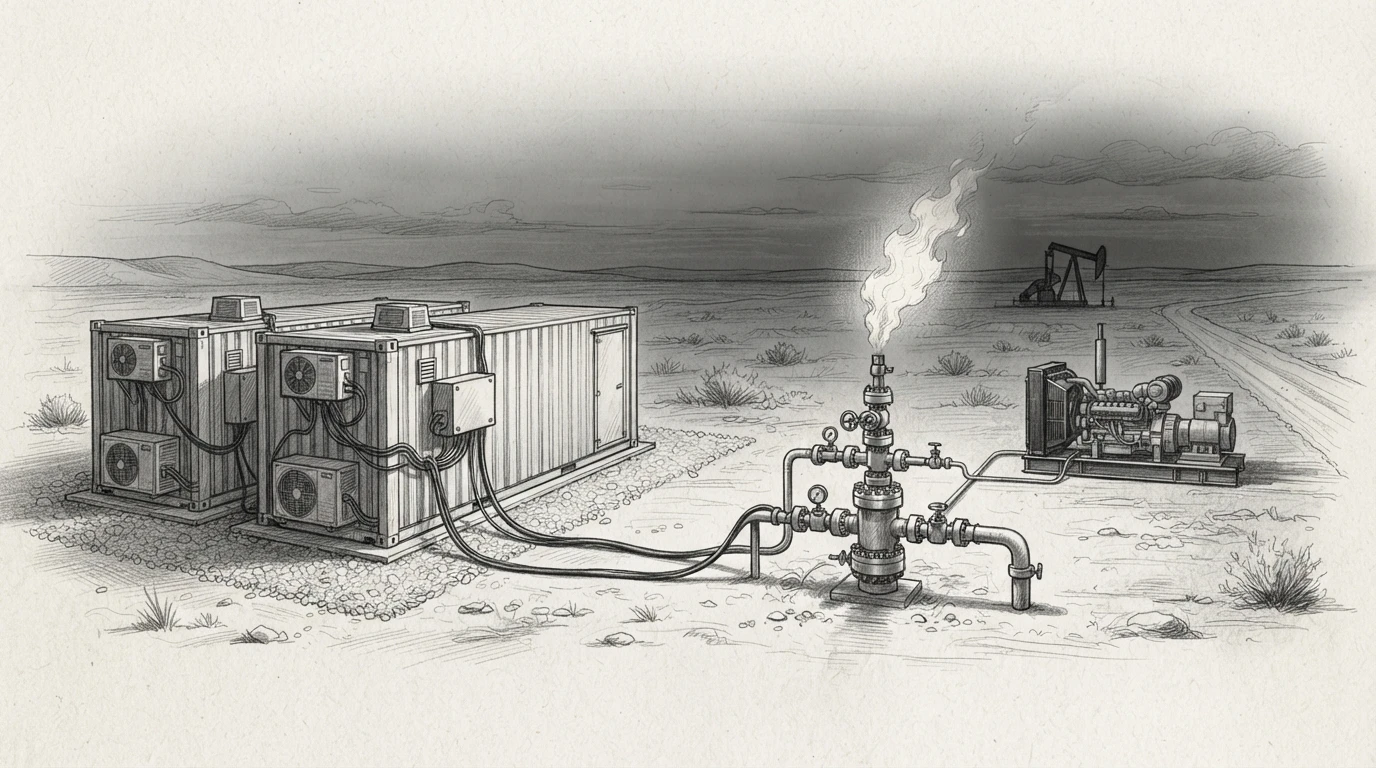
Flare-gas mining turns a waste product into revenue. Operators drop modular containers of ASICs next to wellheads and buy stranded gas at steep discounts, often below grid power. The rigs run where transmission lines end, so they skip utility rates entirely and land closer to the $0.04 to $0.06 industrial range. The trade-off is mobility: when a well runs dry, the containers move to the next site. That flexibility is exactly why hosting deals near stranded gas keep the 42-60% margins noted earlier.
When the Answer Is AI, Not Mining
Some operators concluded mining itself is the problem. As Data Center Knowledge reports, miners are retooling sites for GPU workloads because AI tenants pay more per megawatt than hash price does. Morgan Stanley still sees power shortages through 2028 even if every mining site converts, which explains the demand. The economics beat squeezing margins from $29 per petahash-second. Our mining economics guide tracks which miners hold AI-ready capacity.
Why Energy Costs Are the Lever, Not the Side Note
Hash price and difficulty move on their own; you cannot control either. Your power rate is the one variable you set, and it decides whether Bitcoin miner profitability and energy costs work together or against you. At $0.07 per kWh, an S21 XP clears its costs with room to spare. At residential rates above $0.10 to $0.12, most rigs cannot cover power alone.

Your margin depends on your power rate. Track Bitcoin miner profitability energy costs daily with Crypto Cobra, where real-time hash price and cost data guide your next move.
Frequently Asked Questions
Q1: Explain how energy costs are affecting Bitcoin mining profitability.
Power is a fixed bill while hash price fell to about $29 per PH/s/day, squeezing margins toward zero. At residential rates above $0.10-$0.12 per kWh, most rigs cannot even cover electricity.
Q2: What electricity rate do I need to mine Bitcoin profitably in 2026?
Efficient rigs like the S21 XP break even near $0.088 per kWh. Aim for sub-8-cent power, ideally $0.04-$0.07 through industrial hosting or flare-gas sites.
Q3: Is home mining still worth it?
Usually not. Residential rates of $0.16-$0.20 per kWh run three to five times industrial costs, so hardware payback is unrealistic unless you have very cheap power.
Q4: Why did mining difficulty fall three times in a row?
Unprofitable machines went offline as prices dropped. That capitulation shrinks network hashrate, which slightly raises earnings for operators still running at low cost.
Conclusion
Bitcoin miner profitability now comes down to one number: your power rate. With production costs near $79,995 and hash price at $29, only sub-8-cent electricity keeps rigs running. Operators surviving this cycle locked in cheap power early, through hosting, flare gas, or AI conversions.