What Is Bitcoin? Complete Guide
Bitcoin (BTC) is the world’s first decentralized cryptocurrency, enabling secure peer-to-peer digital transactions without the need for banks or governments. Launched in 2009, Bitcoin introduced a new financial system powered by blockchain technology. To fully understand what bitcoin is we need to know who created it and how it works.
Bitcoin operates on a public distributed ledger known as the blockchain, where a global network of computers (nodes) verifies and records transactions using cryptography. This system prevents double-spending and ensures transparency, as all transactions are publicly visible and nearly impossible to alter.
Why Bitcoin Was Created
Bitcoin was created in response to fundamental flaws in traditional financial systems.
After the 2008 financial crisis, trust in banks and centralized institutions was shaken. Satoshi Nakamoto introduced Bitcoin as a way to remove reliance on third parties and give individuals full control over their money.
Bitcoin solves key problems in legacy finance:
- Trust: No need to rely on banks or intermediaries
- Censorship: Transactions cannot easily be blocked or reversed
- Inflation: Fixed supply prevents unlimited money printing
- Control: Users hold their own funds, not institutions
This is what makes Bitcoin fundamentally different from traditional currencies.
👉 For a deeper comparison, see: Bitcoin vs Fiat Money
How to Buy and Use Bitcoin (Beginner Path)
Getting started with Bitcoin is easier than most people think—but doing it correctly and safely is critical.
At a basic level, the process involves:
- Choosing a trusted exchange
- Buying Bitcoin
- Moving it to your own wallet
- Learning how to send and receive transactions
However, beginners often make mistakes like:
- leaving funds on exchanges
- using insecure wallets
- misunderstanding fees
👉 Learn more:
These guides walk you step-by-step through buying, storing, and using Bitcoin securely.
Bitcoin History
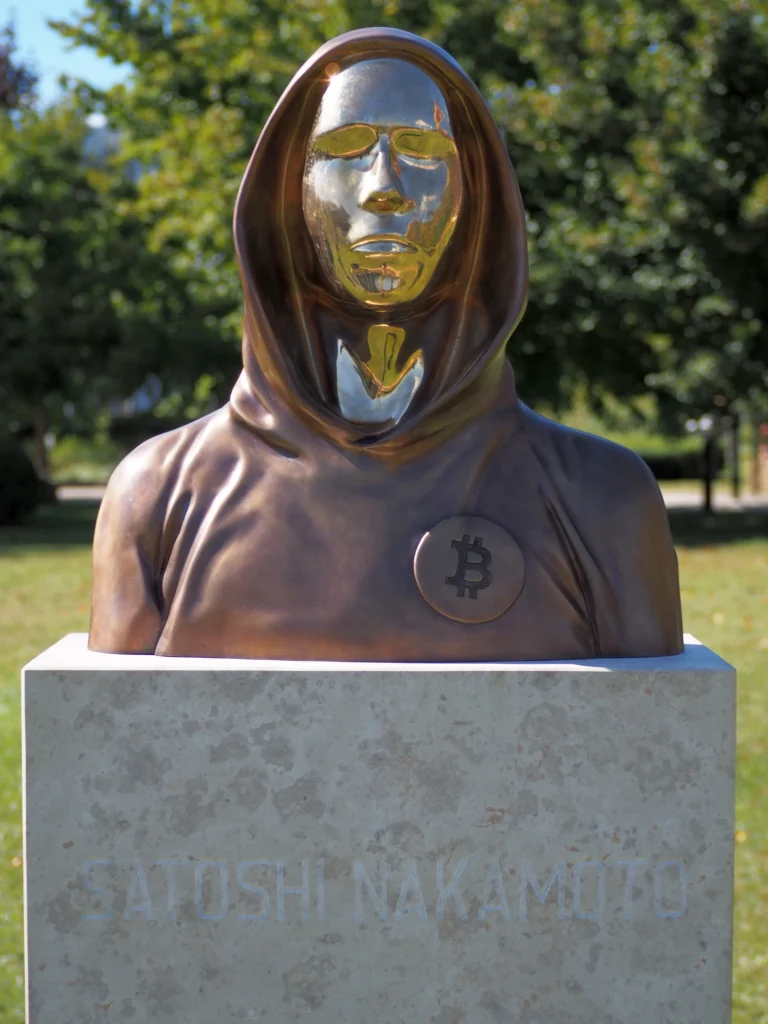
Bitcoin was introduced in 2008 by an anonymous individual or group known as Satoshi Nakamoto, who published the whitepaper “Bitcoin: A Peer-to-Peer Electronic Cash System.”
The network officially launched on January 3, 2009, with the creation of the genesis block, which famously included a reference to bank bailouts.
Early adoption was limited, but Bitcoin gained traction over time. By 2017, it entered the mainstream with growing investor interest. In 2024–2025, major developments such as spot Bitcoin ETFs in the United States further accelerated adoption. Some countries, like El Salvador, even experimented with Bitcoin as legal tender.
How Does Bitcoin Work?
Bitcoin transactions begin when users send BTC from one wallet to another. Each transaction is signed using a private key and broadcast to the network.
Miners then compete to validate transactions by solving complex proof-of-work puzzles. Once verified, transactions are grouped into blocks and added to the blockchain approximately every 10 minutes.
This process secures the network and ensures that all transactions are accurate and tamper-resistant.
Key Bitcoin Features
Bitcoin has several unique characteristics that set it apart from traditional currencies:
- Limited Supply: Bitcoin has a fixed supply of 21 million coins, creating scarcity similar to gold.
- Decentralized: No central authority controls the network.
- Secure: Cryptography and consensus mechanisms protect against fraud.
- Divisible: One Bitcoin can be divided into 100 million units called satoshis.
- Pseudonymous: Transactions are tied to wallet addresses, not personal identities, but remain traceable on the blockchain.
Bitcoin Mining Explained
Bitcoin mining is the process of validating transactions and adding them to the blockchain. Miners use specialized hardware (ASICs) to perform calculations and secure the network.
As a reward, miners receive newly created Bitcoin along with transaction fees. Following the 2024 halving, the block reward is 3.125 BTC.
Mining pools are commonly used to generate more consistent rewards, while environmental concerns have led to increased use of renewable energy sources.
Buying and Using Bitcoin
Bitcoin can be purchased on cryptocurrency exchanges such as Coinbase using traditional (fiat) currency.
Once purchased, Bitcoin should be stored in a secure wallet. Users can:
- Hold BTC as a long-term investment
- Send it globally
- Spend it with merchants that accept Bitcoin
Transaction fees vary depending on network activity. For faster and cheaper payments, the Lightning Network enables near-instant microtransactions.
Bitcoin Price and Value
Bitcoin reached major milestones in recent years, surpassing $100,000 during periods of strong institutional demand and ETF adoption.
Its value is driven by:
- Scarcity (fixed supply)
- Adoption and demand
- Network effects
Unlike traditional currencies, Bitcoin is not backed by physical assets but by its decentralized network and global consensus.
Bitcoin vs Other Cryptocurrencies (High-Level)
While thousands of cryptocurrencies exist, Bitcoin remains fundamentally different.
Why Bitcoin stands apart
- First and most decentralized network
- Strongest security and longest track record
- Fixed supply (21 million coins)
- No central authority or foundation controlling it
Most other cryptocurrencies:
- have higher supply inflation
- rely on centralized teams
- prioritize features over security
Bitcoin focuses on being:
👉 sound money first, technology second
Bitcoin vs Altcoins
Altcoins (alternative cryptocurrencies) often aim to improve speed, features, or scalability—but usually at the cost of decentralization or security.
👉 Full comparison coming soon: Bitcoin vs Altcoins
Bitcoin vs Ethereum
Ethereum is designed as a programmable blockchain for applications, while Bitcoin is optimized for storing and transferring value securely.
👉 Full breakdown coming soon: Bitcoin vs Ethereum
Where to Go Next
If you’re just getting started, the best next step is to move from understanding Bitcoin to actually using it.
👉 Recommended next steps:
Or continue learning fundamentals:
👉 Visit the Bitcoin Fundamentals Hub
Faqs
What Is Bitcoin?
Bitcoin is a decentralized digital currency using blockchain for secure, peer-to-peer transactions without intermediaries.
Bitcoin Whitepaper?
The 2008 whitepaper by Satoshi Nakamoto introduced Bitcoin as electronic cash, solving double-spending via proof-of-work.
Who Invented Bitcoin?
Satoshi Nakamoto created Bitcoin in 2008; identity remains unknown.
Why Digital Gold?
Bitcoin’s 21M cap and scarcity make it “digital gold” as an inflation hedge.
Max Bitcoin Supply?
21 million BTC total; ~19.95M mined as of 2026.
What Is Halving?
Every 210k blocks (~4 years), rewards halve to slow issuance; next post-2024.
How Does Bitcoin Work?
Transactions verified by miners on blockchain via proof-of-work consensus.
Bitcoin Transaction Fees?
Fees incentivize miners; vary with network demand.
Minimum Bitcoin Amount?
Satoshi (sat): 0.00000001 BTC, enabling tiny transfers.
Can You Mine Bitcoin?
Yes, with ASICs; profitable for large ops, not solo home mining.
Final Thoughts
Bitcoin has evolved from a niche experiment into a global financial asset that continues to reshape how people think about money, ownership, and trust.
At its core, Bitcoin is more than just a digital currency — it’s a decentralized system that removes the need for intermediaries and gives individuals greater control over their finances. Its fixed supply, transparent network, and growing adoption make it one of the most important innovations in modern finance.
However, like any emerging technology, Bitcoin comes with both opportunities and risks. Understanding how it works is the first step toward making informed decisions, whether you’re investing, using it for transactions, or simply exploring the space.
If you’re just getting started, take your time to learn the fundamentals, explore how the network operates, and build a solid foundation before diving deeper into the crypto market.
Want to go deeper? Read our complete Bitcoin guide → /bitcoin