Quick Summary Altcoin Trends News: The apparent rotation into smaller altcoins is not a confirmed altseason, because stablecoin supply fell $14.2 billion in 30 days, USDT dominance rose to about 8.25%, and the Altcoin Season Index remained at 39. Price gains appear driven by bitcoin profit-taking, bargain hunting in beaten-down tokens, and thin liquidity rather than fresh capital entering the market. A genuine rotation would require stablecoin supply to grow, USDT dominance to fall, and the index to clear 75, with current buying focused mainly on DeFi, layer-2, AI, and gaming tokens.
Altcoin Trends News
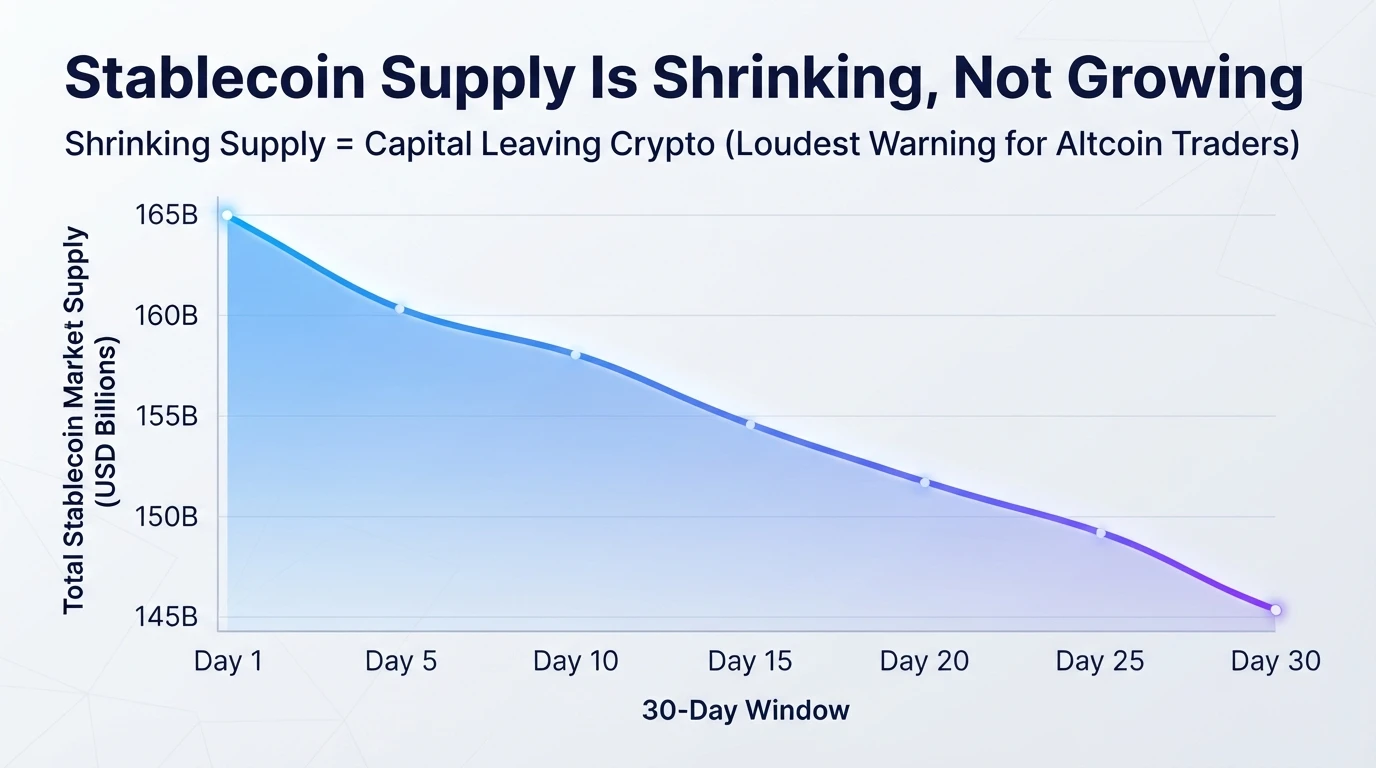
Traders are talking up a rotation into altcoins again, and altcoin trends news feeds make it look convincing: bitcoin dominance slipped below 60% in mid-November 2026. But the flows say otherwise. Stablecoin supply fell $14.2 billion in 30 days, and USDT dominance jumped to roughly 8.25%, which reads as defensive, not bullish. Both moves look identical on a chart, so we test each rotation claim against on-chain data before you position for an altcoin rotation 2026 rally.
What Is Driving the Rotation Into Smaller Coins
Three forces are driving the current rotation into altcoins: traders are taking profits on bitcoin and parking gains in smaller coins, lagging tokens look cheap after months of underperformance, and thin liquidity turns small buying into outsized price moves.
- Profit-taking flows – gains from bitcoin get recycled down the risk curve
- Cheap-looking laggards – beaten-down altcoins attract bargain hunters
- Thin liquidity – small inflows move prices fast, which draws more traders in
Profit-Taking Flows Are Feeding the Trade
Bitcoin’s run left many holders deep in profit. Some lock gains by selling coins and buying altcoins instead of cashing out fully. That keeps money inside crypto and lifts smaller tokens first, especially DeFi and layer-2 names that traders already know.

Lagging Tokens Look Cheap on Paper
Tokens that slept through the rally show big gaps against their past highs. Charts invite the “catch-up trade”: buy the laggard before it plays favorites. The catch is that cheap rarely means undervalued. Many laggards lag for real reasons, like weak usage or token unlocks ahead, so a discount can widen rather than close.

Thin Liquidity Is the Amplifier
Smaller coins trade on shallow order books, so even modest inflows push prices up hard. That sudden move shows on screens, gets clipped and shared, and pulls in fresh buyers chasing momentum. Fast gains also mean fast losses when flows reverse. With stablecoin supply down $14.2 billion in 30 days, the fuel behind this amplifier is thinner than the price action suggests.
Is This Real Rotation or a Cash Dash
No, altseason has not started in 2026. Three gauges argue against the hype:
- Stablecoin supply: down $14.2 billion in 30 days, not rising
- USDT dominance: near 8.25%, a defensive signal
- Altcoin Season Index: 39, well below the 75 threshold
Stablecoin Supply Is Shrinking, Not Growing
Real rotation needs fresh money. Stablecoin supply is contracting, which means capital is leaving crypto, not moving from bitcoin into smaller coins. Price gains without new cash rarely last. Watch for supply to flatten or grow before trusting any rally. Traders tracking altcoin rotation in 2026 should treat shrinking stablecoins as the loudest warning.
USDT Dominance Is the Tell
When USDT dominance climbs, traders are parking money in stablecoins rather than buying risk. Rising USDT dominance alongside falling bitcoin dominance often means simple profit-taking. Money flows out of the market, not down the risk curve into altcoins. Only a falling USDT share with steady stablecoin supply supports genuine rotation.
The Altcoin Season Index Has Not Confirmed Anything
The Altcoin Season Index sits at 39, far under the 75 level that confirms altcoin season. That reading says bitcoin still outperforms most top altcoins over 90 days. Nothing is confirmed until the index clears that bar, so treat current altcoin strength as noise.
Where the Money Is Actually Landing
The Sectors Leading the Bid
So which altcoin sectors are traders rotating into? The flow is narrow, not broad:
- DeFi protocols with real fee revenue
- Layer-2 networks riding cheaper transactions
- AI and gaming tokens on fresh narratives
That matches 2026 sector data from KuCoin’s market comparison, which flags layer-2 expansion and DeFi as the main growth lanes. We track these shifts weekly in our altcoin trends coverage, where the pattern holds: leadership rotates by sector first, and breadth only arrives late.
Names Getting Attention, Not Recommendations
Specific tokens, like major layer-2 leaders, dominate headlines, but attention is not allocation. Phemex’s layer-2 ranking lists the usual names, yet thin liquidity means small orders move prices fast. Confirm any single-name bet with the same ladder used above: stablecoin supply first, USDT dominance second, the index last.
How We Got Here
2026 Was a Bitcoin Season
Most of 2026 belonged to bitcoin. Bitcoin dominance stayed in the 58% to 61% range, and the Altcoin Season Index sat at 39 for months. Big capital flowed into exchange-traded funds, not small caps, so altcoins lagged badly.
Why the Base Matters for Small Caps
That base shapes what comes next. A rotation from bitcoin works only when money leaves the largest coin and lands in smaller ones. That also mirrors our earlier bitcoin dominance breakdown, where dominance dips alone never confirmed a real shift.
Conclusion
Altcoin trends news may show rotation, but the data disagrees: shrinking stablecoin supply, rising USDT dominance, and an Altcoin Season Index of 39 all point to a cash dash, not altseason. Recheck those three gauges weekly before trusting any altcoin rotation 2026 claim.