If you have spent any time exploring the cryptocurrency market, you have likely come across the Stellar XLM Coin. While many digital assets dominate the headlines with volatile memes or complex decentralized finance (DeFi) experiments, Stellar has spent over a decade quietly building the infrastructure to solve a very specific, massive global problem: the slow, expensive, and fragmented nature of cross-border payments.
Whether you are here to check the Stellar price, understand the technology behind its fast transfers, or evaluate whether you should invest in XLM in 2026, this guide covers everything you need to know. We will break down exactly how the payment network functions, explore its real-world utility, and analyze the market factors driving the XLM price prediction today.

What is Stellar XLM Coin?
At its core, Stellar is an open-source, decentralized payment network designed to connect the world’s financial infrastructure. Its primary goal is to allow money to move globally as quickly and easily as an email.
XLM, or Stellar Lumens, is the native cryptocurrency of the Stellar network. While the network can tokenize and transfer any form of value—such as US Dollars, Euros, or even gold—the XLM coin plays a vital role in keeping the system secure and functioning. Every transaction on the network requires a tiny fraction of an XLM coin to be paid as a fee, and every active account must hold a small minimum balance of XLM. This design prevents spammers from overwhelming the network with junk transactions.
The Problem Stellar Solves
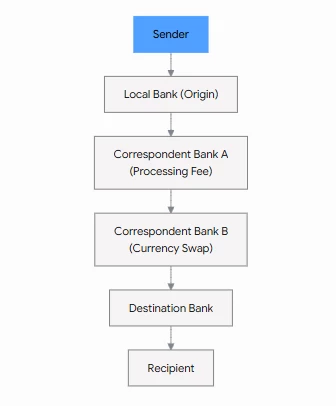
The traditional financial system is highly fragmented. If a worker in the United States wants to send money to family in the Philippines, that transaction typically relies on a web of correspondent banks. It can take three to five business days to settle and may incur fees ranging from 5% to 10% of the total amount.
Stellar acts as a unified translation layer. By tokenizing fiat currencies on its distributed ledger, Stellar allows institutions, fintechs, and everyday users to execute cross-border payments that settle in roughly five seconds, for a fraction of a cent.
Stellar XLM Price Today
For investors and traders, monitoring the Stellar price is essential. As of mid-2026, checking a live chart shows the XLM price fluctuating in the mid-$0.10s (roughly $0.14 to $0.16), representing a period of significant consolidation following broader macroeconomic shifts and the aftermath of the 2025 altcoin cycles.
Here is a snapshot of how to read the live market data for the Stellar XLM Coin:
- Market Cap: The total market capitalization of XLM typically hovers around $4.5 billion to $5.5 billion, placing it firmly among the top established altcoins in the market.
- Circulating Supply: There are approximately 33 billion XLM coins currently in circulation.
- Total Supply: The maximum supply is permanently capped at 50 billion XLM. The Stellar Development Foundation (a nonprofit foundation that supports the network) holds the remaining supply to fund ecosystem development, partnerships, and developer grants.
- Trading Volume: The 24-hour trading volume often measures in the hundreds of millions, reflecting deep liquidity across major exchanges.
When analyzing the price today, it is important to separate network utility from speculative crypto market cycles. While the Stellar network processes millions of transactions daily, the XLM price remains heavily correlated with broader crypto liquidity, Bitcoin dominance, and shifting narratives around altcoins.
How Stellar Works
To understand why financial institutions trust this network, you have to look under the hood. Stellar abandons the energy-intensive mining process used by Bitcoin in favor of a unique consensus mechanism.
The Stellar Consensus Protocol (SCP)
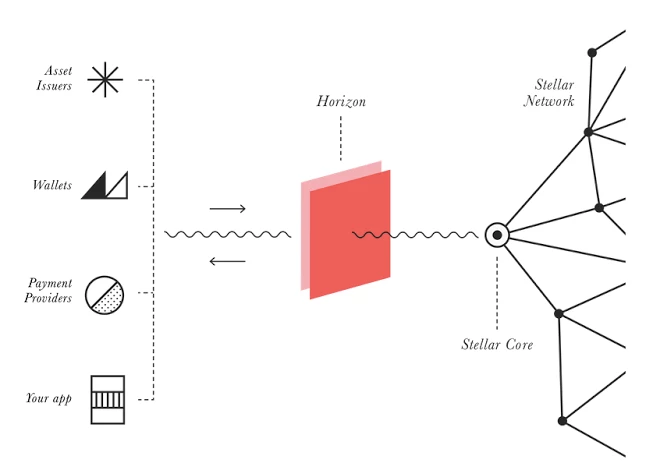
Most people associate blockchain with “Proof of Work” (mining) or “Proof of Stake” (locking up tokens). Stellar uses neither. Instead, it relies on the Stellar Consensus Protocol, a federated Byzantine agreement system.
In simple terms, SCP relies on a network of trusted nodes (servers) that communicate with one another to agree on the state of the distributed ledger every few seconds. Because it does not require heavy computational power to solve cryptographic puzzles, SCP allows for incredibly fast settlement times and keeps the network highly eco-friendly.
The Role of Anchors
A blockchain is only useful if it can interact with the real world. This is where anchors come in. Anchors are trusted entities—usually banks, licensed money transmitters, or fintech companies—that act as bridges between the Stellar network and traditional fiat currencies.
If you deposit US Dollars with an anchor, they issue a tokenized version of those dollars on the Stellar network. You can then send those tokenized dollars across the globe in seconds. When the recipient wants to withdraw the funds in their local currency, a local anchor redeems the digital tokens and hands over the physical fiat.
Built-in Decentralized Exchange (DEX)
One of Stellar’s most powerful native features is its built-in decentralized exchange. If you want to send Euros to a friend in Mexico, but you only hold US Dollars, the network will automatically search its internal order books to find the best exchange rate. It will instantly convert your USD tokens into MXN tokens and deliver them to the recipient, seamlessly bridging the currency gap.
Cross-Border Payment Flows
Why XLM Has Real-World Utility
While many cryptocurrencies search for a problem to solve, the Stellar XLM Coin was engineered from day one to tackle the friction in global finance.
1. Cross-Border Payments and Remittances
The remittances market is a multi-billion dollar industry where individuals send money across borders to support their families. Historically, this process is plagued by high fees. Stellar’s low-cost transfers mean a migrant worker can send value home without losing a massive percentage to intermediaries. Organizations like MoneyGram have actively integrated Stellar to allow users to easily cash in and cash out of digital assets at physical retail locations worldwide.
2. Fast Transactions and Micro-Payments
Because the network settles in roughly 3 to 5 seconds and costs a fraction of a cent per transaction, it unlocks the ability to send micro-payments. Content creators, ride-sharing platforms, and IoT (Internet of Things) devices can utilize the network to stream tiny fractions of value in real-time, something impossible on legacy payment rails.
3. Institutional Interoperability
Stellar is fundamentally built for interoperability. The network is aligned with the ISO 20022 financial messaging standard, which is the global language used by SWIFT and central banks. This compliance ensures that traditional financial institutions can plug into Stellar’s distributed ledger without having to rebuild their entire backend architecture.
Is Stellar XLM a Good Investment in 2026?
For those looking to invest in XLM, evaluating the asset requires weighing its undeniable fundamental utility against the realities of cryptocurrency market dynamics.
The Bull Case: Adoption and Smart Contracts
The narrative for the Stellar crypto has expanded significantly by 2026. The introduction of Soroban, Stellar’s native smart contract platform, has transformed the network from a simple payments rail into a fully programmable ecosystem.
Furthermore, Stellar has become a powerhouse in the Real-World Asset (RWA) tokenization space. With over $1.2 billion in tokenized assets currently hosted on the network—including major US Treasury funds managed by giants like Franklin Templeton—the institutional footprint is undeniable. Additionally, early 2026 brought a massive regulatory milestone when US regulators formally classified XLM as a digital commodity, clearing a path for broader institutional custody and investment without the overhang of securities law violations.
The Bear Case: Price Stagnation and Competition
Despite its massive real-world utility, the XLM price has historically struggled to generate the explosive speculative returns seen by newer Layer-1 blockchains or AI-driven tokens. Because Stellar focuses on enterprise infrastructure and stablecoin settlement (where the value moves in USDC or EURC, rather than XLM itself), high network usage does not always translate to immense buying pressure for the XLM coin.
Additionally, Stellar faces fierce competition. Traditional fintechs are becoming faster, Central Bank Digital Currencies (CBDCs) are being tested globally, and direct competitors like Ripple (XRP) command significant market share in the institutional settlement space.
Stellar XLM Price Prediction Factors
When looking at an XLM price prediction, keep an eye on these catalysts:
- Network Usage: Spikes in on-chain volume and the deployment of new stablecoins.
- Institutional Partnerships: New financial institutions leveraging Soroban for tokenization.
- Market Cycle Sentiment: XLM generally moves with the broader market. A strong rotation of capital into utility-focused altcoins is necessary for sustained price appreciation.
How to Buy Stellar XLM Coin
Because Stellar Lumens has been a top-tier asset for years, buying it is incredibly straightforward. It is supported by almost every major platform globally.
1.Choose a Cryptocurrency Exchange:Ensure the exchange supports your local fiat currency.
Top-tier exchanges like Coinbase, Binance, Kraken, and Bitstamp all offer deep liquidity for XLM. Select a platform that complies with your local regulations and offers a transparent fee structure.
2.Fund Your Account:Use a bank transfer or debit card.
Once your identity is verified (KYC), deposit your local fiat currency. Bank transfers are typically the cheapest method, though they may take a few days to clear compared to instant card purchases.
3.Buy XLM:
Navigate to the trading interface, search for the XLM/USD (or your local currency) trading pair, and execute a market or limit order.
4.Secure Your Tokens:Move assets off the exchange for long-term holding.
If you plan to hold your Stellar crypto for an extended period, withdraw it to a secure, self-custodial wallet. Hardware wallets like Ledger or network-specific software wallets like Lobstr provide excellent security and give you full control of your private keys.
Risks to Know Before Buying
Before you add XLM to your portfolio, it is vital to acknowledge the inherent risks:
- Market Volatility: Like all cryptocurrencies, the XLM price is highly volatile. It is susceptible to aggressive drawdowns during macroeconomic uncertainty or Bitcoin-led market corrections.
- Adoption Risk: While the technology is stellar, banks are notoriously slow to adopt public distributed ledgers. If institutions opt for private, permissioned blockchains instead of public networks, Stellar’s growth could stall.
- Narrative Risk: In the crypto space, attention dictates price. Because Stellar is an established, infrastructure-focused project, it often gets overlooked by retail traders chasing the newest trends, which can lead to prolonged periods of price stagnation even when fundamentals improve.
FAQ
What is Stellar Lumens?
Stellar is the name of the payment network and distributed ledger, while Lumens (ticker symbol: XLM) is the native cryptocurrency that powers the network. The terms are often used interchangeably, but technically, you are buying Lumens to use on the Stellar network.
Is XLM the same as Stellar?
XLM is the digital asset; Stellar is the blockchain protocol. You can think of Stellar as the highway and XLM as the toll required to drive on it.
What is XLM used for?
XLM is primarily used for two things: to pay the microscopic transaction fees required to execute a transfer on the network, and to serve as a bridge currency when the network’s decentralized exchange cannot find a direct trading pair between two illiquid fiat currencies.
Can you mine XLM?
No. Unlike Bitcoin, you cannot mine XLM. The total supply of 50 billion coins was created at the network’s inception. The network relies on the Stellar Consensus Protocol, which uses trusted nodes to validate transactions rather than energy-intensive mining rigs.
What makes Stellar different from XRP and other payment coins?
While both Stellar and Ripple (XRP) focus on cross-border payments, they target different segments. Ripple historically focused heavily on acting as a direct settlement layer for massive, tier-one global banks. Stellar, run by a nonprofit foundation, was designed with a focus on financial inclusion, aiming to connect smaller institutions, payment processors, and the unbanked. Furthermore, Stellar’s recent integration of the Soroban smart contract platform gives it broader programmable utility compared to standard payment coins.