Bitcoin Cobra reports
Table of Contents
Introduction
Brand context and objectives
At Crypto Cobra, we deliver educational content that . We focus on Bitcoin basics, crypto investigations, and practical market insights you can apply from day one. Our approach is independent and data driven, aiming to clarify complex topics without fluff.
We build guides, reviews, and analyses to show how Bitcoin fits into broader crypto dynamics. Our language is direct, our tone is professional, and we ground every claim in solid data and observed trends.
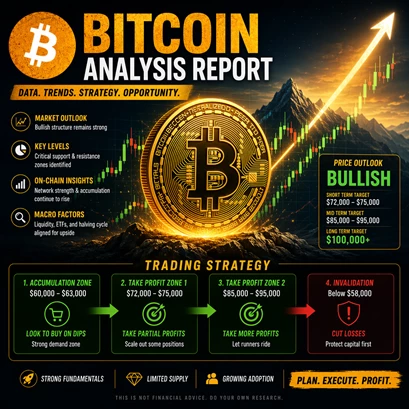
Grab a Free Bitcoin Analysis Report now:
What readers will learn
You will gain a clear framework for tracking Bitcoin and evaluating crypto markets. Our sections cover essential concepts, from transaction basics to advanced analytics, so you can spot opportunities and manage risk.
- Bitcoin tracking fundamentals and how to read on-chain signals
- Intro to crypto investigations and the role of blockchain analytics
- Key terms in fraud detection, anti-cybercrime, and law enforcement collaboration
By the end, you should feel confident interpreting market moves, assessing risk, and applying core concepts to real-world scenarios. This section sets the foundation for deeper dives into trading frameworks, DeFi intersections, and mining strategies that follow.
2. Bitcoin Security and Privacy Essentials
Best practices for safeguarding holdings
You protect value by combining secure storage with careful operational habits. Start with a layered approach that minimizes risk from device loss, theft, and malware.
- Use hardware wallets for major holdings to keep keys offline.
- Enable multi-signature setups to require multiple approvals for transfers.
- Keep backups of seed phrases in physically secure locations separate from devices.
- Regularly update firmware and software to mitigate known vulnerabilities.
- Practice safe signing habits and verify addresses before transactions.
Privacy matters in crypto investigations as well as everyday use. Limit exposure by avoiding linking wallets to personal identifiers where possible, and monitor for unusual activity that could indicate compromise.
Understanding private keys and wallets
Private keys grant access to Bitcoin and authorize spending. They must remain confidential and protected from loss or exposure.
- Private keys should never be shared or stored in plain text on internet-connected devices.
- Wallets come in forms from hot to cold; hot wallets are convenient, cold wallets are safer for long-term storage.
- Seed phrases reconstruct access when devices fail; treat them as indispensable recovery data.
- Choosing a wallet involves assessing security features, recovery options, and compatibility with your workflow.
- Public addresses reveal transaction history but do not expose private keys; balance visibility varies by wallet design.
In crypto investigations and blockchain analytics, understanding how keys and wallets map to transactions helps trace digital breadcrumbs while respecting privacy safeguards and legal constraints.
3. Trading Frameworks for Crypto Cobra
Risk management foundations
Establishing a disciplined risk framework is essential for crypto tracking and investigations. Start with clear position sizing and predefined loss limits to protect capital during volatile moves.
- Set maximum drawdown thresholds to stop losses before risk compounds.
- Define daily, weekly, and monthly risk caps aligned with your portfolio size.
- Use stop orders and risk-adjusted targets to automate discipline.
- Maintain a trade diary to analyze what works and what does not, improving crypto intelligence over time.
Technical vs. fundamental analysis in crypto
Crypto Cobra blends two complementary lenses. Technical analysis helps you read price action and on-chain signals, while fundamentals guide long-term context and credibility of moves.
- Technical analysis focuses on chart patterns, volume, and momentum indicators to time entries and exits.
- Fundamental analysis examines project legitimacy, liquidity, and macro drivers influencing Bitcoin transactions and transfers.
- For crypto investigations, combine on-chain metrics with price-based signals to spot anomalies and persistence of trends.
- Balance speed and depth: use fast technical reads for timely actions and deeper fundamentals for higher-conviction bets.
| Aspect | Technical | Fundamental | Integrated Approach |
|---|---|---|---|
| Data source | Price, volume, momentum | Network health, liquidity, governance | On-chain signals plus price context |
| Use case | Timing entries and exits | Assessing sustainability and risk | Balanced decision making |
| Strength | Speed and responsiveness | Longer-term validation | Actionable, robust signals |
4. DeFi and Bitcoin Intersections
How Bitcoin interacts with DeFi
Bitcoin remains a foundational value anchor within DeFi ecosystems, even as rails evolve beyond pure smart contracts. Bridges, wrapped tokens, and oracle services enable BTC to participate in liquidity pools, lending, and yield opportunities without altering its native properties.
- Wrapped Bitcoin tokens enable Bitcoin to participate in Ethereum-based DeFi while preserving Bitcoin’s native value.
- Cross-chain bridges move BTC across networks, supporting lending, borrowing, and yield opportunities.
- On-chain oracles provide price signals to DeFi protocols using Bitcoin as a reference asset.
- Bitcoin-backed collateral enhances risk management in diversified lending pools.
Cobra-approved DeFi strategies
Strategies in the DeFi space should emphasize security, transparency, and risk discipline. The Cobra framework focuses on robust controls and clear governance.
- Use reputable bridges with proven security audits to minimize counterparty risk in BTC moves between chains.
- Limit exposure by allocating a defined portion of holdings to DeFi activities, keeping core BTC in secure storage.
- Prefer protocols with transparent upgrade paths and community oversight to reduce governance risk.
- Monitor transaction traces and on-chain activity to detect unusual or potentially malicious flows early.
5. Mining and Passive Income with Bitcoin
ASIC mining basics
ASIC miners are purpose-built for Bitcoin’s hashing algorithm. They maximize efficiency but come with high upfront costs and ongoing power demands.
- Assess hash rate against electricity costs to estimate break-even periods.
- Evaluate firmware options and cooling solutions to maintain performance and longevity.
- Secure access to reputable mining pools and stable payout schedules for consistent income.
Staking alternatives and yield opportunities
Bitcoin itself does not support traditional staking, but there are passive income paths tied to the broader crypto ecosystem. These approaches hinge on security, liquidity, and regulatory clarity.
- Mining co-ops and hosting services can spread hardware costs while sharing rewards.
- Hash power leasing offers liquidity without direct ownership of rigs, but introduces counterparty risk.
- BTC-backed lending and custody products may generate yield through collateralized loans.
- Staking-like yields can appear in related networks where BTC is used as collateral or liquidity in DeFi layers.
| Option | Key Considerations | Typical Yield Drivers |
|---|---|---|
| ASIC mining | Hardware costs, power, cooling, pool fees | Block rewards, network difficulty, electricity price |
| Hash power leasing | Counterparty risk, contract terms | Hash rate demand, contract pricing |
| BTC-backed lending | Collateral requirements, risk controls | Interest rates, loan demand |
6. Market Analysis Case Studies
Recent notable moves and their drivers
During the prior cycle, Bitcoin price action aligned with shifts in macro conditions and on-chain activity. Analysts observed liquidity reorderings on exchange desks and spikes in wallet movements linked to key market participants. These patterns often reflect demand for safer assets amid geopolitical uncertainties or clearer regulatory signals.
Case studies showed how cross-border capital flows, coordinated by OTC desks, could move prices without direct exchange announcements. When media narratives matched on-chain indicators, price action could extend beyond a couple of sessions, leading to brief pockets of heightened volatility.
- On-chain fund movements preceded multi-day price gains, suggesting gradual accumulation amid improving liquidity metrics.
- Hash rate and energy-market signals sometimes foreshadow longer-term sentiment shifts despite spot price volatility.
- Regulatory clarifications in major jurisdictions frequently act as catalysts, prompting reactive positioning across wallets and venues.
Lessons learned from real-world scenarios
These moves underscore the value of integrating price context with blockchain analytics. Tracing transaction trails helps distinguish legitimate accumulation from attempts at manipulation.
Effective risk management rests on diversified data sources and disciplined capital deployment. Those who align fundamentals with risk controls tend to weather drawdowns more effectively in uncertain environments.
| Aspect | Observed Dynamic | Implication |
|---|---|---|
| Liquidity shifts | OTC activity and exchange desk rebalances | Potential price pressure without public announcements |
| Geopolitical signals | Regulatory moves and policy signals | Temporary rally or pullback tied to expectations |
| On-chain context | Wallet clustering and transaction flows | Early indicators of sentiment shifts |
FAQ
Below are concise answers to common questions about Bitcoin Cobra reports and related crypto investigations. Each point reflects practical, grounded insights drawn from industry practice.
- What is Bitcoin tracking? It involves tracing Bitcoin transactions across the blockchain to identify origins, destinations, and relationships between addresses. This supports criminal investigations and anti-cybercrime efforts.
- How does blockchain analytics aid law enforcement? Analysts map transaction trails, detect money flows, and correlate on-chain activity with off-chain entities to build cases.
- What is crypto intelligence? It blends on-chain data with open-source information and threat intelligence to identify risk exposures, fraud schemes, and potential adversaries.
- What role do exchanges play in investigations? Exchanges can provide transaction histories, KYC data, and cooperation with authorities when legal processes require it.
- What is involved in fraud detection for Bitcoin? Fraud detection uses pattern analysis, anomaly spotting, and transaction tracing to reveal manipulation, scams, or misrepresentation.
- How does this relate to anti-cybercrime work? Crypto investigations support attribution, recovery efforts, and risk mitigation within broader anti-cybercrime programs.
- Who are the key entities mentioned in these reports? Bitcoin, blockquiry, ACFCS, Brian Monroe, Michael Kane, Shane Hampton, Hydro, Remy St. Felix, and related cybersecurity and law enforcement communities.
Key considerations
- Cross-border attribution challenges require coordination and robust data governance.
- Privacy must be balanced with investigative needs and regulatory compliance.
- Accurate blockchain interpretation depends on quality tooling and experienced analysts.
Conclusion
Crypto Cobra presents a practical path through Bitcoin markets, grounded in clear analysis and disciplined methods. This conclusion reinforces actionable takeaways without fluff.
You should finish with a framework for evaluating moves, managing risk, and spotting early signals in both on-chain activity and price action. The aim is to bring structure to your analysis and reduce guesswork.
- Ground your assumptions in data from trusted blockchain analytics and verified transaction traces.
- Balance technical reads with fundamental context to avoid overreliance on a single signal set.
- Maintain adaptable risk controls that respond to evolving market dynamics and regulatory developments.
| Focus Area | What to Do | Why It Matters |
|---|---|---|
| Bitcoin tracking | Cross-check on-chain breadcrumbs with wallet activity | Clarifies whether moves are allocation driven or manipulative |
| Crypto investigations | Correlate off-chain information with on-chain signals | Strengthens attribution and reduces false positives |
| Fraud detection | Monitor for anomalous patterns and liquidity shifts | Early risk alerts and safer positioning |
Our approach remains independent and education-forward. Continued study of blockchain analytics, market mechanics, and regulatory context will sharpen your edge as the landscape evolves.