A crypto marketing funnel is the planned path that turns scattered Web3 attention into informed token demand, wallet connections, and long-term holders. Done well, it does more than push a sale. It sequences education, community trust, and conversion so people understand the project, the token utility, and the risks before they buy.
This guide defines the crypto marketing funnel, explains why Web3 funnels differ from Web2, maps the stages, and shows how to build one from persona research through tracking and optimization.

Table of Contents
What Is a Crypto Marketing Funnel?
Crypto Marketing Funnel Definition
A crypto marketing funnel is the structured buyer journey from first awareness of a project to a token purchase, and then to retention and advocacy. It connects content, community, paid campaigns, PR, email, wallet onboarding, and post-sale engagement into one conversion path.
The goal is not “more impressions.” The goal is qualified demand: people who understand the token, can complete wallet connection and any required KYC or whitelist steps, and have a reason to hold after the token sale, IDO, or TGE.
A useful crypto funnel strategy answers four questions at every stage:
- What does this user need to believe before moving forward?
- What asset answers that question?
- What action should they take next?
- How will you know they did it?
Crypto Marketing Funnel vs Web2 Marketing Funnel
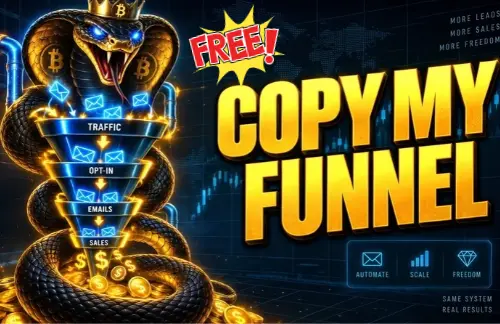
A Web2 funnel usually moves from ad or search visit to landing page, form fill, demo, and purchase. A Web3 marketing funnel adds technical and trust steps that traditional funnels do not have.
Why wallet setup creates extra friction
Many qualified visitors drop off before they ever see a buy button. They may need a compatible wallet, the right network, gas, a seed-phrase backup they trust, and a clear explanation of what “connect wallet” does and does not do. If that path is buried in a Discord thread, conversion suffers even when the offer is strong.
Why trust and token education matter more
Token buyers are not only evaluating a product. They are evaluating smart-contract risk, tokenomics, team credibility, liquidity, and whether the token has real utility. Audits, a readable whitepaper, transparent token allocation, and plain-language risk disclosure are funnel assets, not footnotes.

Why Crypto Funnels Are Different From Traditional Funnels
Web3 attention is noisy. A viral post on X can fill Telegram overnight and still produce almost no whitelist signups. The friction is structural:
- Identity is a wallet, not an email. You often cannot nurture someone until they opt into email, Discord, or a CRM-linked form.
- Trust is fragile. One unclear claim about returns, or a missing audit, can stall consideration.
- The product and the asset are entangled. Users may want the protocol, the game, or the NFT utility, but the commercial event is a token sale, listing, or on-chain action.
- Compliance and geography matter. KYC, accredited-investor rules, advertising restrictions, and exchange listing requirements change what you can say and where you can say it.
- Community is both a channel and a product signal. Empty Discord, botted followers, or unanswered risk questions show up as drop-off later in the crypto conversion funnel.
Treat those constraints as design inputs. A token marketing funnel that ignores wallet onboarding or token education will look busy at the top and leak at the bottom.
The 6 Stages of a Crypto Marketing Funnel
These crypto marketing funnel stages combine retention and advocacy into one post-purchase stage. Some teams split them. Either model works if each stage has an owner, an asset, and a metric.
Stage 1: Awareness — Attracting Qualified Web3 Traffic
User intent: “What is this, and is it relevant to me?”
Awareness should attract people who might actually use or hold the token, not just anyone who clicks “crypto.” Retail investors, DeFi users, gamers, and institutions do not respond to the same hook.
Assets: SEO explainers, PR, KOL posts, short X threads, paid ads where policy allows, launch teasers tied to a real problem.
Primary KPI: qualified visits or community joins from the right segments, not raw impressions.
Awareness content examples
- “What is [category] and why does it need a token?”
- A founder thread that states the problem, the product, and what the token is not.
- A comparison piece against the status quo, without fake performance claims.
Master Your Trading Mind
Stop emotional trades. Get 5 FREE trading resources.
Stage 2: Education — Explaining the Project and Token Utility
User intent: “How does this work, and what is the token for?”
Education is where most Web3 funnels are thin. People need the mechanism, the token utility, and the limits of the design before they join a whitelist.
Assets: whitepaper summary, tokenomics page, audit summaries, FAQs, short videos, glossary posts.
Primary KPI: content depth signals such as whitepaper views, tokenomics page time, FAQ completions, or email course signups.
Education assets: whitepaper, tokenomics, audits, FAQs
Publish a one-page tokenomics summary before the full paper. Spell out supply, emissions, unlocks, treasury, and what holders can actually do. Link audits and say what they cover and what they do not. A clear FAQ reduces repetitive objections in Telegram and Discord.
Stage 3: Engagement — Building Community Trust
User intent: “Are real people behind this, and will they answer hard questions?”
Engagement is not vanity membership. It is repeated, useful contact that lowers perceived risk.
Assets: Telegram, Discord, X, AMAs, office hours, ambassador replies, public changelogs.
Primary KPI: meaningful participation: questions answered, AMA attendance, returning members, not bot joins.
Community assets: Telegram, Discord, X, AMAs
Use Telegram for fast announcements and support, Discord for structured channels (tokenomics, support, governance), and X for distribution. AMAs work when moderators collect questions in advance and publish a recap. Unanswered security questions are a funnel leak, not a community vibe issue.
Stage 4: Consideration — Helping Users Evaluate the Project
User intent: “Should I commit time, identity, or capital?”
Consideration is comparison and risk review. Users look for social proof that is specific: case studies, integration partners, security write-ups, roadmap milestones already shipped, and testimonials from users who describe a job done, not a price prediction.
Assets: comparison pages, risk disclosure, audit links, partner proof, product demos, holder or user stories.
Primary KPI: high-intent actions such as whitelist starts, demo completions, or “notify me” clicks from educated visitors.
Stage 5: Conversion — Driving Wallet Connections and Token Sales
User intent: “How do I complete this without making a mistake?”
Conversion in a token marketing funnel is often a sequence: whitelist, KYC if required, wallet connection, network check, contribution or purchase, confirmation. Each step needs its own instruction and failure state.
Assets: whitelist page, wallet guide, presale instructions, supported-network list, status page, support macro for failed transactions.
Primary KPI: whitelist signups, completed KYC, successful wallet connections, completed purchases, and drop-off between those steps.
Conversion assets: whitelist page, wallet guide, presale instructions
The whitelist page should state eligibility, timeline, and what data you collect. The wallet guide should name supported wallets and networks and warn about fake sites. Presale or IDO instructions should be numbered, include gas expectations, and repeat the official URL. Never ask users to share seed phrases. Say that explicitly.
Stage 6: Retention and Advocacy — Turning Buyers Into Long-Term Holders
User intent: “What do I do after I buy, and why should I stay?”
Retention is product usage, staking or governance participation where those are real features, and clear communication around unlocks and incidents. Advocacy is referral and ambassador behavior that comes after value, not before it.
Assets: holder newsletter, product guides, governance updates, referral program with transparent rules, incident postmortems.
Primary KPI: retention rate, repeat product actions, holder newsletter engagement, qualified referrals.
Retention assets: holder newsletter, staking guides, governance updates
A holder newsletter should explain what shipped, what changed in token emissions or unlocks, and what users should do next. If staking or governance exists, publish guides that describe lockups, slashing or penalty risk, and how voting works. If those features do not exist yet, do not invent them to fill the stage.
Crypto Marketing Funnel Framework: TOFU, MOFU, and BOFU
TOFU, MOFU, and BOFU are a simpler overlay on the six stages. Use them to assign content and channels without building a separate strategy.
| Depth | Stages | Job | Example assets |
|---|---|---|---|
| TOFU | Awareness | Attract the right problem-aware audience | SEO guides, PR, KOL explainers, X threads |
| MOFU | Education, engagement, consideration | Teach, prove, and reduce risk | Tokenomics, audits, AMAs, case studies |
| BOFU | Conversion, retention, advocacy | Complete the action and keep holders active | Whitelist, wallet guide, email, product updates |
TOFU content answers category questions and should mention the project lightly. Hard selling here increases bounce and attracts the wrong crowd.
MOFU content assumes interest and handles objections: “Why a token?”, “What do audits cover?”, “How do unlocks work?”, “How is this different from a similar DeFi, GameFi, or NFT project?”
BOFU content assumes intent. Short pages, one primary CTA, and a support path outperform long essays. After conversion, the same audience needs onboarding, not another awareness ad.
Map user intent to depth before you brief creators. A “how to connect a wallet” article is BOFU or late MOFU. A “what is a DEX?” article is TOFU. Mixing them on one URL usually weakens both rankings and conversion.
How to Build a Crypto Marketing Funnel Step by Step
Step 1: Define Your Crypto Buyer Persona
Start with who can legally and practically buy or use the token. Three common personas:
Retail investor persona
Curious, often mobile-first, influenced by X and KOLs, sensitive to complexity and scam signals. Needs plain language, official links, and a short path from interest to whitelist. Objections: “Is this a rug?”, “What does the token do?”, “Can I afford a mistake?”
DeFi user persona
Already has a wallet and compares yields, emissions, and risks. Needs precise tokenomics, contract addresses, audit scope, and how the protocol works. Hype without mechanics will not move them.
Institutional or enterprise buyer persona
Needs compliance language, team background, security documentation, and a sales-assisted path. A public presale page is rarely the whole funnel. Offer a briefing, data room, and a human follow-up.
Write one sentence per persona: trigger, objection, required proof, and next step. If a channel cannot serve at least one of those sentences, cut it.
Step 2: Map the Web3 Buyer Journey
List the real steps, including the ugly ones:
- Sees a post, article, or ad.
- Checks the site and X or Telegram for legitimacy.
- Reads token utility and risks.
- Joins community or email.
- Starts whitelist or KYC.
- Connects a wallet on the correct network.
- Completes the purchase or on-chain action.
- Learns what to do as a holder.
Mark drop-off points you already see: wallet install, KYC abandon, wrong network, “I’ll wait for listing.” Each drop-off needs an asset or a process change, not another awareness burst.
Step 3: Create Funnel-Specific Content Assets
Build a minimum set before you scale spend:
- One TOFU explainer targeting the problem, not the ticker.
- One tokenomics and utility page.
- One trust page: audits, security practices, team, and risk disclosure.
- One community entry point with rules and official links.
- One conversion page with a single CTA.
- One post-purchase onboarding sequence.
Match claims to evidence. If you cite traction, show the definition. If you mention compliance, describe the actual process users will face, including KYC where it applies.
Step 4: Build Landing Pages and Conversion Paths
Give each campaign one landing page and one next step. A page that offers “join Discord, read the whitepaper, follow on X, and buy now” splits attention.
Conversion-path basics:
- Official URL repeated near the CTA.
- Supported wallets and networks above the fold.
- Timeline for presale, IDO, or TGE.
- What happens after signup.
- A visible risk disclosure near the commercial CTA.
- Mobile layout that does not hide the wallet guide.
CRO here is mostly clarity and trust, not button color. Test headlines that state utility versus headlines that imply urgency, but do not test claims you cannot substantiate.
Step 5: Set Up Tracking and Attribution
UTM tracking and CRM setup
Tag every link with source, medium, campaign, and content. Send whitelist and email events into a CRM or a simple pipeline: visitor, lead, whitelist started, whitelist completed, KYC passed, wallet connected, purchased, retained.
On-chain actions and off-chain leads will not share one perfect ID. Document the join keys you do have: email, wallet address after consent, referral code, or campaign ID. Respect privacy and do not collect seed phrases or unnecessary identity data.
A/B testing landing pages and CTAs
Test one variable at a time: headline, proof block, or CTA label (“Join whitelist” vs “Get sale access”). Judge tests by qualified completions, not click-through alone. A higher click rate into a confusing KYC flow can lower completed purchases.
Step 6: Launch, Test, and Optimize the Funnel
Launch in layers. Prove that MOFU content answers real objections before you scale paid ads or KOL spend. After launch, review the path weekly:
- Where do qualified users enter?
- Where do they stall?
- Which message produced whitelist signups that later converted?
- Which channel produced joins that never returned?
Optimize the leakiest stage first. Pouring budget into awareness while wallet connection fails is how token launches buy noise.
Best Channels for Each Funnel Stage
Channels are jobs, not a checklist. PR and social create awareness. SEO and content carry education. Community and case studies support consideration. Landing pages and coordinated campaigns drive conversion. Email and community carry retention.
SEO and Content Marketing
Best for: TOFU and MOFU, plus long-term BOFU help pages.
Publish explainers, comparisons, token-utility guides, and wallet or whitelist documentation you can update. SEO compounds; a launch tweet does not. Internal links should move readers from education to the official conversion page without surprise redirects.
Best content formats for TOFU
Problem guides, category definitions, founder essays, and data-backed market explainers.
Best content formats for MOFU
Tokenomics breakdowns, audit explainers, AMA recaps, product walkthroughs, and objection FAQs.
Best content formats for BOFU
Whitelist instructions, wallet setup, network checklists, and “what happens after you buy” pages.
Crypto PR and Media Outreach
Best for: awareness and credibility with people who will not join your Discord first.
Pitch a story about the product and the market problem. Provide a fact sheet: what the token does, what it does not do, audit status, and timeline. Avoid guaranteeing returns. A skeptical headline you can answer is more useful than a fluff mention no one trusts.
Community Marketing: Telegram, Discord, and X
Best for: engagement, consideration, support, and retention.
Pin official links. Separate announcement channels from discussion. Staff support during conversion windows. Publish AMA notes in a searchable place so new members are not dependent on a 400-message scroll.
Influencer and KOL Campaigns
Best for: awareness among a defined persona, sometimes MOFU if the creator can explain the mechanism.
Brief KOLs with approved facts, banned claims, and the exact URL. Prefer creators whose audience matches DeFi users, gamers, or NFT collectors as relevant. Measure assisted whitelist signups and downstream conversion, not views alone. Disclose paid promotion where required.
Paid Ads and Retargeting
Best for: controlled tests and retargeting people who already hit MOFU or BOFU pages.
Platform policies for crypto ads change and are often restrictive. Use them only where you are allowed to advertise, and send traffic to pages that match the claim in the ad. Retargeting works best after education: tokenomics viewers, whitelist abandoners, and wallet-guide readers. Exclude people who already converted.
Email Marketing and Lead Nurturing
Best for: MOFU follow-up, launch reminders, and holder retention.
A short sequence outperforms a single blast: problem and utility, proof and risks, how to join, launch-day instructions, post-purchase onboarding. Segment retail leads away from users who already connected a wallet. Make every email identifiable and easy to unsubscribe from.
Referral and Ambassador Programs
Best for: advocacy after the product or sale has a clear, honest offer.
Define what counts as a qualified referral, how rewards vest, and what ambassadors may not say. Track referrals with codes tied to your CRM. Programs that pay for raw joins invite bots and poison your funnel metrics.
Crypto Marketing Funnel Examples
These crypto marketing funnel examples are patterns, not endorsements. Adapt the path to your product and legal constraints.
Token launch or presale. TOFU category content and PR create awareness. MOFU tokenomics, audits, and AMAs handle objections. BOFU is a whitelist, optional KYC, wallet connection, and a timed sale. Retention is a holder update on what the treasury funded and what shipped after TGE.
DeFi protocol. Awareness targets users who already understand DEX or lending mechanics. Education goes deep on emissions, fees, and risks. Conversion may be “connect wallet and supply” rather than a presale. The retention metric is repeat usage, not a one-time buy.
Exchange or on-ramp. The funnel educates on fees, supported assets, and security, then converts on account creation and first deposit. Trust assets include security practices and clear support. Community hype matters less than a reliable first transaction.
Wallet. TOFU explains self-custody. MOFU covers backups, phishing, and supported networks. Conversion is install plus a successful first connection to a partner app. Advocacy is referral after the user has moved value safely.
GameFi. Awareness lives with game content, not ticker memes. Education explains whether the token is required to play and what NFT or token utility exists in the current build. Conversion might be wallet connect inside the game. Retention is sessions and crafted items, not announcement-channel growth.
In each case, name the commercial action, the trust proof required before it, and the post-action habit you want. That is the crypto funnel strategy in practice.
Crypto Marketing Funnel Metrics to Track
Crypto marketing funnel metrics should diagnose leaks, not decorate a dashboard. Track a small set from attention to holders.
| Metric | What it tells you | Watch for |
|---|---|---|
| Qualified leads | Fit of TOFU traffic | High traffic, low education-page views |
| Conversion rate by step | Where the path breaks | Drop-off at wallet or KYC |
| Wallet connections | Technical friction | Connects that never purchase |
| Whitelist signups | Intent before sale | Signups with no prior education |
| CAC / CPA | Cost per qualified action | Cheap joins that never convert |
| Retention rate | Whether buyers stay or use the product | Buyers who vanish after TGE |
| ROI | Whether spend returns value you can define | Vanity ROI based on impressions |
Define the commercial event first: completed whitelist, completed purchase, or first on-chain product action. Then calculate CPA against that event. CAC is only meaningful if you know which costs are included and which persona you acquired.
Diagnose by stage. If awareness CTR is fine but tokenomics engagement is poor, the message is shallow. If education is strong and wallet connections fail, fix the guide, network UX, and support, not the blog. If purchases happen and retention collapses, the problem is utility, communication, or expectations set too high upstream.
Attribution will be incomplete. Use directional comparisons: campaign versus campaign, page versus page, week versus week. Do not pretend a single dashboard knows every KOL-assisted wallet.
Common Crypto Funnel Mistakes to Avoid
Selling before explaining. A buy CTA on every page attracts impulsive clicks and educated skepticism. Put proof and utility before the commercial ask.
One community for every job. Mixing support, price chat, and announcements creates noise and hides scam links. Split channels and pin official URLs.
Ignoring wallet and KYC friction. If the happy path takes twelve unclear steps, your conversion rate is a design bug.
Unverifiable claims. Implied returns, fake testimonials, and “audit” badges that do not link to a report destroy consideration. Transparency is a conversion asset.
No risk disclosure. Serious buyers look for what can go wrong: smart-contract risk, unlocks, liquidity, and regulatory limits. Hiding it does not remove the objection.
Measuring joins instead of completions. Telegram growth can rise while whitelist quality falls. Tie spend to downstream events.
Scaling ads before the path works. Paid traffic amplifies whatever page you have. Fix drop-off, then scale.
Recruiting advocates too early. Ambassador programs before there is a product story or clear rules fill the funnel with low-intent users.
FAQs About Crypto Marketing Funnels
What is a crypto marketing funnel?
It is the planned path from first awareness of a Web3 project to token purchase or on-chain action, and then to retention. It links content, community, campaigns, wallet onboarding, and post-sale communication.
How does a crypto marketing funnel work?
You attract a defined audience, teach the product and token utility, build enough trust to survive scrutiny, and give a clear path through whitelist, KYC if required, and wallet connection. After the sale or TGE, you keep holders informed and active.
What are the stages of a crypto marketing funnel?
A practical six-stage model is awareness, education, engagement, consideration, conversion, and retention and advocacy. TOFU, MOFU, and BOFU are a shorter way to assign content and channels to those stages.
How do you build a crypto marketing funnel?
Define personas, map the Web3 buyer journey including technical steps, create stage-specific assets, build focused landing pages, set up UTM and CRM tracking, then launch and optimize the largest drop-off first.
What is the difference between a Web2 and Web3 marketing funnel?
Web2 funnels often end in a form fill or card checkout. A Web3 marketing funnel adds wallet setup, network selection, possible KYC, smart-contract trust, and token education. Those steps create extra drop-off if you do not design for them.
How do you measure a crypto marketing funnel?
Track qualified leads, step-by-step conversion rate, whitelist signups, wallet connections, CPA or CAC against a real completion event, retention rate, and a clearly defined ROI. Use the numbers to find leaks, not to celebrate traffic.
What channels work best in a crypto marketing funnel?
SEO and content for education, PR and X for awareness, Telegram and Discord for trust and support, KOLs for targeted reach, email for nurturing and holders, and paid or retargeting only where policy and unit economics allow. Landing pages do the conversion job those channels start.
How do you improve crypto funnel conversion rates?
Clarify the next step, publish tokenomics and audit information in plain language, shorten wallet and whitelist instructions, remove competing CTAs, retarget people who already studied the project, and fix the specific step where users abandon. Do not “fix” conversion by making riskier promises.
Conclusion
A crypto marketing funnel works when every stage has a job: attract the right people, explain the token, earn trust in public, make the wallet path obvious, and keep holders oriented after the sale. Web3 adds friction that a generic funnel template ignores. Design for that friction, measure completions instead of noise, and improve the stage that actually leaks.
Used this way, the crypto marketing funnel is not a hype sequence. It is an operating system for turning attention into informed demand, and informed demand into holders who understand what they bought.