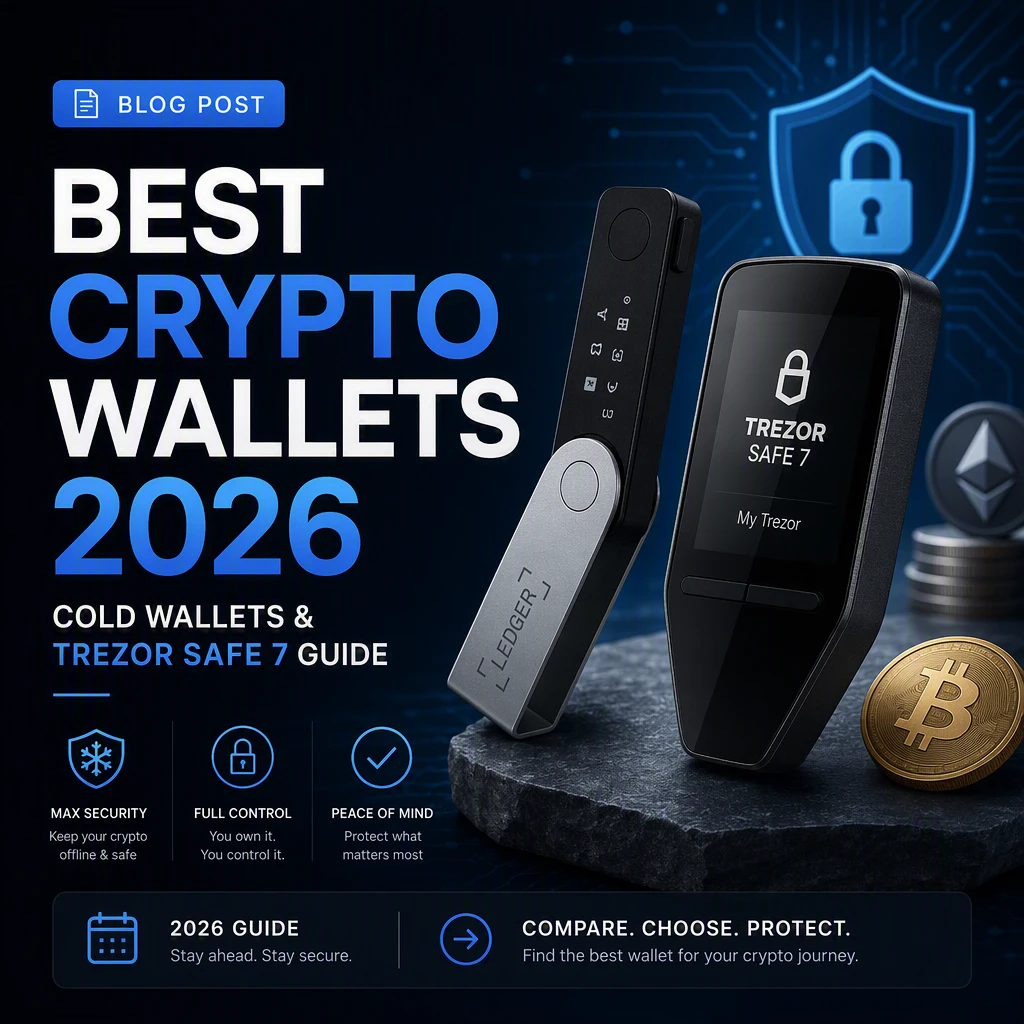
Best cold storage wallets in 2026 prioritize security, offline private keys, transparent transaction signing, and reliable recovery. This guide compares Trezor Safe 7, Ledger Nano Gen5, OneKey Pro, Tangem, and OKX for Bitcoin, Ethereum, Solana, and broader cryptocurrency portfolios.
What are the Best Cold Storage wallets ?
In my opinion its Ellipal for its ease of use.
Why Cold Storage Wallets Are Essential for September 2026 Crypto Wallets Holders
Why cold storage wallets matter is straightforward: private keys remain offline, reducing exposure to phishing, malware, exchange breaches, and malicious browser extensions. Use a hardware wallet for savings, while keeping only spending funds in a hot wallet.
Offline Protection Explained: What Every Crypto Wallet Owner Must Know Before September 2026
Offline protection means signing cryptocurrency transactions on a disconnected hardware device rather than exposing private keys to an internet-connected computer. Verify addresses on the device screen, record the recovery phrase offline, and test a small transfer before moving substantial digital assets.
Why Cold Wallets Dominate Long-Term Holding for September 2026 Portfolios
Why cold wallets suit long-term holding is their reduced attack surface. A properly initialized device stores private keys internally, while public keys can remain visible for receiving Bitcoin or Ethereum. Protect the recovery phrase as carefully as the device itself.
Base wallets vs Solana wallets: Choosing Networks for Cold Storage in 2026
Base wallets and Solana wallets require network-specific support, so confirm compatibility before purchasing. Ethereum-compatible Base assets use EVM addresses, whereas Solana uses a different address system. Check supported blockchains, token standards, firmware, and destination networks before sending funds.
Decoding Private Key Isolation: How a Cold Storage Wallet Shields Your Coins
Private key isolation keeps signing secrets inside a cold storage wallet and exposes only public keys to companion software. The blockchain records ownership and transactions, but never stores the private keys themselves. Confirm every recipient address on the hardware screen before approval.
Close-up of hardware wallet screen verifying a recipient address before cryptocurrency transaction approval
Base wallets vs Solana wallets: Choosing Networks for Cold Storage in 2026
Ledger devices demonstrate why blind signing deserves caution: a wallet may approve data whose full meaning is unclear on the screen. Avoid unfamiliar contracts, inspect permissions, and use Clear Signing where supported. Revoke unnecessary approvals after DeFi activity.
Cold Wallet vs Hardware Wallet Myths Debunked for First-Time Buyers
Cold wallet versus hardware wallet terminology can confuse buyers. A hardware wallet is a physical device, while cold storage describes keeping signing secrets offline. A device connected during transaction signing can still provide strong security, but user verification and recovery-phrase protection remain essential.
Cold Wallet vs Hot Wallet Showdown: 7 Game-Changing Security Principles for 2026
Cold wallet versus hot wallet decisions depend on purpose. Use cold storage for savings, a hot wallet for frequent payments, and separate accounts for DeFi or NFTs. Seven principles matter: minimize exposure, verify addresses, update safely, protect backups, test recovery, limit approvals, and maintain transaction records.
Split-screen illustration contrasting offline cold storage with an internet-connected hot wallet and DeFi applications
Unmasking Blind Signing: The Hidden Threat Inside Your Crypto Wallet Experience
Blind signing occurs when a user approves opaque contract data without understanding the final action. It can authorize token transfers or unlimited allowances. Prefer readable transaction previews, use a dedicated DeFi account, and reject any request that conflicts with the displayed recipient or amount.
Base wallets vs Solana wallets: Choosing Networks for Cold Storage in 2026
Clear transaction previews help Trezor users compare recipient, amount, fee, and contract details before signing. Treat the device display as authoritative, not the browser. For unfamiliar tokens, confirm decimals and network carefully because identical symbols can represent different assets.
Ledger Security Chips Under the Microscope: Are They Enough for 2026?
Ledger security chips can strengthen tamper resistance, but hardware alone cannot prevent phishing or a stolen recovery phrase. Evaluate firmware practices, supply-chain controls, screen verification, backup procedures, and software hygiene alongside the chip’s protections.

5 Proven Security Principles That Define Elite Cold Wallet Security Standards
Five security principles define elite cold wallet security: isolate private keys, verify every transaction, maintain redundant backups, compartmentalize accounts, and rehearse recovery. Security is strongest when technical controls and disciplined operating procedures work together.
Air-Gapped Signing and Passphrase Strategies for Maximum Cold Wallet Security
Air-gapped signing transfers transaction data without a direct network connection, sometimes through QR code offline signing. A passphrase can create a hidden account, but it must be memorized or backed up accurately; one typo can produce an apparently empty wallet.
How Ledger Devices Illustrate Blind Signing Dangers in Modern Transactions
What keeps keys offline is not branding but key isolation. A hardware device should generate and retain secrets internally; an offline chip or secure element may assist, yet recovery words still control funds. Never photograph or type those words into cloud services.
Definitive Hardware Cold Wallet Comparison: Methodology Behind the Best Cold Wallets 2026
A fair hardware cold wallet comparison examines security architecture, supported blockchains, display quality, transaction clarity, recovery, fees, software reliability, and long-term maintenance. We separate verified features from marketing claims and assess whether each product fits saving, trading, or multi-chain use.
How We Tested Every Hardware Cold Wallet: Our Transparent Methodology Revealed
Testing every hardware wallet involves initializing devices from official packaging, checking firmware authenticity, restoring with a test seed, sending small amounts, and reviewing signing prompts. We also assess cable, Bluetooth, app, and recovery workflows without exposing real savings.
Google Ratings Deep Dive: Real User Love for Solana wallets and Base wallets Support
Google ratings can reveal recurring complaints about Solana wallets and Base wallets support, including connection failures or missing tokens. Ratings are signals, not proof: compare recent reviews with documented firmware updates, compatibility lists, and reproducible testing.
How Ledger Devices Illustrate Blind Signing Dangers in Modern Transactions
Usability scores reflect setup clarity, readable screens, backup guidance, and dependable companion applications. Ledger and Trezor Safe 5 may suit different users, so evaluate whether daily workflows encourage address verification rather than hurried approvals.
Decoding Private Key Isolation: How a Cold Storage Wallet Shields Your Coins
The comparison framework weights security and recovery first, then usability, supported blockchains, accessibility, and cost. A wallet with fewer features may rank higher for long-term security if its transaction signing is clearer and its backup process is easier to audit.

How Ledger Devices Illustrate Blind Signing Dangers in Modern Transactions
Google ratings capture real-world friction, while lab testing examines repeatable behavior under controlled conditions. Combine both sources, investigate unusual review patterns, and give greater weight to specific reports involving security, recovery, firmware, or transaction failures.
Cold Wallet vs Hardware Wallet Myths Debunked for First-Time Buyers
Google ratings can indicate reliability trends such as defective cables, confusing applications, or delayed support. They cannot validate private-key security. Before buying, confirm official distribution, recent software support, recovery documentation, and the vendor’s response to reported defects.
Ultimate Cold Wallets Face-Off: Trezor Safe 7, Ledger Nano Gen5 & OneKey Pro Analyzed
The leading cold storage options serve different priorities. Trezor Safe 7 emphasizes transparent verification, Ledger Nano Gen5 emphasizes ecosystem breadth, and OneKey Pro targets multi-chain convenience. Compare supported assets, display behavior, backup design, and your tolerance for connected features before purchasing.
Decoding Private Key Isolation: How a Cold Storage Wallet Shields Your Coins
Trezor Safe 7 versus Trezor Safe 5 should be judged by screen, connectivity, supported assets, and transaction-preview improvements rather than model number. Safe 5 may offer better value, while Safe 7 can justify its premium for users who prioritize newer interaction and broader workflows.
How Ledger Devices Illustrate Blind Signing Dangers in Modern Transactions
Trezor Safe 7 appeals to Solana wallets users when its color touchscreen makes addresses and transaction details easier to inspect. Always confirm current Solana support, firmware requirements, and application compatibility before transferring meaningful balances.
Cold Wallet vs Hardware Wallet Myths Debunked for First-Time Buyers
Ledger’s ecosystem can simplify Base wallets management through integrated account views and familiar approval flows. Confirm that the displayed network is Base, not Ethereum or another EVM chain, and verify fees and recipient addresses on the device.
Head-to-Head: Trezor Safe 5, Ledger Nano Gen5 and OneKey Pro Battle for Supremacy
Trezor Safe 5, Ledger Nano Gen5, and OneKey Pro each balance security, compatibility, and convenience differently. Choose Trezor for visible verification, Ledger for broad ecosystem integration, or OneKey Pro for a multi-chain interface, while independently validating current specifications.
Head-to-head photograph of three hardware wallets beside a comparison checklist and network icons
Cold Wallet vs Hardware Wallet Myths Debunked for First-Time Buyers
Trezor Safe 5 can be a strong value choice when its screen clearly presents transaction details. Lower price does not eliminate the need for safe purchasing, verified firmware, secure backups, and careful contract review. Avoid blind signing regardless of budget.
OneKey Pro Design Triumph: Why Base wallets Collectors Rate It Highly
OneKey Pro attracts Base wallets collectors through a polished interface and broad asset workflows. Its design is useful only when users verify network, contract, amount, and recipient on the device. Treat convenience as an aid to security, never a replacement for it.
Next-Gen Hardware Cold Wallet Titans: Essential Ledger Nano and OneKey Pro Insights
Next-generation hardware wallets increasingly combine stronger screens, expanded network support, and safer signing prompts. Ledger Nano and OneKey Pro buyers should prioritize recoverability, firmware transparency, supply-chain authenticity, and whether everyday features increase or reduce the attack surface.

Modern hardware wallet lineup with enlarged screens displaying verified blockchain transaction details
Ledger Nano Gen5 First Look: Is This the Most Powerful Hardware Cold Wallet Yet?
Ledger Nano Gen5 should be evaluated on verified specifications rather than launch claims. Examine its secure element, display, supported cryptocurrency networks, backup method, and application support. Power is valuable only if the interface helps users reject fraudulent transactions.
Cold Wallet vs Hardware Wallet Myths Debunked for First-Time Buyers
The Ledger application ecosystem can streamline OKX transfers, but users must copy and verify the receiving address on the hardware device. Send a small test amount first, select the correct network, and never approve an unexpected withdrawal request.
Why Ledger Remains a Favorite Among Non-Custodial Wallets Veterans
Ledger remains popular among non-custodial wallets veterans because of established software, broad asset support, and familiar recovery workflows. Users should still verify official applications, avoid phishing links, and maintain an independent backup rather than relying on vendor access.
OneKey Pro Unboxed: The Revolutionary Open-Source Challenger to Ledger Nano Gen5
OneKey Pro’s appeal lies in its design, multi-chain coverage, and claims around open-source transparency. Buyers should inspect published repositories, audit scope, firmware signing, and update history instead of assuming every component is independently verifiable.
OneKey Pro Open-Source Edge: Audited Firmware for Non-Custodial Wallets Purists
OneKey Pro’s open-source edge matters when code, audits, and reproducible documentation are available for meaningful components. Open source does not guarantee security; review audit findings, unresolved issues, release controls, and whether users can verify authentic firmware.
OneKey Pro vs Ledger Nano: Which Non-Custodial Wallets Approach Suits You?
OneKey Pro versus Ledger Nano is a choice between different non-custodial wallets approaches. Compare transparency, application maturity, asset support, screen verification, connectivity, and recovery. Select the device whose procedures you can consistently follow under stress.
Cold Wallet vs Hot Wallet Decisions: Where Does OKX Fit in Your 2026 Crypto Wallets Plan?
OKX fits a crypto wallets plan as a convenient hot-wallet or exchange environment, not automatically as a vault for life savings. Keep trading liquidity online, move strategic reserves to cold storage, and use separate accounts for experimental applications.
OKX Hot Wallet Reality Check: When to Stay Connected and When to Go Cold
An OKX hot wallet is appropriate for active trading, swaps, and small payments requiring immediate access. Go cold when funds become long-term savings, when exposure exceeds your risk limit, or when an account no longer needs frequent signing.
Avoiding Blind Signing When You Connect OKX to Your Hardware Device
When connecting OKX to a hardware device, match the network, recipient, token, amount, and fee on the device screen. Reject opaque prompts, disable unnecessary permissions, and use a dedicated account for unfamiliar applications.
Cold Wallet vs Hot Wallet Risks: Why OKX Hot Storage Isn’t for Life Savings
OKX hot storage remains internet-exposed and may face phishing, account takeover, withdrawal, or platform risks. It can support liquidity, but life savings deserve offline private keys, tested recovery, geographic backup separation, and a documented inheritance process.
OKX and Beyond: Smart Hot-to-Cold Migration Strategies for Serious Holders
Smart hot-to-cold migration begins with inventory, address verification, small test transfers, and staged movement. Record transaction IDs and destination networks, then confirm balances independently on the blockchain. Never rush a large transfer because of market volatility.
Step-by-step migration diagram showing exchange withdrawal, test transfer, hardware verification, and blockchain confirmation
Seamless OKX to Cold Storage Wallets Transfers: A How-To for September 2026 Movers
For OKX to cold storage wallets transfers, initialize the device offline, generate a receiving address, verify it on the device, and submit a small test withdrawal. After confirmation, send the remainder, retain records, and check the blockchain explorer independently.
Clear Transaction Previews: How Trezor Reduces Blind Signing Exposure
Your cold wallet versus hot wallet strategy should match trading frequency and loss tolerance. Active traders need limited online liquidity; long-term holders need stronger isolation. Review allocations monthly and return surplus funds to cold storage after trading.
Beyond Devices: Security Principles and Crypto Wallets Wisdom for 2026 Holders
Beyond devices, security depends on disciplined operations: authentic software, verified addresses, secure backups, account separation, and recovery rehearsals. Cryptocurrency ownership is self-custody, so mistakes cannot usually be reversed by a bank or platform.

Secure self-custody workspace with backup plates, hardware wallet, verification checklist, and offline documentation
Cold Wallet vs Hardware Wallet Explained: Are All Hardware Devices Truly Cold?
Not all hardware devices are equally cold. A device may retain keys securely yet connect through USB or Bluetooth during signing. Cold storage describes key exposure, not total isolation. Evaluate architecture, prompts, firmware, and the surrounding computer or phone.
How Cold Wallet vs Hardware Wallet Semantics Affect Insurance and Inheritance Plans
Cold wallet versus hardware wallet terminology affects policies and estate plans because insurers and heirs need documented control procedures. Clarify whether coverage applies to self-custody, store recovery materials separately, and provide trusted instructions without revealing secrets prematurely.
Clear Transaction Previews: How Trezor Reduces Blind Signing Exposure
Ledger recovery options can restore access on a replacement device using the recovery phrase, but that phrase remains the ultimate authority. True offline practices include secure physical backups, no digital copies, periodic recovery testing, and restricted access.
Unmasking Blind Signing: The Hidden Threat Inside Your Crypto Wallet Experience
Real-world cold storage wallet setups work best when the owner uses an official device, verifies firmware, creates a written inventory, tests recovery, and separates spending from savings. This checklist turns security theory into repeatable household practice.

Practical cold-storage checklist beside a hardware wallet, metal backup, and labeled segregated accounts
Clear Transaction Previews: How Trezor Reduces Blind Signing Exposure
Newcomers choosing non-custodial wallets should start with supported assets, readable transaction screens, recovery clarity, and reputable distribution. Buy directly or through an authorized seller, initialize personally, and never accept a prewritten recovery phrase.
Ledger Security Chips Under the Microscope: Are They Enough for 2026?
Preparing a crypto tax report requires transaction dates, assets, quantities, fees, acquisition basis, and disposal proceeds. Export public transaction history without exposing private keys. Tools such as CoinLedger can organize records, but review classifications manually.
Cold Wallet vs Hot Wallet Showdown: 7 Game-Changing Security Principles for 2026
After purchase, create a crypto tax report workflow, document inheritance instructions, and practice everyday receiving and sending. A wallet is not complete until backups are tested, beneficiaries understand procedures, and records distinguish personal transfers from taxable disposals.

Organized post-purchase planning folder showing tax records, inheritance instructions, and hardware wallet procedures
Unmasking Blind Signing: The Hidden Threat Inside Your Crypto Wallet Experience
To generate a crypto tax report from cold storage, collect public addresses and transaction IDs, export history from relevant blockchains, and reconcile transfers with exchange statements. Keep wallet labels consistent so purchases, swaps, income, and gifts are classified correctly.
Clear Transaction Previews: How Trezor Reduces Blind Signing Exposure
Automate a crypto tax report by importing public addresses or read-only API credentials, never seed phrases or private keys. Review duplicate transfers, bridge activity, staking income, and fee treatment before filing. Automation accelerates reconciliation but does not replace judgment.
Ledger Security Chips Under the Microscope: Are They Enough for 2026?
Cold storage wallet history proves on-chain movement, not always ownership basis or intent. Preserve exchange confirmations, invoices, wallet labels, and contemporaneous notes. Chainalysis-style analytics may connect addresses, so maintain privacy without compromising accurate records.
Don’t Get Burned: Essential Crypto Tax Report Tactics for Cold Wallets Users
Cold wallets users should build a crypto tax report from complete records rather than guessing from current balances. Track every acquisition, transfer, swap, staking event, and disposal, including assets moved between personal addresses.
Ledger Security Chips Under the Microscope: Are They Enough for 2026?
Non-custodial wallets records can prevent tax-report nightmares when they include wallet ownership labels, timestamps, transaction hashes, cost basis, and supporting exchange statements. Store encrypted copies securely and preserve original exports in case software formats change.
Crypto Wallet Export Hacks: Turning Transactions Into a Flawless Crypto Tax Report
Crypto wallet export techniques include downloading CSV files, querying public addresses, and reconciling explorer data with exchange reports. Normalize timestamps and asset symbols, identify internal transfers, exclude duplicates, and have a qualified tax professional review complex DeFi or NFT activity.