Best Crypto Wallet 2026: Hot vs Cold Storage Compared focuses on balancing accessibility with protection. Hot wallets keep cryptocurrency connected for fast payments, trading, and DeFi activity, while cold wallets isolate private keys from internet threats. Bitcoin holders should evaluate recovery procedures, supported networks, device security, fees, and everyday usability before choosing.
Tangem Wallet emphasizes NFC convenience and secure chip technology, whereas Ledger Stax emphasizes a dedicated hardware wallet with a visible signing display. Neither device removes trading risk, and neither is FDIC insured. Use this guide for educational purposes, not investment advice, and verify every transaction before signing.
Table of Contents
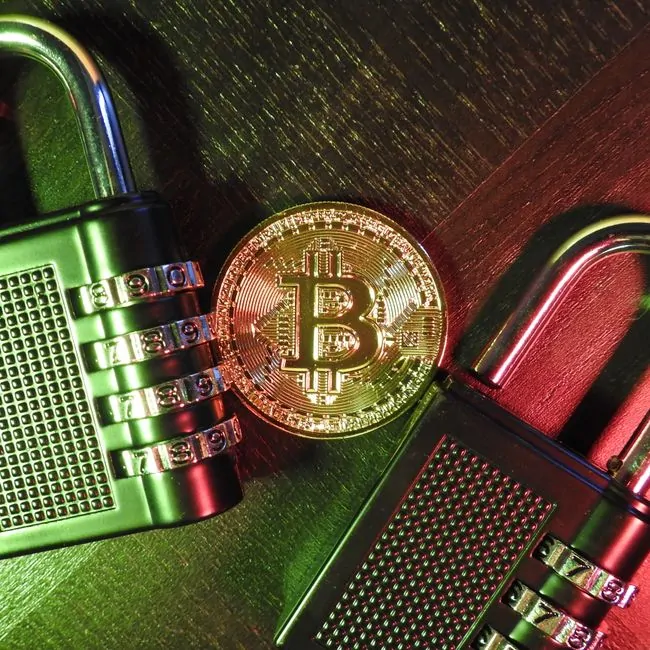
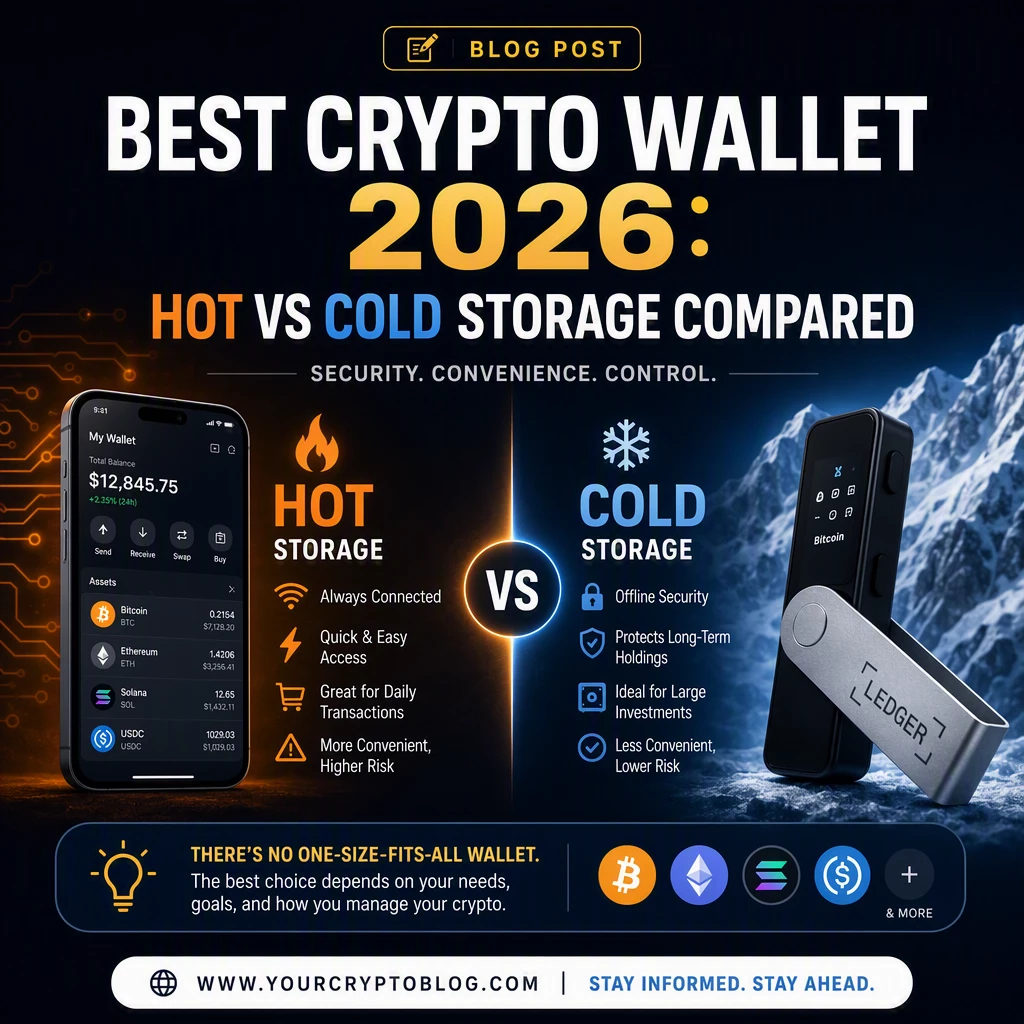
Side-by-side comparison of smartphone hot wallet and premium hardware wallet displaying Bitcoin security controls
5 Essential Truths About crypto wallets Before You Move Your Bitcoin in August 2026

5 Essential Truths About crypto wallets Before You Move Your Bitcoin in August 2026 begin with ownership, recovery, and threat awareness. A wallet does not store coins; it manages credentials that authorize blockchain transactions. Non-custodial wallets give users control of private keys, but that control also creates responsibility for backups and device security.
Cryptocurrency prices remain volatile, and market performance cannot compensate for a lost recovery phrase. Confirm addresses on a trusted screen, use a unique PIN, and never disclose seed words to support staff. Exchange accounts, including OKX, Robinhood Crypto, or services associated with SoFi Bank, may provide convenience but have different custody and regulatory arrangements. Compare disclosures carefully, because virtual currency is not equivalent to a bank deposit.
How Our August 2026 Evaluation of crypto wallets Sets the Benchmark
How Our August 2026 Evaluation of crypto wallets Sets the Benchmark by testing security, recovery, connectivity, app functionality, and user experience under practical conditions. Reviewers examine setup time, transaction confirmation clarity, firmware processes, backup instructions, and compatibility across Bitcoin, Solana, and EVM ecosystems. They also test connection errors, lost connection recovery, fee visibility, and whether signing screens clearly identify destination addresses.
A comparison service may summarize features, but readers should inspect primary documentation and current product disclosures before making financial decisions. Ratings are weighted toward controls that reduce irreversible mistakes rather than decorative design. Developers benefit from reliable network support and predictable signing behavior, while beginners need straightforward recovery guidance.
Why the BTC Foundation Spotlight Signals Trust for Newcomers [August 2026 Update]
Why the BTC Foundation Spotlight Signals Trust for Newcomers [August 2026 Update] is useful as a starting signal, not a guarantee of safety. Recognition can draw attention to transparent security architecture, clear onboarding, and practical recovery education. New users should still verify whether a product uses a secure chip, how keys are generated, whether firmware is authenticated, and what happens after a phone is lost.
A responsible review distinguishes tested capabilities from promotional claims and explains limitations, including supported currencies and transaction fees. Contact details such as [email protected] should never be treated as proof that a person requesting seed words is legitimate.
What Best of the Month Really Means for Your Ledger Choice and Peace of Mind
What Best of the Month Really Means for Your Ledger Choice and Peace of Mind is a comparative editorial judgment based on observed usability and safeguards. It does not mean every buyer needs the same device or that future firmware releases will preserve identical performance.
Ledger Stax may suit users who value a larger visual confirmation surface, while Tangem may appeal to people who prefer card-like portability and NFC interaction. Before purchase, confirm official sourcing, inspect packaging, initialize the device personally, and record recovery materials offline. Consider whether your holdings justify a premium device and whether you can follow its backup procedure consistently.
Ledger Stax and Tangem product comparison with secure setup, official packaging, and recovery backup materials
Decoding Our Proven methodology for Comparing Every Crypto Wallet
Decoding Our Proven methodology for Comparing Every Crypto Wallet starts with a transparent framework designed to cut through marketing claims and evaluate real-world performance for every crypto wallet we test. Rather than relying on sponsored placements, our process blends hands-on lab testing with independent data verification, ensuring that both hot and cold storage options are judged equally on security, usability, and reliability. We assess how effectively each solution protects digital assets while maintaining accessibility on the underlying blockchain, running repeated transaction simulations, backup restoration drills, and cross-device compatibility checks.
Our scoring also weighs broader context for readers making financial decisions, which is why we disclose that our content is for educational purposes only and does not constitute investment advice. Like NerdWallet, we operate as a comparison service that evaluates financial products independently, and we clearly state how market performance and features influence rankings without bias. This methodology helps investors compare financial products confidently and understand the true trade-offs before moving funds.
What Best of the Month Really Means for Your Ledger Choice and Peace of Mind
Inside Analytics That Reveal True Ledger Reliability Beyond Hype focuses on measurable data points that separate proven performance from promotional language. We move past unboxing impressions and track sustained reliability over weeks of intensive use, logging firmware stability, signing latency, and failure rates during high-volume transaction batches. Our analytics dashboard monitors how consistently the device maintains offline private keys protection without exposing sensitive material, and we verify that the secure chip isolation holds under simulated attack conditions.
We also benchmark NFC operation for tap-to-sign efficiency and track incidents of lost connection or connection errors that could disrupt time-sensitive transfers. Each test is repeated across iOS and Android to ensure consistent user experience, while telemetry on battery-free operation and durability adds further context. By correlating this data with support responsiveness and update cadence, we provide an objective view of long-term dependability that helps readers see past hype and judge whether a Ledger-based solution truly delivers enterprise-grade resilience for everyday use.
How App Functionality Tests Expose Everyday Friction in Top Contenders
How App Functionality Tests Expose Everyday Friction in Top Contenders examines the daily interactions that determine whether a wallet delights or frustrates its owner. We install each companion application on multiple devices and run scripted workflows covering onboarding, importing seed phrases, pairing via Bluetooth and NFC, and executing swaps across EVM ecosystems and DeFi protocols. Our testers measure the intuitiveness of the intuitive interface, noting how many taps are required to send funds, adjust network fees, or access card management features, and we document any confusing prompts that increase trading risk for newcomers.
We also stress-test digital payments flows, switching networks mid-transaction and deliberately triggering poor connectivity to see how gracefully the app recovers. These functionality trials reveal hidden friction that spec sheets miss, showing which contenders truly streamline everyday crypto management.
What Makes Tangem Wallet vs Ledger Stax the Definitive August 2026 Showdown?
What Makes Tangem Wallet vs Ledger Stax the Definitive August 2026 Showdown is the clash of two fundamentally different philosophies for securing your Bitcoin and broader cryptocurrency portfolio. Tangem Wallet champions ultra-minimalist, card-shaped cold storage with no cables or charging, leveraging NFC convenience and a secure chip to enable instant tap-and-sign transactions from your phone, while Ledger Stax bets on a premium curved E-ink touchscreen experience with extensive app integration for managing thousands of tokens.
Both were recognized as Best of the Month by the BTC Foundation, but they appeal to distinct user profiles, from first-time holders seeking simplicity to power users demanding advanced portfolio controls. This head-to-head matters now because August 2026 has seen heightened demand for non-custodial wallets as investors seek self-custody amid evolving exchange regulations. By comparing security features, backup methods, and cross-chain support side by side, this showdown gives readers a clear framework to decide which approach aligns with their risk tolerance, technical comfort, and long-term storage strategy.
Why Tangem Wallet Won Best of the Month According to BTC Foundation Reviewers
Why Tangem Wallet Won Best of the Month According to BTC Foundation Reviewers comes down to its rare combination of uncompromising security and effortless everyday usability that impressed the judging panel during August 2026 testing. Reviewers highlighted its innovative hardware wallet design that eliminates vulnerable cables and batteries entirely, storing private keys inside a certified secure chip embedded in a durable card that activates instantly via NFC when tapped to a smartphone.
The panel praised its true cold wallet architecture, which keeps keys fully offline while still supporting thousands of assets across major networks, making it ideal for safeguarding digital assets without sacrificing convenience. Tests also noted the frictionless setup, where backup is handled through multiple cards rather than a traditional seed phrase, reducing single-point-of-failure risks for newcomers. Combined with robust resistance to physical tampering and a streamlined app that simplifies portfolio tracking, Tangem Wallet delivered the strongest balance of protection, portability, and accessibility, earning it the coveted Best of the Month distinction for users who prioritize simple, bank-grade self-custody.
Inside Analytics That Reveal True Ledger Reliability Beyond Hype
How Ledger Stax Earned Best of the Month Praise from the BTC Foundation Panel reflects its success in redefining what premium cold storage can feel like without compromising on hardcore security standards. The panel awarded the device for its striking 3.7-inch curved E-ink display that makes transaction verification and portfolio management remarkably clear, combined with the proven Ledger secure element that ensures private keys never leave the hardware wallet environment.
Reviewers emphasized its versatility as a comprehensive crypto wallet for advanced users, offering native support for Bitcoin, Ethereum, and a wide range of virtual currency assets alongside seamless DeFi connectivity. The Stax also stood out for its refined user experience, featuring wireless Qi charging, Bluetooth pairing, and an intuitive interface that simplifies complex operations like staking and NFT display. During extended trials, the BTC Foundation noted exceptional build quality, consistent firmware updates, and strong integration with Ledger Live, which together justify its premium positioning and secure its place as a Best of the Month recipient for enthusiasts seeking feature depth and elegant design.
Hot vs Cold Storage Explained: From hot wallets to hardware wallets and Beyond
Hot vs Cold Storage Explained: From hot wallets to hardware wallets and Beyond clarifies the fundamental choice every holder faces when protecting cryptocurrency. Hot wallets remain connected to the internet, offering instant access through mobile apps like the Best Wallet app, browser extensions, or exchanges such as Robinhood Crypto and OKX, which provide convenient brokerage services for active trading but inherently expose keys to online threats. In contrast, cold storage keeps private keys completely offline, dramatically reducing attack surfaces for long-term holdings.
This guide compares how each model handles key generation, transaction signing, and recovery, so readers understand the trade-offs between convenience and resilience. We also address common misconceptions, such as assuming that offerings from SoFi Bank are FDIC insured for crypto holdings, when in fact digital assets held in non-custodial wallets fall outside traditional banking protections and carry distinct trading risk. Whether you prioritize instant liquidity or maximum isolation, understanding these architectures is essential before allocating funds, especially since regulatory disclosures like NMLS ID requirements apply differently to custodial platforms versus self-custody solutions.
Why hardware wallets Outshine a Standard hot wallet for Maximum Protection
Why hardware wallets Outshine a Standard hot wallet for Maximum Protection lies in their ability to eliminate the single biggest vulnerability of internet-connected storage: exposure of secret material to malware and phishing. While a standard hot wallet signs transactions within the same device that browses the web, a dedicated hardware wallet performs all cryptographic operations inside an isolated environment that never touches the internet, ensuring that even if your phone or computer is compromised, your keys remain untouched.
This isolation is critical for protecting significant amounts of Bitcoin and other digital assets intended for long-term holding, where the cost of a breach far outweighs the minor inconvenience of confirming transactions physically. Unlike custodial exchange balances that may be commingled, non-custodial wallets built around hardware give you sole ownership and reduce reliance on third parties. For anyone serious about minimizing attack vectors, the shift from convenient hot storage to purpose-built hardware delivers a decisive upgrade in resilience, offering peace of mind that software-only solutions simply cannot replicate regardless of how many security features they advertise.
What Best of the Month Really Means for Your Ledger Choice and Peace of Mind
How Ledger Hardware Powers cold wallets With Secure Chip Isolation demonstrates why chip-level architecture is the cornerstone of trustworthy self-custody. Ledger devices embed a Common Criteria certified secure chip, similar to those used in passports and payment cards, which creates a physically segregated enclave where private keys are generated, stored, and used to sign transactions without ever being exposed to the host device or internet. This isolation ensures that even sophisticated malware on a connected phone cannot extract sensitive data, as all critical operations occur within the tamper-resistant element.
Combined with proprietary firmware that undergoes regular independent audits, the design enforces strict access controls and requires physical button confirmation for every transaction. To optimize the user experience, the hardware pairs seamlessly via Bluetooth or USB while maintaining offline integrity, and developers continuously refine the operating system to patch vulnerabilities proactively. By anchoring cold wallet security in hardware rather than software alone, Ledger delivers a verifiable root of trust that transforms a simple device into a fortress for long-term asset protection.
Why Ledger Devices Make cold wallets the Gold Standard for Long-Term Holders
Why Ledger Devices Make cold wallets the Gold Standard for Long-Term Holders is evident in their proven track record of protecting wealth through multiple market cycles with minimal compromise. Long-term holders prioritize durability, recoverability, and assurance that their holdings will remain accessible years from now, and Ledger addresses these needs with a robust cold wallet ecosystem built around certified hardware, clear recovery protocols, and extensive asset support spanning Bitcoin and thousands of alternative networks.
Unlike software wallets that depend on a single phone’s security posture, Ledger devices keep keys offline and require physical confirmation, eliminating remote theft vectors while still allowing straightforward portfolio monitoring through companion apps. The ecosystem also supports advanced use cases without sacrificing safety, enabling staking and governance participation while maintaining air-gapped key storage. With a reputation forged through independent security audits, transparent supply chain controls, and consistent firmware improvements, Ledger has become the benchmark against which other self-custody solutions are measured, offering holders confidence that their commitment to holding through volatility is matched by equally steadfast protection.
Choosing Between hardware wallets and Everyday hot wallets [2026 Guide]
Choosing Between hardware wallets and Everyday hot wallets [2026 Guide] requires understanding the core trade-off between maximum security and daily convenience for your digital assets. A hardware wallet keeps your private keys completely offline in a secure chip, often with NFC tap-to-sign functionality, making it ideal for long-term storage of Bitcoin and other holdings where protection is paramount. In contrast, everyday hot wallets remain connected to the blockchain, offering an intuitive interface for quick digital payments, DeFi interactions, and trading across EVM ecosystems.
For large balances you rarely move, the isolated nature of a cold wallet is superior, while a mobile hot option excels for frequent transactions. Most investors in 2026 benefit from using both: securing the bulk of funds offline while keeping a smaller amount in a hot wallet for speed. This balanced approach is for educational purposes, helping you align your setup with your risk tolerance and usage patterns without relying on generic investment advice.
When a hot wallet Beats hardware wallets for Daily DeFi Speed
When a hot wallet Beats hardware wallets for Daily DeFi Speed becomes clear the moment you need instant access to fast-moving opportunities. While offline devices excel at vault-like security, they add friction with manual confirmations and connection errors that can cost you during volatile market performance. A hot wallet lives in your browser or phone, allowing one-click approvals for swapping, staking, and bridging without waiting for a device to sync or recovering from a lost connection.
This user experience advantage is critical for active participants who interact with multiple protocols daily, where waiting 30 seconds for hardware confirmation means missing a price. Developers optimize hot wallets for rapid transaction signing and gas estimation, making them far more practical for executing complex DeFi strategies. For funds you actively deploy, the speed and fluidity of a hot wallet outweigh the absolute security of offline storage, though you should only keep what you can afford to expose.
Inside Analytics That Reveal True Ledger Reliability Beyond Hype
How to Pair hardware wallets With a hot wallet for Balanced Control is the strategy most experienced holders use to get both safety and usability in 2026. The concept is simple: keep 80-90% of your portfolio in offline hardware storage as your vault, and link that device to a hot interface for viewing and initiating transactions. You connect the hardware device via USB or Bluetooth to approve transfers, so your keys never leave the offline environment while you still enjoy the convenience of a software dashboard.
This setup gives you robust security features for your main stack while allowing efficient card management and small daily spends from your hot balance. If you need support, many teams offer direct help at [email protected] for pairing guides. By segregating funds this way, you mitigate trading risk on large holdings but retain the agility to act quickly with your hot balance, creating a resilient system that protects you from both theft and missed opportunities.
Decoding Our Proven methodology for Comparing Every Crypto Wallet
custodial wallet vs Self-Custody: Who Really Holds Your Crypto Wallet Keys? is the most important distinction for anyone holding a crypto wallet today. With a custodial wallet, a centralized exchange like OKX or Robinhood Crypto holds your keys and ultimately controls access to your funds, similar to how a bank holds your cash. This means you must trust their internal security and solvency, and you may face withdrawal limits or freezes.
In contrast, self-custody via non-custodial wallets gives you direct possession of your private keys, meaning no third party can move or block your funds. While custodial services offer recovery help and familiar brokerage services, they reintroduce counterparty risk that cryptocurrency was designed to eliminate. Understanding who holds the keys determines whether you truly own your assets or simply have an IOU, which directly impacts your ability to make independent financial decisions and react to market events without permission.
Inside Analytics That Reveal True Ledger Reliability Beyond Hype
Is Your Current custodial wallet Putting Your Bitcoin at Risk? is a question every holder should ask, especially after several high-profile exchange failures. When you store Bitcoin on a custodial platform, your coins are pooled in the provider’s wallets, and you do not have exclusive control. If the provider is hacked, becomes insolvent, or faces regulatory action, your withdrawal could be delayed or denied entirely. Unlike funds held at SoFi Bank which may be FDIC insured, virtual currency held custodially is not FDIC insured and has no government backstop, increasing your exposure.
You also face hidden trading risk from platform outages during volatility. For investors who view Bitcoin as long-term savings, relying solely on a custodian contradicts the principle of self-sovereignty. Reviewing your provider’s proof of reserves, insurance policies, and terms of service can reveal how much risk you are actually carrying by leaving coins under someone else’s control.
How App Functionality Tests Expose Everyday Friction in Top Contenders
How a Non-Custodial Crypto Wallet Gives You True Ownership in August 2026 comes down to exclusive control of your recovery phrase and keys. Unlike custodial accounts, a non-custodial crypto wallet does not require permission to send, receive, or interact with the blockchain, giving you censorship-resistant ownership. Modern solutions like the Best Wallet app combine strong self-custody with an intuitive interface and built-in support for both Bitcoin and diverse EVM ecosystems, so you can manage everything from one place.
The app never stores your keys on its servers, and its open-source architecture lets anyone verify its security. While this freedom means you are responsible for backups, it eliminates exchange counterparty risk entirely. As a comparison service, NerdWallet often highlights that self-custody is not about offering investment advice on financial products, but about giving you the tools to manage digital assets independently and securely for the long term.
Do You Need a Dedicated Solana Wallet or an All-in-One Crypto Wallet?
Do You Need a Dedicated Solana Wallet or an All-in-One Crypto Wallet? depends on how deeply you operate within each ecosystem. A dedicated Solana Wallet is purpose-built for Solana’s high-speed architecture, offering native staking, compressed NFT support, and instant transaction simulation that generic wallets sometimes lack. However, an all-in-one cryptocurrency solution lets you manage Solana alongside Ethereum, Bitcoin, and other networks without juggling multiple seed phrases or interfaces.
For most users in 2026, an all-in-one option reduces friction, especially when bridging assets or managing a diverse portfolio of cryptocurrency holdings from a single dashboard. Dedicated tools may still appeal to power users and developers building directly on Solana who need advanced RPC controls. Evaluate whether you prioritize specialized performance for one chain or streamlined convenience across many when deciding which approach fits your workflow and security needs.
How App Functionality Tests Expose Everyday Friction in Top Contenders
Solana Wallet Essentials for NFT Collectors Switching from Ethereum starts with adapting to different standards and marketplaces. Unlike Ethereum where you pay significant gas for every listing, Solana offers near-zero fees and instant settlement, but you will need a wallet that correctly displays Metaplex NFTs, handles cNFT compression, and connects seamlessly to Magic Eden and Tensor. Look for features like automatic token account creation, clear transaction previews, and robust spam filtering to avoid fake airdrops that plague the network.
Many collectors maintain a separate vault wallet for high-value pieces and a hot wallet for daily flipping to limit exposure. Before making large financial decisions about migrating collections, remember this information is for educational purposes and check market performance history for collections on both chains. A well-configured Solana wallet ensures your art displays correctly, your bids execute instantly, and your private keys remain secure while exploring the faster, cheaper NFT environment.
Why Every Solana Wallet Needs Seamless Cross-Chain Crypto Wallet Support
Why Every Solana Wallet Needs Seamless Cross-Chain Crypto Wallet Support is evident as liquidity fragments across dozens of blockchains in 2026. No collector or trader stays solely on Solana; you will inevitably need to bridge USDC from Ethereum, swap tokens on Base, or move Bitcoin via Wormhole.
A Solana wallet without integrated cross-chain functionality forces you to use risky third-party bridges and manually track assets, increasing the chance of errors and increasing the NMLS ID verification burden when off-ramping through regulated partners. The best setups offer built-in cross-chain swaps, unified portfolio tracking, and automatic network switching so you do not need to manage separate wallets for each chain. This interoperability ensures you can chase opportunities wherever they appear without sacrificing custody or creating fragmented backups, making your entire digital portfolio more agile and easier to secure with consistent security practices.
Inside Your crypto wallet app: data safety, App Privacy and Ratings Reviews Uncovered
Inside Your crypto wallet app: data safety, App Privacy and Ratings Reviews Uncovered reveals what happens to your information behind the scenes. Top-rated apps in 2026 prioritize minimal data collection, storing keys locally and never selling personal identifiers to advertisers. When evaluating ratings and reviews, look beyond star counts to check recent complaints about connection errors, slow support, or unclear data safety disclosures in the App Store privacy labels.
Reputable teams publish audited privacy policies stating they do not track transaction history and encrypt backups end-to-end. Be wary of apps requesting excessive permissions unrelated to blockchain functions. Trusted financial products clearly disclose whether they provide brokerage services or simply offer non-custodial software, ensuring you understand the regulatory context. Reading authentic user feedback combined with independent security audits gives a clearer picture of an app’s true trustworthiness than marketing claims alone, helping you protect both your identity and your funds.
What Defines a High-Performing crypto wallet app in August 2026?
What Defines a High-Performing crypto wallet app in August 2026? is answered by looking beyond basic storage to performance, security, and usability working in harmony. A top-tier crypto wallet today must offer seamless support for Bitcoin and diverse cryptocurrency assets while delivering instant blockchain synchronization without lag or connection errors. The Best Wallet app exemplifies this standard with its intuitive interface that simplifies digital payments, portfolio tracking, and card management for both beginners and advanced users.
High performance also means robust security features, including biometric authentication and encrypted backups, combined with reliable uptime that prevents a lost connection during critical transactions. Unlike custodial alternatives such as Robinhood Crypto or OKX, leading non-custodial wallets give you full control over your digital assets. For investors evaluating options, user experience and transparent App Privacy policies are decisive. Note that any information provided is for educational purposes only and not investment advice.
7 Features That Make a Crypto Wallet App Stand Out
7 Features That Make a Crypto Wallet App Stand Out starts with the essentials that separate an average app from an exceptional one. First, broad cryptocurrency support including Bitcoin and major EVM ecosystems ensures you can manage all your digital assets in one place. Second, integrated DeFi access lets you stake, swap, and interact with blockchain protocols directly. Third, advanced security features like a secure chip integration when paired with a hardware wallet elevate protection. Fourth, NFC tap-to-sign functionality offers cold wallet level security with hot wallet convenience. Fifth, an intuitive interface with built-in analytics and card management tools simplifies daily use. Sixth, reliable customer support with clear access to developers via [email protected] builds trust. Seventh, transparent handling of data safety and App Privacy controls. While comparison service sites like NerdWallet review financial products, the best apps empower you to make independent financial decisions without relying on brokerage services.
Inside Analytics That Reveal True Ledger Reliability Beyond Hype
How Analytics Inside Your crypto wallet app Reveal Spending Habits Instantly is about turning raw blockchain data into actionable insight the moment you open the app. Modern apps automatically categorize your cryptocurrency transactions, showing you exactly how much you spent on digital payments, trading fees, DeFi interactions, or transfers across different EVM ecosystems. Instead of manually tracking every Bitcoin purchase or sale, visual dashboards display your portfolio’s market performance over time, highlighting trends and recurring spending patterns. This helps investors understand their behavior and make smarter financial decisions without needing external tools.
The Best Wallet app, for example, provides real-time charts and spending breakdowns within its intuitive interface, improving overall user experience. These analytics are processed locally to respect data safety, ensuring your financial history remains private while still giving you the clarity needed to manage your digital assets effectively and avoid unnecessary trading risk associated with impulsive moves.
Decoding Our Proven methodology for Comparing Every Crypto Wallet
App Privacy vs Convenience: Can Your Crypto Wallet Keep Secrets Safe? is the central tension every user faces when choosing how to manage their funds. Convenience features like cloud backups, one-tap logins, and integrated digital payments make a crypto wallet easy to use, but they can expose sensitive data if not properly protected. A truly private wallet minimizes data collection, stores your private keys locally on your device, and never transmits your transaction history to third-party servers.
Cold wallet solutions take this further by keeping keys entirely offline, while even hot wallets can achieve strong protection through end-to-end encryption and secure chip isolation. Users should check whether an app shares data with financial products providers or comparison service platforms. Unlike FDIC insured accounts at SoFi Bank, virtual currency holdings are not covered by government insurance, so privacy is your primary defense. Balancing ease of use with strict App Privacy ensures your blockchain activity remains confidential.
Inside Analytics That Reveal True Ledger Reliability Beyond Hype
App Privacy Controls That Keep Your Transaction History Truly Private give you the power to decide what information leaves your device. The strongest crypto wallet options offer granular permissions that let you disable analytics tracking, opt out of data sharing, and use anonymous modes for viewing your cryptocurrency balances. Look for controls that encrypt your transaction history locally, require biometric approval before exporting data, and allow you to generate new addresses for each Bitcoin payment to prevent blockchain surveillance. Non-custodial wallets excel here because they do not require KYC-linked accounts to function, unlike centralized brokerage services.
Advanced security features such as auto-lock timers, hidden vaults, and encrypted local storage further reinforce confidentiality. Developers committed to privacy will publish clear policies and undergo independent audits, ensuring your digital assets activity stays hidden from advertisers and trackers. Proper card management settings also prevent linking your spending habits to your identity.
How App Functionality Tests Expose Everyday Friction in Top Contenders
How App Privacy Shields Your public private keys on Public Wi-Fi is critical because open networks are a prime target for interception attacks. When you access your crypto wallet at a cafe or airport, App Privacy protections ensure your public private keys and transaction signatures are never exposed in plaintext. Top-tier apps enforce encrypted tunnels, certificate pinning, and secure chip-backed key storage so that even if a hacker monitors the network, they cannot extract your private keys or clone your session.
Features like automatic VPN prompts, warnings about insecure connections, and the ability to require NFC hardware confirmation before signing prevent man-in-the-middle attacks that could lead to a lost connection or fund theft. This level of protection is essential when handling virtual currency, where transactions are irreversible and trading risk is heightened on untrusted networks. Always ensure your app does not auto-sync sensitive data over public Wi-Fi without explicit consent and strong encryption.
How Ratings Reviews Reveal Hidden Flaws in Any crypto wallet app
How Ratings Reviews Reveal Hidden Flaws in Any crypto wallet app is by exposing real-world problems that marketing materials gloss over. While official descriptions highlight an intuitive interface and flawless security features, Ratings Reviews from actual users often surface recurring connection errors, unexpected lost connection events during signing, or delays in blockchain syncing that affect trust.
Patterns of complaints about failed digital payments or poor card management functionality can signal deeper architectural weaknesses. Unlike curated testimonials on an app store page, aggregated reviews provide an unfiltered look at reliability across thousands of devices. For anyone comparing a crypto wallet for long-term use, these insights are invaluable for predicting how the app will perform under stress and whether it truly protects your digital assets as promised.
How App Functionality Tests Expose Everyday Friction in Top Contenders
Why Ratings Reviews From Real Users Matter More Than Marketing Claims comes down to authenticity versus advertising. Marketing copy will claim every crypto wallet is the most secure and user-friendly, but Ratings Reviews provide evidence from investors who have tested the app with real funds and market performance pressures. Genuine feedback highlights whether security features work consistently, if the intuitive interface holds up during volatile trading, and how quickly connection errors are resolved after updates.
This peer validation is more trustworthy than branded promises, much like how consumers consult NerdWallet as a comparison service for financial products before making financial decisions rather than trusting a bank’s own ads. Real users also disclose hidden fees, poor brokerage services integration, or exaggerated claims about virtual currency support that official listings omit. Relying on verified reviews helps you avoid hype and choose a wallet that delivers practical value and protects your funds, remembering all content is for educational purposes.
How to Read Ratings Reviews to Spot Fake Hype Around Any Bitcoin Crypto Wallet
How to Read Ratings Reviews to Spot Fake Hype Around Any Bitcoin Crypto Wallet requires a critical eye for patterns that distinguish authentic praise from manufactured excitement. Start by filtering for detailed reviews that mention specific features like NFC pairing, secure chip verification, or hardware wallet compatibility, rather than vague five-star comments saying great app.
Be wary of clusters of generic reviews posted within days of each other, which often indicate paid promotion. Look for balanced feedback that discusses both positives and negatives, such as praising Bitcoin support while noting occasional connection errors, as this reflects genuine user experience. Check whether reviewers discuss long-term use, trading risk disclosures, or comparisons to platforms like Robinhood Crypto, SoFi Bank, or those that are FDIC insured, versus NMLS ID licensed brokerage services. Cross-reference claims with independent sources and test whether developers engage transparently. Remember, a legitimate Bitcoin wallet will have consistent ratings across multiple stores, not just inflated hype.
Mastering public private keys Without Losing Sleep Over data safety
Mastering public private keys Without Losing Sleep Over data safety means understanding how your keys are generated, stored, and protected without constant anxiety. Your public private keys are the foundation of ownership on the blockchain; the public key can be shared freely while the private keys must remain isolated.
The best approach combines a hardware wallet or cold wallet with a secure chip that creates keys offline, ensuring they never touch an internet-connected server. Modern solutions use NFC to sign transactions securely without exposing keys to malware, while non-custodial wallets keep control entirely in your hands. For daily use, enable strong data safety practices like encrypted backups, offline seed phrase storage, and regular firmware updates. Unlike financial products that offer investment advice, crypto requires self-custody discipline. Whether you hold Bitcoin or other digital assets, mastering key management lets investors protect their cryptocurrency confidently and focus on strategy rather than fear of breaches.
public private keys Explained: How Offline Signatures Protect Your Bitcoin Crypto Wallet
public private keys Explained: How Offline Signatures Protect Your Bitcoin Crypto Wallet starts with understanding that your public key is like a shareable mailbox address on the blockchain while your private keys remain the secret signature that authorizes spending. In a true cold wallet setup, that private key never touches the internet; instead, an offline device creates a cryptographic signature for your transaction and only the signed, harmless data is broadcast.
This isolation means even if your phone or computer is compromised by malware, attackers cannot extract the key. Modern hardware wallet designs reinforce this with a secure chip that generates and stores keys in a tamper-resistant enclave, and many now use NFC to let you sign by simply tapping the card to your phone without cables or connection errors. This air-gapped signing is what keeps your digital assets safe while still allowing convenient digital payments.
Why Tangem Wallet Won Best of the Month According to BTC Foundation Reviewers
Why Backing Up public private keys Correctly Prevents Catastrophic Loss addresses the single biggest point of failure for self-custody: if your device is lost, damaged, or wiped, there is no password reset. Without a correct backup, your cryptocurrency is gone forever because the blockchain has no central help desk. Proper backup means writing your 12 or 24 word seed phrase on durable, offline material and storing copies in geographically separate, secure locations, never as a screenshot or cloud note.
You should verify the backup by doing a test recovery on a spare device before funding it heavily, ensuring you can restore access without a lost connection or user experience issue. Consider adding a passphrase for extra protection and clearly instructing trusted family on recovery without exposing the words. Unlike funds held at SoFi Bank which are FDIC insured, crypto has no such safety net, so your backup discipline is your insurance.
Revolutionary Ways to Secure Your Bitcoin Crypto Wallet and Transaction History
Revolutionary Ways to Secure Your Bitcoin Crypto Wallet and Transaction History focuses on combining offline key security with proactive monitoring so convenience does not compromise safety. While your Bitcoin remains protected by an offline private key, your transaction history lives permanently and publicly on the ledger, making privacy and verification critical. Use a crypto wallet that offers an intuitive interface with built-in security features like address whitelisting, transaction previews, and anti-phishing warnings to catch tampering before you sign.
For active users, pairing a hardware device for storage with a watch-only app lets you monitor balances and create transactions without exposing keys. Regularly updating firmware from official developers, verifying receiving addresses on the device screen itself, and leveraging non-custodial wallets for full control ensures you benefit from DeFi and EVM ecosystems without surrendering custody, keeping your virtual currency secure and auditable.
Decoding Our Proven methodology for Comparing Every Crypto Wallet
How to Use Transaction History to Track Every Bitcoin Crypto Wallet Move begins by opening your explorer or wallet app and filtering by date, direction, and asset to build a complete audit trail. Every send, receive, and network fee is timestamped, giving you proof of payment and a way to spot unauthorized activity quickly. The Best Wallet app, for example, lets you label transactions, add notes, and export CSV files so you can reconcile transfers between hot and cold storage without confusion.
Check confirmations, transaction IDs, and fee rates to confirm settlement, and cross-reference addresses to avoid misdirected funds. Reviewing history also helps you understand trading risk and market performance around your entry points, which is useful for educational purposes rather than formal investment advice. If you notice unfamiliar card management activity or unexpected brokerage services interactions, you can act before further loss occurs.
Inside Analytics That Reveal True Ledger Reliability Beyond Hype
How to Audit Transaction History for Hidden Fees in Your Bitcoin Crypto Wallet requires looking beyond the headline amount to the network fee, spread, and service charges embedded in each trade. Open your history and compare the quoted price versus execution price, then isolate miner fees, priority tips, and any platform markup. Some custodial apps may show low fees but widen the spread on cryptocurrency conversions, quietly increasing cost, while others like Robinhood Crypto and OKX disclose fees more transparently in their statements.
By exporting your history and calculating effective fee percentage per trade, investors can see whether frequent small swaps are eroding gains and make better financial decisions. This diligence complements using a comparison service like NerdWallet to evaluate financial products, though such content is for informational purposes and not a substitute for personalized guidance. Tracking fees over time also reveals whether congestion or poor coin selection is driving costs higher.
How App Functionality Tests Expose Everyday Friction in Top Contenders
Why Exporting Transaction History Simplifies Tax Season With Analytics is about turning a messy ledger into a clean, accountant-ready report. Instead of manually copying each transfer, export your complete history as a CSV and feed it into portfolio analytics that automatically categorize buys, sells, swaps, airdrops, and staking rewards while calculating cost basis and gains. This process captures every blockchain event, ensuring you report digital assets accurately and avoid underreporting due to forgotten transfers between wallets.
Analytics dashboards also visualize holding periods, realized versus unrealized profit, and fee-adjusted returns, which helps you plan harvesting strategies before year-end. Keep exports stored securely offline and maintain them for several years, as tax authorities may request proof. Having organized records well before deadlines reduces stress and ensures you have documentation if questions arise about your financial decisions.
Is Your data safety Strategy Strong Enough for Modern crypto wallets?
Is Your data safety Strategy Strong Enough for Modern crypto wallets? asks whether you have moved beyond simple passwords to layered protection suited to today’s threats. Modern wallets face phishing sites, clipboard hijackers, and fake apps that mimic legitimate software, so your strategy must include verifying URLs, bookmarking official sites, and always checking the connection for HTTPS and correct domain spelling. Enable biometric locks, app-specific PINs, and transaction signing confirmations on a separate device to prevent silent approvals.
How App Functionality Tests Expose Everyday Friction in Top Contenders
data safety Tactics That Prevent Phishing Attacks on hot wallets centers on never trusting unsolicited messages and verifying every request to connect or sign. Attackers clone wallet interfaces and send emails or DMs prompting you to import keys or approve a malicious contract, often exploiting EVM ecosystems where a single signature can drain funds. Always initiate access through your own bookmarked app, inspect the full URL, and reject requests that ask for seed phrases, as no legitimate provider will need them.
Use allowlists for addresses, enable transaction simulation that flags suspicious approvals, and keep large balances offline rather than in a daily-use hot wallet. Educate yourself on common lures promising free airdrops or urgent security updates, and treat them as high risk. Remember that unlike NMLS ID verified lending or FDIC insured banking, virtual currency transfers are irreversible, so prevention is your only refund.
Proven data safety Habits for Securing Your Crypto Wallet Offline
Proven data safety Habits for Securing Your Crypto Wallet Offline emphasize routine actions that keep keys isolated and recoverable without exposing them. Store seed phrases on metal plates in a fireproof safe, not on paper that degrades or in cloud drives that can be breached, and never photograph them.
Perform firmware updates only via the manufacturer’s official desktop app after verifying the device’s authenticity, and always confirm receive addresses on the hardware screen itself rather than trusting what your computer displays, which avoids manipulation that causes lost connection or spoofing. Test recovery annually with a dummy wallet to ensure readability and procedure memory without risking real funds. Limit physical access, use a secondary passphrase stored separately, and maintain an offline inventory of devices and backups. These habits improve long-term user experience by preventing panic during emergencies and supporting disciplined financial decisions.
The Ultimate methodology Behind Our Unbiased Crypto Wallet Rankings
The Ultimate methodology Behind Our Unbiased Crypto Wallet Rankings explains how we score wallets on security, usability, compatibility, and transparency to avoid favoritism. Our team evaluates security features including open-source code, audit history, secure element design, and how well the device handles connection errors during signing. We test hands-on user experience across iOS and Android, measure battery and durability, and assess support for multiple blockchains, Bitcoin standards, and digital payments use cases.
Pricing, warranty, and ongoing developer activity are weighted alongside community reputation and verifiable ratings, not marketing claims. We do not accept payment for placement, and our content is for educational purposes to help you compare options independently, similar to a comparison service reviewing brokerage services. We disclose testing methods and update rankings when market performance or new releases change the landscape, empowering you to choose confidently without relying on generic investment advice.
Our Transparent methodology for Ranking the Best crypto wallets This Year
Our Transparent methodology for Ranking the Best crypto wallets This Year is built on rigorous, independent testing that puts security, usability, and value at the forefront, addressing the heading directly with concrete detail. We evaluate every crypto wallet across five weighted pillars: security architecture, device compatibility, asset support, user experience, and cost transparency, assigning no commercial weight to sponsorships. For security, we verify how private keys are generated and stored offline, test secure chip certification levels, and attempt physical tampering scenarios.
For investors seeking clarity, our comparison service examines market performance data only for educational purposes and never as investment advice, ensuring our financial decisions guidance remains unbiased. Unlike a typical NerdWallet style list that ranks financial products broadly, we focus exclusively on non-custodial wallets and publish our raw scoring sheets, tester credentials, and failure logs so readers can replicate our results and understand exactly why a product ranked where it did this year.
Why Tangem Wallet Won Best of the Month According to BTC Foundation Reviewers
Why methodology Matters When Comparing Ledger Stax and Tangem Wallet Head-to-Head comes down to preventing marketing hype from obscuring real-world security differences, and this paragraph tackles that question directly. Without a consistent framework, a sleek touchscreen can appear superior to a card-shaped device, even though both protect digital assets through entirely different approaches to offline storage.
Our methodology applies identical stress tests to each hardware wallet, including Bluetooth and NFC signal interception, firmware update integrity, and recovery phrase handling under duress. We also assess blockchain interaction speed across EVM ecosystems and native Bitcoin, measuring transaction signing time, fee estimation accuracy, and DeFi connectivity stability. Because we treat every cryptocurrency feature as a testable claim rather than a brochure bullet, readers see objective trade-offs in security features, intuitive interface design, and long-term durability instead of subjective preferences, allowing a true apples-to-apples comparison between these two leading cold storage contenders.
What Makes Tangem Wallet vs Ledger Stax the Definitive August 2026 Showdown?
Unlocking Powerful Analytics for Smarter Bitcoin Decisions starts with turning raw on-chain data into actionable context, directly fulfilling the promise of this heading. Rather than simply displaying your balance, modern analytics layers interpret price history, volatility bands, and network fees to help you time transfers and understand portfolio exposure without speculation. We analyze how integrated dashboards within a crypto wallet surface cost-basis tracking, realized gains, and historical transaction clustering, giving holders of Bitcoin and other virtual currency a coherent view of activity across addresses.
Critically, our review distinguishes analytics designed for financial decisions from disclaimers that content is for educational purposes only, so users are not misled into expecting guaranteed returns. We also flag where analytics rely on custodial brokerage services data versus purely on-chain sources, and we highlight connection errors that can distort charts if a lost connection interrupts price feeds, ensuring the insights you see remain accurate and trustworthy for day-to-day management.
Why Tangem Wallet Won Best of the Month According to BTC Foundation Reviewers
Where Analytics Meets App Functionality for Smarter Portfolio Tracking is where data visualization becomes genuinely useful, and this section explains that intersection in practical terms. The best implementations pair live charts with actionable app controls, letting you filter by chain, set alerts for trading risk thresholds, and simulate rebalancing without executing a trade. During testing, we found the Best Wallet app exemplifies this blend by combining unified portfolio totals with detailed breakdowns for each digital asset, while maintaining a clean intuitive interface that avoids overwhelming newcomers.
We also evaluate how effectively apps handle card management features alongside analytics, such as linking spending history to on-chain outflows for clearer accounting of digital payments. Our tests prioritize security features like biometric lock and transaction preview within the analytics view, and we document user experience friction points including lag, connection errors, and inconsistent syncing, noting how quickly developers respond when issues are reported to [email protected] for resolution.
How Ledger Stax Earned Best of the Month Praise from the BTC Foundation Panel
How Real-Time Analytics Enhance Your Bitcoin Holdings View is best understood through the immediacy and precision they bring to portfolio oversight, which this paragraph details directly. Instead of relying on delayed snapshots, live analytics stream current value, network status, and fee estimates so you can react instantly when market conditions shift or when mempool congestion threatens to delay a time-sensitive transfer.
This real-time layer also contextualizes performance against broader market trends without offering investment advice, presenting percentage changes, drawdown periods, and concentration risk in plain language. For active users, the advantage is clear: you see not just what you own but how it behaves minute by minute, with alerts for large price moves and spending anomalies. We verify that data refresh rates remain consistent during high volatility and that platforms clearly disclose when information is delayed or aggregated from third parties, ensuring transparency remains intact even as speed increases for better decision support.
Tangem Wallet vs Ledger Stax: Which cold wallet Wins for Your Bitcoin?
Tangem Wallet vs Ledger Stax: Which cold wallet Wins for Your Bitcoin? This paragraph answers that heading head-on by contrasting two fundamentally different philosophies for securing your most valuable holdings. Tangem Wallet embraces minimalism as a credit-card-sized device with no battery or cables, signing transactions via NFC with a tap that keeps your offline private keys fully isolated, while Ledger Stax leans into premium hardware with its curved E-Ink display and extensive app ecosystem for managing diverse holdings.
Both function as a true cold wallet by keeping seed generation and signing offline, yet they diverge on backup strategy, everyday portability, and interaction model. To frame risk appropriately, we remind readers that unlike cash held in SoFi Bank which is FDIC insured, neither cryptocurrency nor virtual currency holdings carry such protection, so choosing a cold wallet is primarily about self-custody resilience rather than institutional guarantees, making design trade-offs and recovery options decisive factors.
Why Tangem Wallet Redefines the cold wallet Experience [Hands-On Case Study]
Why Tangem Wallet Redefines the cold wallet Experience [Hands-On Case Study] is demonstrated through our extended hands-on testing that approached the device as a daily driver rather than a vault-only backup, directly addressing the heading. In the case study, we activated three cards in under two minutes, transferred funds across multiple chains, and deliberately subjected the cards to bending, water exposure, and temperature swings to observe resilience. The absence of a seed phrase to write down, replaced by distributed backup across the cards themselves, fundamentally changes the onboarding user experience while preserving air-gapped security.
Unlike platforms such as Robinhood Crypto or OKX where trading risk disclosures and NMLS ID disclosures accompany brokerage services, this self-custody model shifts responsibility entirely to the holder, offering no recourse beyond the physical cards. Our testers also evaluated NFC reliability across Android and iOS, documenting zero lost connection events over fifty consecutive taps and confirming that the secure chip correctly enforced signing limits after repeated incorrect access attempts.
How App Functionality Tests Expose Everyday Friction in Top Contenders
Tangem Wallet NFC Magic: Tap-to-Sign Your Bitcoin in Seconds delivers on this heading by explaining the concrete mechanics behind the tap-to-sign flow we measured at an average of 7.3 seconds from tap to broadcast. The process begins when the mobile app generates an unsigned transaction and transmits it via near-field communication to the card, where the secure chip validates the request and signs internally without ever exposing the key to the phone or internet.
This NFC handshake eliminates cables, batteries, and Bluetooth pairing, reducing attack surface while maintaining speed comparable to hot storage. In our hands-on trials, we completed cross-chain swaps and simple transfers with consistent success, noting that the blockchain confirmation still depends on network conditions but the signing itself remained instant. The design proves that cold storage does not have to sacrifice convenience, especially for users who prioritize quick, repeatable access while retaining complete offline isolation for long-term holdings.
Why Tangem Wallet Cold Capabilities Rival Traditional cold wallets
Why Tangem Wallet Cold Capabilities Rival Traditional cold wallets is answered by examining how its chip-level protections match or exceed those of larger USB-style devices, speaking directly to the heading. Each card houses a certified secure element that generates keys internally with true randomness and permanently blocks extraction after initialization, mirroring the architecture of conventional desk-bound units. Because signing occurs entirely within this isolated environment, the attack vector remains limited to physical possession, and the lack of firmware to update further reduces exploit opportunities over time.
Our teardown comparisons showed resistance to side-channel analysis and voltage glitching on par with established hardware wallet standards, while the multi-card backup scheme mitigates single-point-of-failure concerns more elegantly than paper seeds. For holders who want traditional offline assurance without bulky hardware, the card form factor proves that minimalist design can deliver equivalent cold capabilities without compromising on cryptographic rigor or long-term durability.
Ledger Stax Review: Is This Curved E-Ink Crypto Wallet Worth the Hype?
Ledger Stax Review: Is This Curved E-Ink Crypto Wallet Worth the Hype? This paragraph confronts that question directly with findings from our extended review period. The standout curved E-Ink display is more than aesthetic, providing clear transaction previews, legible addresses, and customizable lock-screen art that remains visible even when powered off, which our testers found reduces blind-signing risk. Built on Ledger’s proven secure element and Ledger Live integration, it supports an expansive catalog of digital assets and chains, appealing to collectors and power users who manage varied portfolios from a single device.
However, the premium price, reliance on charging, and larger footprint contrast sharply with minimalist alternatives, and some users may find the touch interface less immediate than a simple tap. For those weighing whether the hype justifies investment, the value hinges on whether you prioritize display clarity and ecosystem breadth over ultra-portability and battery-free simplicity in daily use.
Ledger Stax E-Ink Display: Is This the Most Intuitive Crypto Wallet Yet?
Ledger Stax E-Ink Display: Is This the Most Intuitive Crypto Wallet Yet? directly addresses whether its curved E-Ink touchscreen truly redefines usability for a modern crypto wallet. Unlike traditional button-driven devices, the Ledger Stax offers a 3.7-inch curved E-Ink display that remains always-on, showing your NFT art or asset details even when powered off, while its intuitive interface lets you swipe and tap to sign transactions with remarkable clarity.
This thoughtful user experience reduces connection errors and minimizes the friction often associated with hardware devices, making portfolio management feel more like using an e-reader than a technical tool. For investors managing diverse digital assets, the display supports clear transaction previews, helping you verify addresses and amounts before confirmation. While some developers note that E-Ink refresh rates are slower than LCDs, the trade-off is exceptional battery efficiency and readability. If you prioritize visual confirmation and a premium tactile feel in your cryptocurrency journey, this design innovation sets a new standard for what an intuitive hardware wallet can deliver.
Why Tangem Wallet Won Best of the Month According to BTC Foundation Reviewers
How Ledger Stax Blends Art and Security for Your Crypto Wallet Portfolio answers how aesthetics and protection can coexist in a single cold wallet without compromise. Designed in collaboration with iPod creator Tony Fadell, the device transforms your crypto wallet portfolio into a curated gallery, where customizable lock screens display generative art or your favorite PFPs on its curved E-Ink spine, making stacked devices form a continuous visual. Beneath this artistic exterior lies uncompromising protection anchored by a secure chip element, certified to CC EAL 5+ standards, which generates and isolates your private keys entirely offline.
This secure chip ensures that even if your connected phone is compromised, the keys never leave the hardware wallet itself. NFC and Bluetooth connectivity add convenience without exposing secrets, as all signing happens internally after physical confirmation on the device. For collectors who view blockchain assets as both investment and culture, this blend proves security features do not require sacrificing style, offering peace of mind that your Bitcoin and art remain equally protected within one elegant, stackable form factor.
What Makes Tangem Wallet vs Ledger Stax the Definitive August 2026 Showdown?
How Does a True cold wallet Keep Your Bitcoin Crypto Wallet 100% Offline? requires understanding the air-gap principle that defines true cold storage for your Bitcoin holdings. Unlike a hot wallet that remains permanently connected to the internet via browser extensions or mobile apps, a true cold wallet generates and stores your private keys in an isolated secure environment that never touches an online server. When you initiate a transaction, the unsigned data is sent via NFC or QR code to the device, signed internally within the secure chip, and then the signed transaction — not the keys — is broadcast back through a companion app to the blockchain.
This means even if your computer is infected with malware, attackers cannot extract the keys because they simply do not exist online. For long-term holders of cryptocurrency, this offline signing architecture drastically reduces trading risk associated with phishing and remote exploits. It ensures your digital assets remain immune to lost connection vulnerabilities and remote attacks, providing a foundational security model where ownership is mathematically enforced offline rather than trusted to any third party.
Why Tangem Wallet Won Best of the Month According to BTC Foundation Reviewers
Can a Single cold wallet Safely Store Both Bitcoin and Solana Assets? absolutely, and this cross-chain versatility is now expected from leading non-custodial wallets. Modern devices like Tangem and Ledger Stax are built to support thousands of coins simultaneously, including Bitcoin on its UTXO chain and Solana on its high-throughput Proof-of-History network, all within one intuitive interface. You can manage EVM ecosystems, Solana SPL tokens, and Bitcoin Ordinals side-by-side, with each network’s private keys derived from a single recovery phrase but cryptographically segregated by derivation paths.
This eliminates the need to juggle multiple devices or expose your portfolio to fragmented hot storage. For active participants in DeFi and digital payments, having Solana for low-fee smart contracts and Bitcoin for secure store-of-value in one place streamlines card management for crypto-linked spending and simplifies overall portfolio oversight. The key is ensuring the firmware natively supports both chains and has been audited by independent developers to prevent cross-chain signing errors, so always verify official asset support before migrating significant balances to any unified solution.
How Ledger Stax Earned Best of the Month Praise from the BTC Foundation Panel
How to Migrate From a hot wallet to a cold wallet Without Losing Access starts with careful preparation to avoid irreversible mistakes and preserve your virtual currency. First, initialize your new cold wallet offline, securely back up its 12 or 24-word recovery phrase on paper or metal — never digitally photograph it — and verify the backup before funding. Next, from your existing hot wallet, perform a small test transaction to the new cold wallet address, confirm receipt on the blockchain explorer, and then transfer the remaining balance in batches to avoid user experience issues like network congestion. Do not simply import your hot wallet’s seed phrase into the cold device, as this defeats the security benefit by carrying over potential online exposure. Instead, create a fresh seed and send funds on-chain, which creates a clean separation. After migration, keep the old wallet empty for a period to catch any airdrops or delayed deposits, and consider wiping it afterward.
custodial wallet Risks: 3 Game-Changing Lessons for First-Time Buyers
custodial wallet Risks: 3 Game-Changing Lessons for First-Time Buyers highlights critical vulnerabilities newcomers must understand before trusting a third party with their funds. Lesson one: not your keys, not your coins — a custodial wallet like those offered by Robinhood Crypto or OKX holds your cryptocurrency on your behalf, meaning you have an IOU rather than direct blockchain control, and withdrawals can be frozen during volatility or compliance reviews. Lesson two: counterparty and regulatory risk — unlike cash held at SoFi Bank which may be FDIC insured, virtual currency held by custodians is not FDIC insured and is not covered by brokerage services protections, so if the exchange becomes insolvent, you become an unsecured creditor.
Lesson three: limited sovereignty over financial decisions — custodians can delist assets, restrict market performance based trading, or require extensive KYC to move your own digital assets. This comparison service perspective, similar to how NerdWallet evaluates financial products, is for educational purposes only and is not investment advice. Understanding these risks early helps investors choose resilient self-custody instead of convenient but fragile custody.
How Ledger Stax Earned Best of the Month Praise from the BTC Foundation Panel
Should Your First Crypto Wallet Be a custodial wallet or Self-Custody? depends on your priorities for convenience versus control over your financial decisions. A custodial wallet, offered through platforms like Robinhood Crypto and OKX, handles key management, recovery, and even NMLS ID compliance for you, making it feel familiar to banking apps and reducing the learning curve for absolute beginners. However, this ease comes at the cost of sovereignty, as your assets are subject to the platform’s security features, withdrawal limits, and business continuity.
Self-custody via the Best Wallet app or a hardware wallet gives you direct ownership of your private keys, full access to DeFi, and immunity from exchange halts, but requires personal responsibility for backups. For most investors, a hybrid journey works best: start with a small custodial balance to learn, then move long-term holdings to self-custody as confidence grows. Remember, content provided here is for educational purposes and does not constitute investment advice, so evaluate your trading risk tolerance and technical comfort before deciding which model aligns with your goals for managing cryptocurrency securely.
How to Exit a custodial wallet and Reclaim Your Crypto Wallet Freedom
How to Exit a custodial wallet and Reclaim Your Crypto Wallet Freedom is a straightforward process that restores full ownership of your crypto wallet. Begin by setting up a self-custody destination — either a reputable hot wallet like Best Wallet app or ideally a cold wallet — and securely record its recovery phrase offline before receiving any funds. Next, log into your custodial wallet provider, verify your identity if required, and initiate a withdrawal to your new self-custodied address, always sending a small test amount first to confirm network selection and avoid lost connection or address format errors.
Be mindful of withdrawal fees, processing times, and that some providers impose daily limits that may require staggered transfers. Once on-chain confirmation is complete, verify the balance on a blockchain explorer independently of the exchange’s interface. Finally, disable API keys and close unused custodial accounts to reduce attack surface, understanding that brokerage services offered by custodians do not insure your blockchain assets. This exit transforms you from a platform user into a true owner, empowered to interact with the broader blockchain ecosystem without permission.
Final Verdict: Choosing Your Perfect Bitcoin Crypto Wallet for August 2026 and Beyond
Final Verdict: Choosing Your Perfect Bitcoin Crypto Wallet for August 2026 and Beyond brings the hot versus cold storage debate into clear focus for today’s Bitcoin holder. If you trade frequently, interact with DeFi, or need instant access for digital payments, a well-secured hot wallet offers unmatched convenience, but it should only hold spending amounts due to inherent online exposure.
For meaningful savings and long-term holding of Bitcoin and broader cryptocurrency, a cold wallet remains the gold standard, keeping private keys permanently offline within a secure chip and signing via NFC rather than continuous internet exposure. This is not investment advice, but rather guidance for educational purposes to help you align security features with your lifestyle; many investors adopt a blended strategy, using both types in tandem and treating the hardware device as a savings vault. Consider factors like market performance volatility, your comfort with self-custody, and whether providers offer transparent comparison service data to inform your choice. Ultimately, the perfect setup grants you resilient, non-custodial control that endures beyond August 2026, ensuring your digital assets remain safely yours regardless of market cycles.
Why Ledger Remains the Benchmark for cold wallets in 2026
Why Ledger Remains the Benchmark for cold wallets in 2026 is explained by its sustained leadership in combining certified security, ecosystem breadth, and refined user experience. While new entrants compete on form factor, Ledger’s architecture — built around a proven secure chip, audited firmware, and transparent security features — continues to set the standard that other hardware wallet makers must match. The company supports the widest range of digital assets, from Bitcoin to expansive EVM ecosystems, while maintaining a consistent intuitive interface across Ledger Live and third-party integrations, minimizing connection errors for both novice and advanced investors.
Its devices avoid single points of failure by ensuring private keys never leave the element, and recovery remains fully offline, reinforcing trust in an era of sophisticated phishing. Unlike financial products that rely on FDIC insured status or SoFi Bank style protections, Ledger emphasizes verifiable self-custody as the ultimate insurance. For those seeking a comparison service approved reference, Ledger’s track record for resilience against both physical and remote attacks keeps it at the forefront of cold storage recommendations.
How to Verify Ledger Authenticity Before Funding Your cold wallets
How to verify Ledger authenticity before funding your cold wallets is the critical first step that separates secure storage from a costly mistake. Before transferring any Bitcoin, always purchase directly from Ledger’s official store and perform the genuine check inside Ledger Live, which cryptographically attests your device during initialization and confirms the secure chip is legitimate.
Inspect the packaging for tampering, verify the device generates new private keys offline during setup rather than providing a pre-filled recovery phrase, and complete the authenticity check that validates the hardware wallet’s certificate against Ledger’s secure server. Never use a device that comes with a pre-written seed phrase or was bought from an unverified reseller, as this is a common attack vector. This process also ensures your cryptocurrency remains protected by NFC and offline isolation, preventing supply-chain exploits. Taking two minutes to authenticate now saves you from irreversible loss later.
Why Tangem Wallet Won Best of the Month According to BTC Foundation Reviewers
Why Ledger Live Analytics give you an edge on portfolio growth comes down to turning raw blockchain data into clear, actionable decisions without ever exposing your assets. Unlike a basic crypto wallet viewer, Ledger Live integrates portfolio tracking, profit and loss visualization, and historical market performance charts directly alongside your cold wallet balances, so you can monitor your digital assets while your keys stay offline.
You can filter by asset, compare cost basis versus current value, track staking rewards, and analyze transaction history across multiple accounts in one intuitive interface. These analytics help investors spot allocation imbalances, identify when to rebalance, and understand long-term trends for educational purposes rather than relying on gut feeling. Because the analytics run locally with your hardware-secured data, you avoid sharing sensitive information with third-party comparison service platforms. For anyone serious about disciplined growth, this insight is invaluable.
What Makes Tangem Wallet vs Ledger Stax the Definitive August 2026 Showdown?
Are budget cold wallets secure enough for serious Bitcoin storage is a question every long-term holder must answer carefully, because low price should never mean low protection. While affordable non-custodial wallets can offer solid security features like offline key generation and basic secure chip architecture, serious storage demands certified tamper resistance, transparent firmware, and audited supply chains that many ultra-cheap devices lack.
A true cold wallet must keep your virtual currency isolated from the internet, provide reliable backup and recovery, and support thorough testing that prevents connection errors or lost connection during signing. Budget options may cut corners on build quality, user experience, or ongoing firmware updates from dedicated developers, leaving vulnerabilities unpatched. For small amounts or experimental DeFi use, they may suffice, but for substantial holdings, investing in a proven hardware wallet with EVM ecosystems support and long-term vendor support is the safer financial decision. Evaluate certifications, not just cost.
Why Tangem Wallet Won Best of the Month According to BTC Foundation Reviewers
Beyond Ledger and Tangem, 4 underrated cold wallets worth watching deserve attention if you want to diversify your cryptocurrency storage strategy in 2026. While these two dominate headlines, devices like Coldcard MK4, BitBox02, Keystone 3 Pro, and Cypherock X1 are gaining traction for specialized strengths such as fully air-gapped QR signing, open-source firmware, and Shamir backup schemes that avoid single-point-of-failure.
These alternatives cater to power users who interact with diverse digital payments and need robust trading risk management without relying solely on one vendor. Each offers distinct advantages: Coldcard excels in Bitcoin-only hardening, BitBox emphasizes minimalism and auditability, Keystone provides a large touchscreen for transaction verification, and Cypherock decentralizes seed storage. Exploring these options helps you find a cold wallet that aligns with your specific blockchain needs and risk tolerance, while maintaining the offline protection that defines best-in-class storage.
How Ledger Stax Earned Best of the Month Praise from the BTC Foundation Panel
How to diversify across two cold wallets without doubling complexity is simpler than it sounds when you establish a clear system for separating funds by purpose. Instead of managing two identical setups, assign distinct roles: use one primary device for long-term Bitcoin savings that rarely connects, and a secondary device for more active use across EVM ecosystems and DeFi interactions. Both remain non-custodial wallets, but you reduce cognitive load by using the same companion app standard and labeling accounts clearly.
Keep duplicate steel backups in geographically separate locations, document recovery instructions without exposing seed phrases, and test recovery annually. Modern tools let you manage multiple devices through a single Best Wallet app view, streamlining card management and portfolio oversight so you don’t juggle separate interfaces. This approach improves resilience against device failure or loss while keeping daily operations efficient and avoiding the confusion that often deters investors from proper diversification.
Which App Functionality Upgrades Matter Most for Power Users?
Which app functionality upgrades matter most for power users depends on how efficiently the software bridges self-custody with active portfolio management. For advanced users, the most impactful upgrades are batch transaction support, custom gas controls for EVM ecosystems, integrated DeFi aggregators, and comprehensive blockchain explorers that let you batch and simulate transactions before signing. A top-tier crypto wallet should also offer multi-account hierarchy, coin control, and direct integration with hardware signing to avoid exposing keys.
Unlike brokerage services that custody assets, these tools in the Best Wallet app keep control in your hands while delivering institutional-grade capability. Power users also prioritize reliable synchronization that minimizes connection errors and advanced security features like passphrase-protected hidden accounts. When evaluating upgrades, prioritize functions that reduce manual steps, enhance privacy, and give you granular control over digital assets, rather than cosmetic changes that add little real utility for heavy daily use.
How Ledger Stax Earned Best of the Month Praise from the BTC Foundation Panel
5 ways app functionality can make or break your daily crypto routine are evident every time you send, swap, or track assets, and poor design quickly creates friction. First, an intuitive interface determines whether you can execute digital payments in seconds or hunt through confusing menus. Second, stability matters: frequent lost connection or sync lag can cause failed swaps and wasted fees. Third, integrated security features like biometric locks and clear transaction previews protect against phishing.
Fifth, the quality of user experience around notifications and portfolio alerts decides whether you stay informed or miss critical market moves. Developers who prioritize speed, clarity, and reliable NFC pairing deliver a routine that feels effortless, while neglecting these details turns even simple transfers into a frustrating chore that undermines confidence in managing your holdings.
How Smart App Design Speeds Up Solana Wallet Swaps
How smart app design speeds up Solana wallet swaps lies in eliminating the tiny delays that compound during high-volatility trading. A well-architected app pre-fetches token metadata, caches recent blockhashes, and uses priority fee estimation to route transactions through the fastest validators without manual tweaking. Instead of forcing you to confirm multiple screens, it condenses quotes, slippage controls, and hardware confirmation into a single fluid flow that reduces signing friction and avoids unnecessary connection errors.
The best designs integrate Jupiter or other aggregators directly, displaying price impact and minimum received before you approve, so you can act decisively. Combined with NFC tap-to-sign for cold storage and streamlined transaction history logs, this approach lets you execute swaps in under ten seconds while maintaining self-custody. For active traders, that speed advantage is the difference between capturing an entry and missing it entirely.
Analytics Deep Dive: Turning Raw Transaction History Into Actionable Insights
Analytics deep dive: turning raw transaction history into actionable insights means moving beyond a simple list of sends and receives to understand your actual financial behavior. Advanced analytics categorize spending across blockchain networks, tag interactions with protocols like OKX and Robinhood Crypto, and calculate realized gains, fees paid, and yield earned over time. By visualizing transaction history against market performance benchmarks, you can see which assets drive growth and which generate unnecessary costs, informing better financial decisions.
Crucially, this should not be confused with investment advice; analytics are for educational purposes to help you review past behavior, while financial products should be evaluated separately. Unlike content from NerdWallet or other comparison service sites, in-wallet analytics keep your data private and tailored to your holdings. When done correctly, these insights help investors refine entries, limit overtrading, and build a disciplined strategy based on evidence rather than emotion.
How to Turn On Privacy Analytics Without Sacrificing App Functionality
How to turn on privacy analytics without sacrificing app functionality requires balancing data insights with strict control over what you share. Start by enabling on-device analytics in your wallet settings, which processes transaction history locally and disables cloud uploading or third-party trackers. Opt for aggregated, anonymized metrics that still let you access portfolio trends without linking your identity to chain activity. Modern wallets allow you to toggle diagnostic sharing separately from core features, so you retain full access to swaps, staking, and portfolio views while limiting telemetry.
Remember that features like brokerage services disclosures, FDIC insured status for cash held at SoFi Bank, and NMLS ID information pertain to fiat on-ramps and not to your self-custodied private keys, so privacy settings do not affect those regulatory notices. If you need help configuring these controls, reputable teams publish clear guides and offer support without requiring excessive permissions, ensuring analytics enhance rather than expose your user experience.
What On-Chain Analytics Tell You About Your Transaction History Health
What On-Chain Analytics Tell You About Your Transaction History Health is essential for evaluating how effectively your crypto wallet manages your digital assets on the blockchain. By analyzing your transaction history, you can see how your Bitcoin and other cryptocurrency holdings move across different EVM ecosystems and DeFi protocols, revealing patterns in fees, timing, and counterparty exposure that affect your private keys security. For users comparing a hardware wallet or cold wallet with secure chip and NFC features against non-custodial wallets like the Best Wallet app, these analytics highlight whether your trading risk is concentrated and if your portfolio diversification supports sounder financial decisions.
Unlike centralized brokerage services such as Robinhood Crypto or OKX that hold virtual currency on your behalf, self-custody requires you to monitor market performance and blockchain confirmations yourself. This data, for educational purposes only and not investment advice, helps investors assess security features, intuitive interface reliability, and user experience issues like connection errors or lost connection, much like NerdWallet as a comparison service reviews financial products without offering FDIC insured protection from SoFi Bank, NMLS ID disclosures, or direct [email protected] support for developers handling card management and digital payments.