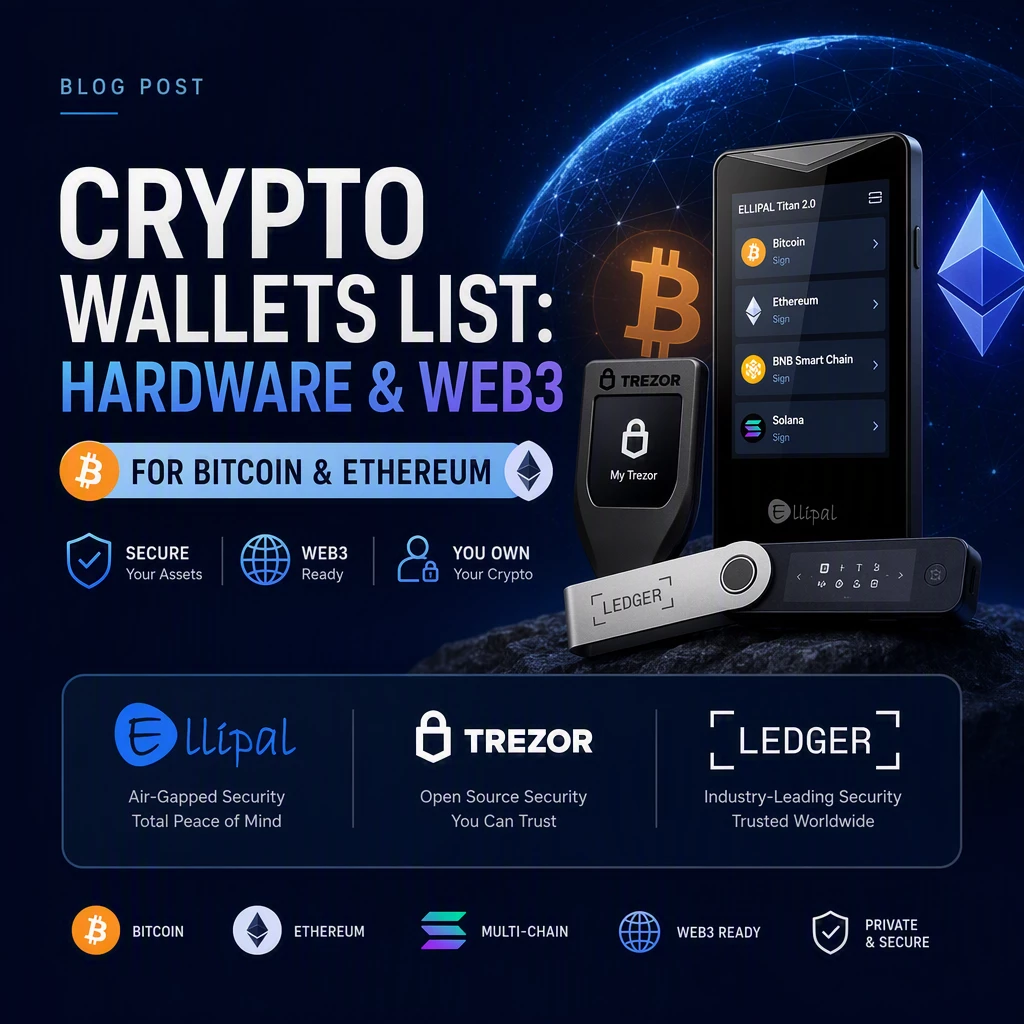
Crypto wallets help you control Bitcoin, Ethereum, Solana, and other cryptocurrencies by managing addresses, transactions, and private keys. This Crypto Wallets List guide compares hardware wallets, software wallets, cold wallets, hot wallets, and Web3 wallets, with practical checks for security, blockchain support, wallet compatibility, recovery, and tax records.
Ellipal is a strong personal preference for offline signing, while Tangem Wallet, MetaMask, Phantom, TokenPocket, and Coinbase Wallet suit different users. Review supported networks, secure chip design, NFC use, mobile support on Android and iOS, and whether a provider is custodial or non-custodial. A crypto wallet cannot remove market risk, and this article is general information rather than investment advice, financial advice, or a recommendation of financial products, brokerage services, or providers.
Crypto Wallets List:
Crypto Wallets List: Why Web3 wallets Dominate Today’s blockchain Revolution
Web3 wallets dominate today’s blockchain revolution because they connect users directly with applications, smart contracts, exchanges, and DeFi protocols rather than limiting access to a single account provider. MetaMask remains widely used for Ethereum and EVM networks, Phantom is prominent in Solana ecosystems, and TokenPocket supports multiple chains through one interface. A wallet generally stores credentials, not coins; balances remain recorded on a blockchain.
Compare a wallet’s blockchain engine, supported networks, transaction simulation, hardware integration, and recovery design before importing funds. Developer platform documentation from services such as Alchemy can help explain network activity, while DefiLlama provides useful ecosystem context, although neither replaces independent security testing.
Web3 wallet dashboard connecting Ethereum, Solana, decentralized applications, smart contracts, and hardware signing
How I Learned to Evaluate Any crypto wallet Without Hype [Hands-On Method]
Evaluating any crypto wallet without hype starts with a repeatable test: verify the official download source, inspect permissions, create a small test account, send a modest amount, and restore the backup on a separate device. I then check private keys, seed-phrase handling, transaction previews, fee controls, supported networks, firmware updates, open documentation, and incident history.
A wallet that advertises hundreds of assets may offer limited functionality for some chains, so test the exact token and application you intend to use. Record the address format and confirm that receiving and sending work before transferring a larger balance. This method separates useful security controls from attractive design claims and gives beginners evidence they can reproduce.
Why My 2025 Choice Landed on Ellipal for Secure BTC Foundation Aligned trading Confidence [Updated Review]
Ellipal became my 2025 preference for a secure BTC foundation because its air-gapped approach keeps signing separate from ordinary network connections. Its large-screen workflow and QR-based communication can make address verification easier, while the secure chip is designed to resist physical extraction.
Users should still buy only from an authorised source, confirm tamper evidence, verify firmware, and protect the recovery phrase offline. Ellipal is not automatically best for every blockchain or application: check network support, staking functions, fees, and compatibility with the exchanges you use. A hardware wallet reduces certain remote attack paths, but it cannot prevent phishing, malicious approvals, or a photographed seed phrase. Treat the device as one layer in a broader security process.
How CryptoCompare Benchmarks Influence My Proven trading Security Checklist
CryptoCompare benchmarks can inform a trading security checklist by highlighting custody models, asset coverage, fees, and user-facing risks, but ratings should never be treated as certification. Translate any comparison into operational questions: Is signing performed offline? Can addresses be verified on the device? Are updates authenticated?
What happens if the app disappears? Check independent reports, reproducible testing, and the provider’s recovery process before choosing. Separate market performance from security performance, because a popular product may still have weak backup habits or poor phishing resistance. A comparison service can organise research, yet personalized advice requires understanding your own holdings, transaction frequency, technical ability, and loss tolerance.
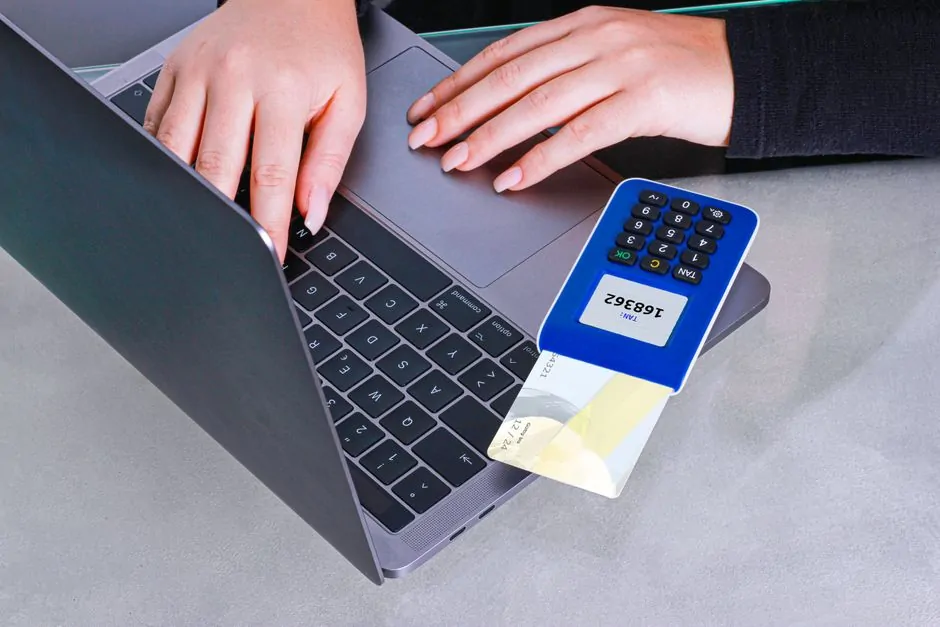
Security checklist beside CryptoCompare-style ratings, offline signing device, recovery card, and transaction verification screen
Is Your Current hot wallet Quietly Exposing You to Risk? [Quick Self-Audit]
A hot wallet deserves a quick self-audit whenever it holds more than you can comfortably replace. Check whether the seed phrase has ever touched cloud storage, messaging apps, screenshots, or an internet-connected printer. Review browser extensions, connected sites, token approvals, and device security, then revoke unnecessary permissions through reputable tools. Confirm that the app was installed from an official source and that notifications do not reveal balances on a shared lock screen.
Keep only spending funds in the hot wallet and move long-term holdings to cold storage. If a wallet supports hardware signing, use it for valuable transactions. A clean audit does not guarantee safety, but it reduces common exposure created by reused passwords, fake support accounts, malware, and careless approval prompts.
How CryptoCompare Benchmarks Influence My Proven trading Security Checklist
BTC Foundation guidance for seed-phrase safety is straightforward: write the words accurately, keep them offline, and never disclose them during an active trading session or support conversation. Use two durable copies stored in separate secure locations, but avoid photographing or typing the phrase into a computer.
Confirm the backup by using the wallet’s recovery-check feature before depositing significant funds. A passphrase can add protection, yet it also creates another secret that must be documented and tested carefully. Never enter recovery words into a website, exchange form, or unsolicited support chat. Trading urgency is a security risk because rushed users approve wrong addresses and reveal credentials. Pause, verify the destination on the device, and remember that anyone with the seed can control the assets.
Using CryptoCompare Ratings to Validate Your Cold Storage Setup Before trading
CryptoCompare ratings can help validate a cold-storage setup only after you compare their criteria with your own threat model. Confirm that the device supports your required assets, signs transactions locally, displays complete addresses, and offers a documented recovery process. Test a small deposit and withdrawal, inspect the transaction on a block explorer, and store the device backup separately from the device itself. Ratings may not reflect supply-chain attacks, counterfeit sellers, unsupported firmware, or user mistakes.
Before trading, disable unnecessary integrations, update from official channels, and establish a second-person review for large transfers. The goal is not the highest score; it is a setup whose controls you understand and can operate consistently under pressure.
7 Steps to filter cryptocurrency wallets by Features That Actually Matter in 2026
Filtering cryptocurrency wallets by meaningful features requires seven steps: identify the chains and applications you need; classify custody as custodial or non-custodial; verify private-key control; inspect hardware or software signing; test recovery; compare fees and supported networks; and review the provider’s security history.
Check whether Ethereum tokens, Bitcoin address types, Solana assets, stablecoins, NFTs, and staking functions are genuinely supported rather than merely listed. Evaluate wallet compatibility with exchanges, tax tools, mobile platforms, and hardware devices. A polished interface is useful, but clear signing prompts and reliable backups matter more. Write down your requirements before browsing advertisements, then reject products that hide ownership terms, recovery limitations, or data practices.

Seven-step crypto wallet filtering worksheet with chain icons, custody labels, recovery test, fees, and compatibility checks
Curating Your Personal crypto tax report With Real Transaction Histories for trading Clarity
Curating a personal crypto tax report begins with complete transaction histories rather than screenshots of wallet balances. Export records from each exchange, wallet, and blockchain address, then label purchases, sales, swaps, transfers, staking income, fees, gifts, and deposits. Distinguish an internal transfer from a disposal, because moving assets between your own wallets may have different tax treatment depending on jurisdiction.
Tools such as CoinLedger can combine wallet and exchange data, but reconcile imported records against transaction hashes and account statements. Keep the acquisition date, cost basis, proceeds, currency, fee, and counterparty context where available. Start early, because missing records become harder to reconstruct when a platform changes its export format or closes an account.
BTC Foundation Guidance for Safekeeping Your Seed Phrase During Active trading Sessions
Organizing a CryptoCompare portfolio snapshot for year-end trading means separating an informational dashboard from authoritative accounting records. Capture balances by wallet and network, label addresses, record acquisition lots, and reconcile the snapshot with exchange exports and on-chain histories. Note wrapped assets, bridged tokens, staking positions, and stablecoins separately because identical tickers can represent different contracts. Save dated reports in a secure, readable format and document conversion rates used for taxable events.
Do not rely on a portfolio app’s market value to calculate gains automatically; market performance and tax basis are different measurements. A monthly reconciliation reduces year-end pressure and exposes duplicated imports, missing transfers, and unsupported assets before they distort your crypto tax report.
Best cryptocurrency wallets Compared: Finding Your Perfect Match Among Top crypto wallets
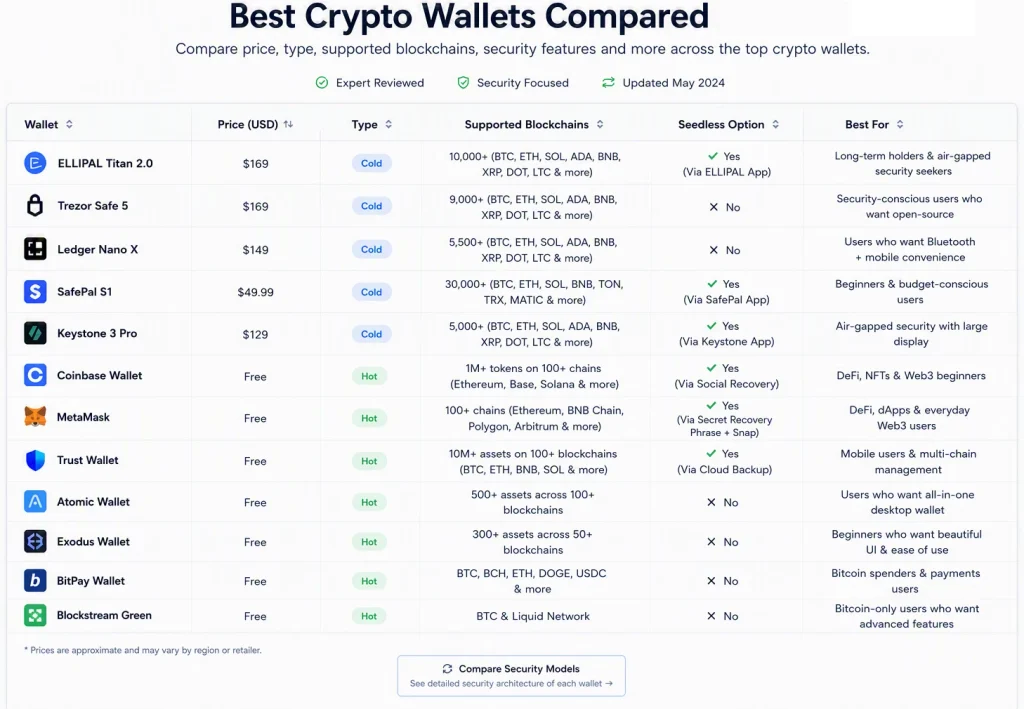
Comparing the best cryptocurrency wallets requires matching the product to the user, not declaring one universal winner. Ellipal and Tangem Wallet emphasise offline or hardware-oriented custody, while MetaMask focuses on Ethereum and EVM Web3 applications. Phantom is practical for Solana users, and Coinbase Wallet can suit people seeking a familiar mobile interface without exchange custody.
Examine private keys, recovery, supported networks, fee controls, transaction simulation, hardware integration, and customer support. Hardware wallets generally suit long-term holdings; software wallets suit frequent interaction; custodial accounts may be simpler but place control with a financial institution. Read product terms and Privacy Policy details, and distinguish factual comparison from sponsored companies, advertisements, or personalized advice.

Side-by-side wallet comparison showing hardware devices, mobile apps, custody models, and supported blockchain networks
How to filter Ethereum and Solana Compatibility Like a Pro [Multi-Chain Guide]
Filtering Ethereum and Solana compatibility like a professional starts by checking native support, token standards, address formats, signing methods, and application connections. Ethereum wallets may need ERC-20, ERC-721, ERC-1155, Layer 2, and EVM support, while Solana requires compatible accounts, SPL tokens, and Solana application connections.
Confirm that the wallet displays contract addresses and network names before signing. A multi-chain label does not guarantee equal features across every network: swaps, staking, NFTs, and hardware signing may be limited. Send a small test transaction, verify the recipient address, and record fees before moving substantial assets. Also check whether the wallet can export useful histories for accounting and whether its recovery method restores every required network rather than only one account type.
How CryptoCompare Benchmarks Influence My Proven trading Security Checklist
Filtering by blockchain compatibility when seeking one wallet for everything requires realistic expectations. Bitcoin uses different transaction and address models from Ethereum, while Solana, Cosmos, and other networks may require separate account derivation, fee assets, and application connectors. Check native support, not merely the ability to watch an address.
Confirm whether sending, staking, swaps, NFTs, and hardware signing work for each asset you own. Review recovery documentation to ensure a seed phrase can restore every account safely and that importing it into another compatible wallet is possible. A single interface can simplify administration, but concentrating all funds in one product creates operational dependence. Use a small test balance, maintain independent backups, and keep a second compatible recovery route for critical holdings.
Visual trading Cues Borrowed from CryptoCompare for Faster Balance Checks
Visual trading cues can make balance checks faster when they emphasise verified information rather than emotional market signals. Use clear labels for wallet, network, token contract, cost basis, and last reconciliation date. Colour can distinguish confirmed deposits, pending transactions, and unexplained changes, but never let a green price indicator replace address verification.
Compare displayed balances with an independent block explorer and inspect token approvals before signing. Hide irrelevant assets and avoid dashboards that encourage impulsive trades through flashing alerts. A concise daily review should confirm device status, recent logins, pending permissions, and unusual withdrawals. Treat portfolio visuals as an operations aid, not a forecast of market performance or a substitute for independent research.
Why Tangem Wallet Stands Apart in the Growing cold wallets Arena [Case Study]
Tangem Wallet stands apart in the cold wallets arena through card-based hardware, NFC communication, and a compact setup that can feel simpler than a conventional screen device. Its design may appeal to users who want portable storage and straightforward mobile access, but convenience must be weighed against recovery arrangements, phone dependence, supported networks, and the consequences of losing every card.
Buy from an authorised channel, verify the application, test recovery, and maintain a secure backup plan before depositing significant assets. Check whether the exact token and network you use are supported, because a card’s broad marketing description may not cover every feature. NFC improves communication convenience; it does not make a careless seed-phrase or approval decision safe.
Watching For Fake Ledger Stax Listings That Exploit Urgent trading Frenzies
Watching for fake Ledger Stax listings means treating urgency as a warning sign rather than a reason to buy quickly. Avoid unofficial marketplaces, dramatically discounted offers, preconfigured devices, and sellers requesting recovery words. Inspect packaging and device prompts, but remember that convincing packaging can be copied.
Initialise the device yourself, generate a new recovery phrase, update firmware through official software, and verify the receiving address on the device screen. Never purchase a device that arrives with a seed phrase or asks you to enter one into a website. During volatile trading, scammers imitate support agents and promote counterfeit links through social media. If authenticity is uncertain, do not connect the device or transfer funds; contact the manufacturer through its verified domain.
BTC Foundation Guidance for Safekeeping Your Seed Phrase During Active trading Sessions
Tagging transactions early simplifies the next crypto tax report because each transfer is easier to identify while the purpose remains fresh. Use consistent labels such as exchange deposit, personal transfer, purchase, sale, swap, staking, liquidity activity, fee, gift, or income. Keep the sending and receiving addresses together so an accounting tool does not classify a self-transfer as a taxable disposal.
Export transaction hashes, timestamps, asset quantities, and fiat values, then save the original exchange files. Apply tags monthly and review unusual contract interactions separately, especially approvals, bridges, and wrapped assets. Early records reduce reconstruction work during trading peaks and help a tax professional understand the sequence of events without guessing from price charts alone.
Is Your Current hot wallet Quietly Exposing You to Risk? [Quick Self-Audit]
Ledger Stax’s curved touchscreen may justify a premium for users who value visual address confirmation, readable transaction details, and a distinctive form factor, but appearance should not decide a security purchase. Assess signing clarity, battery behaviour, firmware process, supported networks, companion-app reliability, and recovery procedures. A larger display can reduce mistakes when checking long addresses, yet it cannot detect every malicious smart-contract approval or protect a seed phrase stored insecurely.
Crypto news followers should separate launch coverage and influencer enthusiasm from hands-on testing and documented specifications. Compare total ownership cost, accessories, support, and compatibility with your regular assets. If a simpler device meets the same threat model and workflow, the premium may offer convenience rather than materially stronger protection.
BTC Foundation Guidance for Safekeeping Your Seed Phrase During Active trading Sessions
Global market views on self-custody adoption suggest hardware demand will be shaped by exchange failures, regulatory changes, institutional controls, and users’ growing awareness of counterparty risk. Adoption is not measured only by device shipments: active use, secure backups, inheritance planning, and recovery literacy matter just as much. Institutions may require multi-signature approval, policy controls, audit trails, and segregated roles rather than a single consumer device.
Individuals should avoid interpreting rising demand as proof that any hardware wallet is safe or necessary. Compare threat models, regional availability, warranty terms, and software support. Hardware can reduce online exposure, but operational mistakes remain significant. Education, tested procedures, and independent verification should grow alongside purchases in 2026.
Using CryptoCompare Ratings to Validate Your Cold Storage Setup Before trading
CryptoCompare data can reinforce enterprise-grade security standards when used as one research input alongside audits, penetration testing, governance documents, and incident disclosures. An enterprise should examine multi-signature support, role-based permissions, secure key ceremonies, withdrawal policies, device attestation, logging, recovery drills, and segregation of duties. Vendor ratings may highlight useful differences, but they rarely capture every internal control or integration risk.
Require a documented threat model and test failure scenarios before production use. Review access quarterly, rotate personnel permissions, and maintain offline recovery materials under controlled custody. Security standards should be measurable: define approval thresholds, response times, backup testing frequency, and evidence retention. The objective is resilient operations, not a marketing badge or a high comparison score.
Inside bitcoin wallets: How blockchain and public private keys Keep Your Coins Secure
Bitcoin wallets protect control of funds through cryptographic keys while the blockchain records ownership conditions and transaction history. A public key or address can be shared to receive bitcoin, whereas a private key authorises spending and must remain secret. Wallet software derives addresses from a recovery seed, signs transactions locally or through a hardware wallet, and broadcasts the signed transaction to the network.
The coins do not sit inside the device; the device protects the credentials needed to satisfy the blockchain’s rules. Check address formats, fee estimates, change outputs, and confirmation status before sending. Back up the seed accurately and test restoration with no valuable balance first. This distinction explains why losing a device may be recoverable, while exposing the seed can permanently compromise funds.
How Do public private keys Actually Protect Your Assets? [Beginner-Friendly Explainer]
Public and private keys protect assets through asymmetric cryptography: the public side identifies an account, while the private side creates a signature that proves spending authority without revealing the secret. When a transaction is signed, network participants verify the signature against the public key and reject invalid attempts. This mechanism does not prove that the recipient is trustworthy, nor does it reverse a confirmed mistake. Malware can change a copied address, and a malicious contract can receive an authorised approval.
Therefore, verify addresses on a trusted screen, limit allowances, and separate daily activity from long-term storage. Keep recovery words offline and never type them into support forms. Understanding the cryptography helps, but safe operating habits remain essential to protecting balances.
Securing public private keys With Offline Backups Endorsed by BTC Foundation Research
Securing public and private keys with offline backups means preserving the recovery secret in a durable form that survives device failure, theft, water, and accidental discovery. Write the words in order, verify spelling, and store separate copies in controlled locations. Metal backup products can improve resistance to fire and moisture, but they do not protect against someone who finds and reads the phrase.
Consider a passphrase or multi-signature arrangement only after you understand recovery complexity and test it successfully. Do not store all backups in one residence or with one custodian. Document instructions for a trusted successor without revealing the complete secret unnecessarily. Review the backup after firmware changes and confirm that restoration reproduces the intended addresses before moving meaningful funds.
BTC Foundation Guidance for Safekeeping Your Seed Phrase During Active trading Sessions
Stories of lost public and private keys show how high-volume trading accounts can fail through ordinary mistakes rather than sophisticated attacks. Users have discarded devices, misplaced seed plates, overwritten wallets, or sent assets to incompatible networks after rushing during volatility. Some retained a seed phrase but forgot a passphrase; others backed up a watch-only address without the spending key.
These cases demonstrate why recovery must be rehearsed before funds arrive. Maintain an inventory of wallets, derivation paths, networks, and backup locations without recording secrets in the inventory itself. Use small test transfers, dual review for large withdrawals, and a written incident plan. If a key may be exposed, move assets to a newly generated wallet and document the event for accounting and security review.
Is Your Current hot wallet Quietly Exposing You to Risk? [Quick Self-Audit]
Bitcoin wallets are not dominated by hardware alone in 2026 because five shifts are changing custody: passkey-assisted access, multisignature vaults, smart-account recovery, mobile secure elements, and regulated institutional custody. Hardware remains valuable for offline signing, but users increasingly combine it with watch-only dashboards, policy engines, and separate spending accounts.
Mobile wallets improve accessibility while introducing risks from malware, backups, and social engineering. Multisignature designs reduce dependence on one key but require disciplined coordination and recovery documentation. The right architecture depends on balance size, transaction frequency, technical skill, and inheritance needs. Compare the complete operating model rather than treating a device category as a guarantee. Any design should make address verification, backup testing, and incident response practical for its actual users.
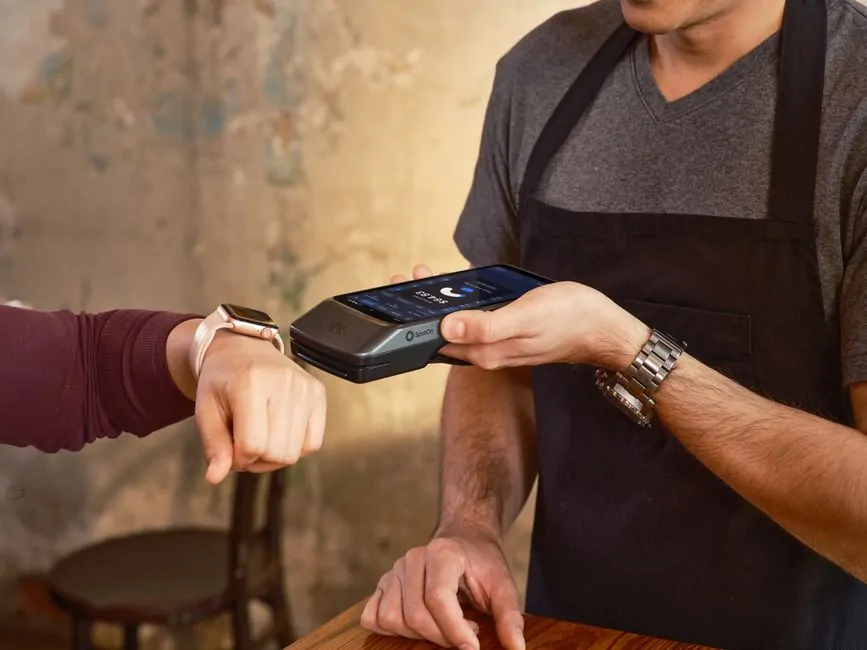
2026 custody landscape showing hardware wallet, multisignature vault, passkey phone, institutional policy engine, and watch-only dashboard
BTC Foundation Guidance for Safekeeping Your Seed Phrase During Active trading Sessions
Auditing Transaction Signatures to Prevent Costly trading Errors on Mobile starts with verifying exactly what your private keys are about to sign before you tap confirm. On Android and iOS, mobile bitcoin wallets often truncate transaction details, making it easy to approve the wrong recipient, fee, or network. A proper audit means checking the raw transaction on your device screen against the blockchain destination, confirming the amount in Bitcoin rather than fiat approximation, and ensuring the nonce and gas details match your intent, especially when bridging to Ethereum or Solana.
Hardware wallets like Tangem Wallet with NFC and secure chip isolation force this review on a separate display, while hot wallets and software wallets rely on in-app previews that can be spoofed. Enable message signing previews, use non-custodial wallets that show hex data, and cross-check with a blockchain explorer. This habit prevents costly trading errors, phishing swaps, and stablecoins sent on the wrong supported networks.
Using CryptoCompare Ratings to Validate Your Cold Storage Setup Before trading
What BTC Foundation Researchers Advise About Rotating Keys After Active trading focuses on hygiene for your private keys after high-frequency activity. Researchers note that active trading increases exposure — each connection to Web3 wallets, DeFi protocols, and brokerage services expands the attack surface for your bitcoin holdings. Their guidance is to avoid unnecessary rotation of your seed phrase itself, since frequent regeneration creates backup risks, but to rotate derived keys and permissions instead.
That means generating fresh addresses for new deposits, revoking token approvals on Ethereum and other chains, and moving long-term Bitcoin to a new cold wallets address if a hot wallets device was connected to untrusted dApps. For hardware wallets users, they recommend using passphrase features to compartmentalize trading funds versus savings. If you suspect compromise during active trading, immediately transfer to a clean wallet, verify wallet compatibility and blockchain support before reusing apps, and document the rotation in your backup. This balances security without weakening the core recovery system.
hot wallet vs Cold Storage: Where Does Your Everyday Spending Belong?
Hot wallet versus cold storage is mainly a question of exposure and convenience. Keep only an operational amount in a hot wallet for ordinary payments, application interactions, and small experiments; place long-term holdings in cold storage with offline signing and tested backups. Use separate addresses for spending, savings, and public activity to reduce privacy leakage and limit damage from a compromised application. Before approving a transaction, inspect the network, recipient, token amount, fee, and contract permissions.
Cold storage is not automatically safer if recovery materials are poorly protected or transactions are signed blindly. A practical rule is to size the hot-wallet balance according to a tolerable loss, then replenish it through a deliberate process. Review that threshold after major changes in usage or security conditions.

Practical hot-wallet and cold-storage layout showing small spending balance separated from offline long-term holdings
Using CryptoCompare Ratings to Validate Your Cold Storage Setup Before trading
Choosing a custodial wallet versus self-custody requires comparing responsibility with convenience. Custodial services may provide password recovery, fraud monitoring, and familiar interfaces, but the provider controls or co-controls access and may restrict withdrawals during outages, compliance reviews, or insolvency. Self-custody gives direct control over private keys but makes the user responsible for backups, phishing resistance, device security, and irreversible transactions.
A financial institution or exchange can be useful for active trading, while a non-custodial wallet may better suit independently managed holdings. Check insurance language, withdrawal rules, proof-of-reserves limitations, jurisdiction, fees, and account recovery before depositing. Do not confuse convenience with protection, and do not move funds into self-custody until you can restore the wallet and verify a transaction safely.
Routine Wallet Reviews Featuring Trusted CryptoSlate crypto news Analysis for trading Safety
Routine wallet reviews using trusted CryptoSlate crypto news analysis should examine both product changes and operational behaviour. Check firmware releases, supported networks, vulnerability disclosures, phishing campaigns, fee changes, and whether the provider has altered custody or data practices. Cross-check reporting with official notices and independent security researchers, because news coverage can simplify technical details or repeat unverified claims.
Perform a monthly account review: remove unused connections, inspect approvals, reconcile balances, test notifications, and confirm backups remain accessible. Keep a dated record of changes and investigate unexplained transactions immediately. Reviews are most valuable when they produce actions, not anxiety. If a serious vulnerability affects your device or application, follow the vendor’s verified migration guidance and avoid links distributed through unsolicited messages.
Hardware wallets Under the Microscope: Choosing cold wallets You Can Trust
Hardware wallets deserve close inspection because their security depends on hardware, firmware, companion software, supply chain, and user procedure. Look for local transaction signing, clear address display, authenticated updates, secure chip design, tamper response, documented recovery, and long-term support. Confirm that the device works with your exact Bitcoin address type, Ethereum tokens, Solana assets, and preferred applications. Buy through an authorised channel and initialise it yourself; never accept a pre-generated seed.
Test a small transfer in both directions and verify the device’s displayed address independently. Consider durability, battery dependence, cable or NFC requirements, accessibility, and inheritance. A trusted cold wallet is not defined by branding alone but by transparent controls that remain usable during stress and recovery.
Is Your Current hot wallet Quietly Exposing You to Risk? [Quick Self-Audit]
Determining which company builds the most resilient devices requires evidence across design, manufacturing, software maintenance, disclosure, and customer support. Compare published security architecture, independent audits, bug-bounty practices, firmware signing, vulnerability response, replacement procedures, and supply-chain controls. No company can honestly promise absolute protection, so evaluate how clearly it explains residual risks.
Check whether updates preserve recovery compatibility and whether users can recover funds without the original vendor. Read warranty exclusions and geographic support terms before purchase. A resilient device should withstand ordinary handling while maintaining secure signing, but durability alone says little about phishing or malicious approvals. Build a shortlist, verify claims through technical documentation, and test the complete setup with a small balance before relying on it for substantial holdings.
BTC Foundation Guidance for Safekeeping Your Seed Phrase During Active trading Sessions
Debunking claims of unbreakable security starts by asking what the claim actually covers. A secure element may resist certain physical attacks, yet it cannot stop a user from approving a malicious contract, revealing a seed phrase, or downloading counterfeit software. Air-gapped communication can reduce network exposure but does not validate a destination automatically. Tamper-evident packaging may discourage interference without proving authenticity.
Translate every claim into a testable control: what is protected, from which attacker, under what assumptions, and with what recovery trade-off? Prefer precise documentation over slogans and compare independent research with company statements. Everyday trading users should use limits, address allowlists, second-person review, and small test transfers. Security is a process of reducing risks, never a promise that mistakes become harmless.
Using CryptoCompare Ratings to Validate Your Cold Storage Setup Before trading
Spotting a trustworthy company behind a hardware-wallets brand involves examining transparency before examining the device’s appearance. Confirm legal identity, official domains, update history, vulnerability disclosures, support channels, privacy practices, and whether the company explains custody clearly. Search for counterfeit warnings and verify that the app signature or publisher matches the official source. Review how the provider handles telemetry, analytics, replacement devices, and account creation.
A credible company will describe limitations and recovery risks instead of implying that hardware eliminates every threat. Keep purchase receipts and serial information separate from seed backups, and never share private keys with support. If documentation is vague, support is only available through social media, or promises sound absolute, select a provider with clearer evidence and a more accountable operating history.
What CryptoSlate Reveals About cookie consent and Privacy Tracking in Wallet Apps
What CryptoSlate Reveals About cookie consent and Privacy Tracking in Wallet Apps highlights how even non-custodial wallets collect behavioral data once you interact with their web interfaces. According to their analysis, many crypto wallets and their companion websites load Google Analytics, Clarity, and CloudFlare scripts that fire before you accept cookie consent, fingerprinting your device, IP, and supported networks viewed. While the blockchain itself remains pseudonymous, the wallet app or its developer platform site can link your browsing of cryptocurrencies, portfolio pages, and help docs to marketing profiles. CryptoSlate found that some providers categorized essential secure chip authentication scripts alongside advertising trackers, forcing users to accept all or lose functionality. Their report urges readers to inspect the Privacy Policy, filter by cookie consent settings that block non-essential trackers, and prefer wallet apps that offer transparent opt-outs. True hardware wallets keep private keys offline, but their companion apps on Android and iOS still pose privacy considerations if tracking is left unmanaged.
Using CryptoCompare Ratings to Validate Your Cold Storage Setup Before trading
How to filter Sponsored crypto news From Independent Testing in 2026 requires a critical eye toward disclosure and methodology. Sponsored companies often pay for placement that mimics reviews, promoting specific crypto wallets, financial products, or advertised financial institution offers without genuine hands-on testing. To filter effectively, check for clear labels like sponsored or advertisements at the top of the article, then look for comparison service disclaimers stating they do not provide personalized advice or investment advice.
Independent testing, by contrast, will detail wallet compatibility testing across blockchain engine integrations, battery and NFC performance, supported networks like Bitcoin, Ethereum, and Solana, and real transaction signing on both Android and iOS. Look for authors who disclose they purchased the device, show photos of seed phrase setup, and publish drawbacks alongside pros. NerdWallet-style comparison frameworks and open-source audits are good signals. Cross-reference claims with community forums and avoid sources that promise guaranteed market performance or omit risks around investment decisions.
Combining Community market views With Hands-On Testing Before Committing to trading
Combining Community market views With Hands-On Testing Before Committing to trading helps you avoid hype when choosing from many crypto wallets. Community market views on forums, Web3 ecosystems discussions, and review aggregators reveal long-term reliability, such as how MetaMask handles Ethereum gas spikes, how Phantom performs on Solana DeFi, or how Coinbase Wallet manages stablecoins. However, sentiment alone can be skewed by sponsored posts and short-term investment issues.
Balance it with your own hands-on testing: install two or three non-custodial wallets, test wallet compatibility with your preferred blockchain, and execute small test transactions for Bitcoin and other cryptocurrencies before committing larger amounts. Evaluate how hot wallets versus cold wallets display fees, how they manage private keys, and whether the blockchain engine connection via Alchemy or other provider stays stable. This dual approach — listening to real users while personally verifying general information about products and services — ensures your final choice supports secure, confident trading rather than following crowd momentum.
Do You Need to filter by cookie consent Settings? Essential Privacy Controls Explained
Do You Need to filter by cookie consent Settings? Essential Privacy Controls Explained is critical because wallet-related browsing can leak financial intent. When you research crypto wallet options, visit hardware wallets comparison pages, or check a crypto tax report via CoinLedger, websites typically deploy cookies for analytics and advertisements. Filtering by cookie consent settings lets you allow strictly necessary cookies for site function while rejecting tracking for products, services, and sponsored companies.
Most reputable sites offer a granular Privacy Policy popup where you can toggle analytics off, preventing Google Analytics and Clarity from linking your interest in Bitcoin or Ethereum to ad profiles. This matters even for cold wallets users: while your private keys remain in a secure chip, your research footprint can still be used to target you with phishing ads. On iOS and Android, also limit app tracking in system settings and review wallet app permissions. If a wallet provider does not offer transparent cookie consent controls, consider that a red flag for overall privacy posture.
How cookie consent Pop-Ups Affect Your Crypto Privacy in Web3 wallets Browsing
How cookie consent Pop-Ups Affect Your Crypto Privacy in Web3 wallets Browsing goes beyond annoying banners — they determine how your Web3 ecosystems activity is tracked. When you browse Web3 wallets like MetaMask, TokenPocket, or Phantom, or use a blockchain engine explorer like DefiLlama, consent pop-ups control whether CloudFlare, Google Analytics, and advertising pixels can store identifiers linked to your wallet address searches. Accepting all cookies may allow providers to correlate your visits across multiple dApps, building a profile of your interest in DeFi, stablecoins, and supported networks.
For non-custodial wallets and software wallets, this off-chain tracking can undermine pseudonymity even though on-chain keys remain secure. Choosing reject non-essential or customize options restricts tracking to functional cookies only, preserving privacy while still letting you compare blockchain support and wallet compatibility. Remember that hot wallets browsing is inherently more exposed than hardware wallets, so tightening cookie consent is a simple, effective layer of privacy hygiene before you connect any crypto wallet.
Curating Your Personal crypto tax report With Real Transaction Histories for trading Clarity
Why CryptoSlate Readers Demand Transparent cookie consent Controls Before trading stems from a growing awareness that privacy is inseparable from security. Readers engaged with Bitcoin, Ethereum, and broader blockchain content understand that opaque consent mechanisms can expose their financial research to third-party data brokers and sponsored companies.
CryptoSlate audiences frequently filter financial products and comparison articles, and they expect the same transparency from wallet providers regarding what is tracked, how long data is retained, and whether information is shared with advertisements networks. Transparent controls mean clearly labeled categories, easy opt-out without degrading core functionality, and a readable Privacy Policy that explains handling of investment decisions and general information queries. When a wallet site bundles analytics with essential services or hides the reject button, trust erodes — users question whether the same opacity extends to brokerage services or key management. Demanding clear cookie consent is therefore a proxy for demanding openness about security, data handling, and respect for user autonomy before any trading begins.
Beyond Storage: Using Your Favourite crypto wallets for Smarter Decisions
Beyond Storage: Using Your Favourite crypto wallets for Smarter Decisions reframes your crypto wallet as an analytics and planning tool, not just a vault for cryptocurrencies. My favourite is Ellipal wallet because it pairs cold wallets security with portfolio visibility across Bitcoin, Ethereum, Solana and other supported networks, letting you track allocation without exposing private keys. Modern Web3 wallets like MetaMask, Coinbase Wallet, and Phantom integrate blockchain engine data and developer platform insights from providers such as Alchemy, plus DeFi dashboards similar to DefiLlama, so you can monitor market performance and stablecoins exposure in one place.
By filtering by features such as blockchain support, wallet compatibility, and integration with tax tools like CoinLedger for your crypto tax report, you can make informed investment decisions rather than reacting emotionally. Use your favourite crypto wallets to simulate transactions, review spending patterns, and test wallet compatibility before bridging. This transforms storage into strategy, helping you manage blockchain assets confidently while keeping security, whether hot wallets or hardware wallets, at the center.
What important information Must Your Backup Contain? [Checklist for 2026]
What important information Must Your Backup Contain? [Checklist for 2026] is more than just writing down twelve words. A complete backup for any bitcoin or crypto wallets setup must include the seed phrase for your private keys, the exact derivation path and passphrase if used, and a record of wallet compatibility details including supported networks and blockchain engine settings. Document whether your hardware wallets use a secure chip, NFC pairing codes, and firmware version, plus the device model like Tangem Wallet or Ellipal.
Include addresses for Bitcoin, Ethereum, Solana, and any Web3 wallets accounts such as MetaMask or Phantom, noting which are hot wallets versus cold wallets. Add instructions for restoring on Android versus iOS, the Privacy Policy and provider contacts for recovery, and where your crypto tax report data is stored. Store this offline, in two geographically separate locations, never digitally in CloudFlare-synced drives or email. Test restoration annually. This checklist ensures you can recover all cryptocurrencies and DeFi positions even if a financial institution or device fails.
Using CryptoCompare Ratings to Validate Your Cold Storage Setup Before trading
Why Every crypto wallet Needs Clear important information on Recovery Costs is a question that confronts every owner of crypto wallets when disaster strikes. Your backup must spell out not just how to restore private keys, but what it will actually cost in time, fees, and replacement hardware. For example, if you lose a device like Tangem Wallet with its secure chip and NFC functionality, will you need to purchase a new card, pay shipping, or cover blockchain network fees to move Bitcoin and Ethereum to a new address?
Cold wallets and hardware wallets often require ordering a duplicate or paying for advanced recovery services, while hot wallets and software wallets may involve seed phrase restoration costs or paid support. Without clear important information, users underestimate expenses and delay recovery, leaving cryptocurrencies exposed. A comprehensive checklist for 2026 should list replacement prices, supported networks recovery fees, and whether your favourite provider like Ellipal wallet charges for extra cards. Documenting these costs alongside your seed phrase ensures you can act quickly and keep your investment secure without unpleasant financial surprises.
Spotting important information Gaps in Setup Guides Before You Start trading
Spotting important information Gaps in Setup Guides Before You Start trading is essential before you fund any crypto wallet and begin handling real assets. Many setup guides for crypto wallets gloss over critical steps like verifying private keys ownership, correctly backing up your seed phrase, or confirming blockchain support for your chosen assets. If you plan to hold Bitcoin on one network and Ethereum or Solana on another, check whether the guide explains wallet compatibility, supported networks, and how to add custom tokens.
A superficial guide may show you how to install MetaMask or Phantom on Android or iOS, but fail to explain that software wallets and non-custodial wallets never store your keys on a developer platform or blockchain engine. Look for missing warnings about fake apps, unclear instructions on enabling the secure chip, or no mention of test transactions before large transfers. Reliable guides from providers like Coinbase Wallet and TokenPocket will detail DeFi connections, stablecoins handling, and secure backup procedures. Identifying these gaps early helps you avoid costly mistakes and ensures your Web3 wallets are configured correctly for secure, long-term use.
Where to Get Reliable crypto news Without Falling for Hype-Driven market views
Where to Get Reliable crypto news Without Falling for Hype-Driven market views starts with choosing sources that prioritize data over hype. Instead of relying on social media influencers who amplify short-term price pumps for Bitcoin and Ethereum, turn to analytics platforms like DefiLlama for on-chain volumes, Alchemy for developer platform activity, and NerdWallet for balanced comparisons of financial products without sponsored companies bias. Reliable crypto news separates general information from personalized advice and clearly states that it is not investment advice or financial advice. Look for outlets that disclose their comparison service methodology, explain how they cover brokerage services, advertisements, and financial institution partnerships, and avoid promising guaranteed market performance.
Cross-reference headlines about Web3 ecosystems and blockchain engine updates with primary sources such as project docs or blockchain explorers rather than reposted rumors. By curating a feed that includes established Web3 wallets documentation, hardware wallets security updates, and neutral market data, you can filter noise, understand real trends in cryptocurrencies, and make investment decisions based on facts instead of fear-driven narratives.
How Daily crypto news Headlines Distort Rational market views During Volatility
How Daily crypto news Headlines Distort Rational market views During Volatility becomes obvious when every price swing in bitcoin triggers sensational coverage. Daily crypto news often frames a 5% drop in Bitcoin as a crash or a modest rally as the start of a new bull run, which warps your perception of risk and encourages emotional trading. These headlines exploit volatility by cherry-picking market views that generate clicks, focusing on short-term market performance while ignoring broader context like long-term adoption of blockchain, stablecoins usage, or developer activity on Ethereum.
When you consume a constant stream of alarming or euphoric updates, you may feel pressured to make hasty investment decisions, misjudge your portfolio’s health, or abandon a sound strategy with cold wallets for secure storage. This distortion is amplified when news sites connected to advertisements or providers of financial products push narratives that benefit sponsored companies. To counter this, limit your news checks, verify claims with data from DefiLlama or CoinLedger, and remember that rational market views require looking beyond daily noise to fundamentals and your own risk tolerance.
Curating Your Personal crypto tax report With Real Transaction Histories for trading Clarity
Balancing Fast crypto news Alerts With Long-Term market views for Smarter trading means learning when to act quickly and when to stay patient. Fast alerts about bitcoin network congestion, Ethereum upgrades, or a major DeFi exploit can be vital if you need to move assets from hot wallets to cold wallets or pause trading, but reacting to every notification leads to overtrading and poor investment decisions. Instead, use alerts as triggers for verification, not immediate action.
Check whether the news affects your specific crypto wallet, supported networks, or long-term thesis about blockchain adoption and Web3 ecosystems growth. For example, a headline about Solana downtime should not automatically prompt you to sell if your strategy is built around diversified cryptocurrencies and secure hardware wallets. Configure alerts from trusted sources and analytics tools rather than hype-driven social feeds, and review them against weekly or monthly trends from platforms like Alchemy or DefiLlama. This balanced approach helps you protect assets, avoid hype-driven market views, and keep your trading aligned with informed, long-term goals rather than short-term panic.
7 Steps to filter cryptocurrency wallets by Features That Actually Matter in 2026
How to filter Transactions to Simplify Your crypto tax report in Under 10 Minutes focuses on using smart filters inside your favourite crypto wallets and portfolio tools to isolate what matters for taxes. Instead of scrolling through thousands of entries across Bitcoin, Ethereum, and Solana, apply filters by date range, transaction type, and supported networks to separate trades, transfers between your own hardware wallets, DeFi activity, and stablecoins conversions. Most non-custodial wallets and software wallets like Phantom, Coinbase Wallet, and MetaMask allow CSV exports, but the raw data mixes blockchain engine interactions with taxable events.
A tool like CoinLedger can automatically tag non-taxable movements, such as sending bitcoin between your own cold wallets, while flagging sells, swaps, and brokerage services rewards as reportable. Filter by wallet compatibility to consolidate histories from multiple devices, including Tangem Wallet, and exclude failed or dust transactions. With CloudFlare-protected dashboards and clear Privacy Policy controls, you can use Google Analytics and Clarity-style filtering to review only relevant transactions. This method turns chaos into a clean, ready-to-file crypto tax report in minutes and supports confident trading.
Curating Your Personal crypto tax report With Real Transaction Histories for trading Clarity
Automating Your crypto tax report With One-Click Exports for Stress-Free trading eliminates manual spreadsheet work and reduces errors during high-volume periods. Modern crypto wallets and tax platforms now offer direct integrations where you connect your blockchain addresses for Bitcoin, Ethereum, and other cryptocurrencies, and the system pulls every transaction via the blockchain engine and developer platform APIs like Alchemy. With one click, you can generate a complete crypto tax report that categorizes buys, sells, DeFi yields, and transfers between hot wallets and hardware wallets, correctly handling private keys ownership without exposing them.
Services such as CoinLedger sync with Coinbase Wallet, TokenPocket, and Phantom on both Android and iOS, merging histories across supported networks while respecting wallet compatibility rules. This automation distinguishes between non-taxable wallet-to-wallet moves and taxable dispositions, applies correct cost basis methods, and formats files for your financial institution or tax preparer. By automating exports, you reclaim hours, maintain accurate records for every crypto wallet you use, and keep trading stress-free knowing your compliance and investment issues are handled efficiently and securely.
Organizing Your CryptoCompare Portfolio Snapshot to Support Accurate Year-End trading
When Your crypto tax report Requires Professional Review After Heavy trading is typically after a year of frequent DeFi interactions, cross-chain swaps, or high-frequency activity across multiple blockchain networks. If you have executed hundreds of trades involving Bitcoin, Ethereum, stablecoins, and assets on Solana, automated tools alone may misclassify complex events like liquidity pool rewards, airdrops, or transfers involving your secure chip hardware wallets. Heavy trading also raises investment issues around cost basis, wash sale considerations, and proper handling of private keys migrations between Web3 wallets and cold wallets.
A professional review ensures your comparison of products and services from different providers is accurate and that your crypto tax report reflects correct blockchain support and brokerage services reporting rules. Experts can also help interpret ambiguous transactions flagged by CoinLedger, verify Google Analytics and Clarity tracking disclosures under Privacy Policy, and ensure no advertisements or sponsored companies have influenced your reporting assumptions. Seeking personalized advice from a qualified tax professional is not financial advice on market performance, but it provides essential general information to avoid penalties and file with confidence.